Opting Out of Organ Donation in Portugal
Researched and written with AI tools from official sources. How we make our guides
Everyone resident in Portugal is a presumed organ donor. How to register as a non donor, object in part, change your mind, and donate while alive.
Last verified: October 2026.
Who this is for
- You live in Portugal, of any nationality, and want to know whether you are an organ donor.
- You want to refuse donation after death, in full or in part, for yourself or your child.
- You are thinking about donating a kidney or part of a liver to someone while you are alive.
Not for you if: you want to record the medical treatment you would accept or refuse while you are alive. Read Making a Living Will in Portugal instead.
Updated October 2026. A new non-donor form and card came into use at the end of August 2026. Registrations and cards made with the old form stay valid.
If you live in Portugal, the law already counts you as a possible organ donor after death. Portugal uses presumed consent: nobody asks you, and nothing on your ID says so. If you do not want to donate, you register on the National Register of Non-Donors (Registo Nacional de Não Dadores, or RENNDA). You fill in one form at any health centre. It is free, and it takes effect four working days after the health centre receives it.
Who the rule covers
The law treats as possible donors after death all Portuguese citizens, stateless people, and foreigners resident in Portugal who have not registered as non-donors. Your nationality makes no difference once you live here.
The law adds one limit. For foreigners without permanent residence in Portugal, the rules of their own country apply instead. A tourist or short visitor is outside the Portuguese rule. If you hold a temporary residence permit and want to be certain your wishes are recorded, registering costs nothing.
Registering as a non-donor does not change any of your rights as a patient of the national health service (SNS). It also does not affect your right to receive a transplant if you ever need one.
How to register as a non-donor
You can register at any time. There is no deadline.
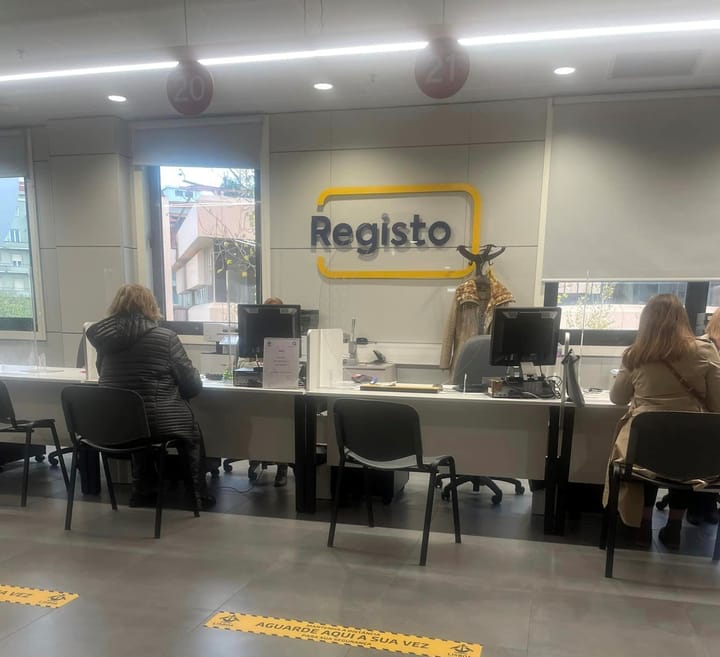
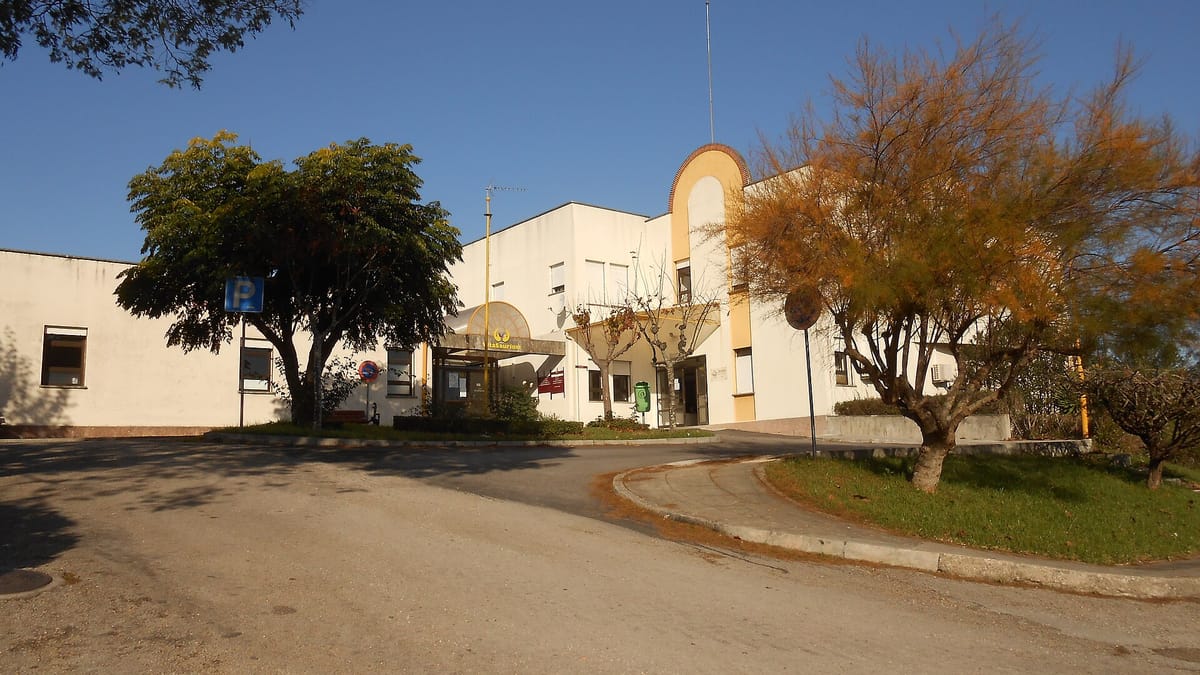
- Get the form. Ask for the RENNDA form (impresso RENNDA) at any health centre (centro de saúde). It does not have to be the one for your area. You can also print the form from the website of IPST, the national blood and transplant institute, and fill it in three times (in triplicate).
- Fill it in. Give your personal details. In the section on restrictions, say whether you refuse everything or only part (see the next section).
- Hand it in at a health centre, in person or through someone who legally represents you. Bring your ID document. The staff member checks your details against it.
- Keep your copy. The staff member signs a copy and gives it to you straight away. This is your proof until your card arrives. Carry it with you.
- Wait four working days. Your registration takes effect four working days after the health centre receives the form, not on the day you hand it in.
There is no charge.
Refusing only some organs or uses
Your refusal can be total or partial.
- Total refusal. You do not want any organs or tissues taken, for any purpose. You do not need to tick any of the options in the restrictions section.
- Refusal for one purpose. You can refuse donation for transplants, or for diagnosis and treatment, by ticking that option.
- Refusal of some organs or tissues. You list the ones you do not want to donate.
The organs that can be donated are the heart, lungs, kidneys, liver, pancreas, intestine, and stomach. The tissues are corneas, skin, heart valves, blood vessels, fascia, tendons, and bone.
Any restriction you choose is recorded on the register and printed on your card.
Children and adults who cannot decide
For a child, or an adult who cannot make the decision, the legal representative registers the refusal. A child who is able to understand and express a view may also state the refusal themselves.
Your own registration covers only you. If you want your children registered, fill in a form for each child.
The non-donor card
Everyone who registers gets an individual non-donor card. SPMS, the health ministry's shared services body, issues it and posts it to you. It must reach you within 30 days of the health centre receiving your form.
The card shows your identity details and any restrictions. A new design came in with the new form in August 2026. Cards issued under the old model are still valid proof.
Changing your mind
Registering is not permanent. To cancel and become a donor again, go to a health centre and fill in the same RENNDA form. At the top, tick the option to cancel your registration (Anulação do Registo no RENNDA). Use the same form to change a restriction or update your details.
What is recorded, and your rights
The register holds your name, address, place of birth, nationality, date of birth, sex, ID document number and date, and any organs, tissues, or purposes you refuse.
Your data is kept for ten years after your death. You have the right to see what the register holds about you and to get an exact copy free of charge. You can also ask for mistakes to be corrected, wrong entries removed, and missing details added. Everyone who handles the data must keep it confidential.
What happens in hospital
Before taking any organ or tissue after death, public and private hospitals must check the register for a refusal or a restriction. They do this through the transplant coordination offices and the tissue-matching (histocompatibility) centres, which are linked to the register. Forensic medicine institutes must also check before taking tissue. Every check is logged, so it can later be proved.
The doctors must write a formal record. It states that the register and any card were checked, that there was no refusal, and which organs or tissues were taken. The doctor who confirms death cannot be part of the transplant team.
Your refusal can also be proved by your health centre copy or your card, if either is shown or found among your belongings before the operation begins. If a body cannot be identified, the law presumes no refusal unless the circumstances suggest otherwise.
Things people get wrong
Telling your family is not the same as registering. The hospital must check the register. A conversation with relatives is not the legal record.
There is no register for saying yes. If you want to be a donor, you do not need to do anything.
The four working days are real. Your refusal does not count on the day you hand in the form.
A living will is separate. An advance directive covers the treatment you want while alive. It does not register a refusal of donation. If you want both, do both.
The old form is no longer the current one. If you print a form at home, use the 2026 version from the IPST website.
Donating while you are alive
Living donation has its own rules and nothing to do with the non-donor register. The most common living donations are a kidney or part of the liver.
Who can donate. You must be an adult in good physical and mental health. A living donation is allowed only when no suitable organ from a deceased donor is available and there is no other treatment that works as well. Donation is always banned if it would very likely cause serious, permanent harm to your health.
Who you can donate to. You can name the person who receives your organ when you are genetically related (for example, a brother or sister) or emotionally close (for example, a spouse). Without that link, you can still donate through the national paired kidney exchange programme, or anonymously to the most compatible patient on the waiting list.
Checks before donation. A medical team assesses your health, and mental health specialists check that your decision is free and unpaid. For organs that do not grow back, a hospital ethics body must give a favourable opinion first.
Consent. Your consent must be free, informed, and in writing, given before a doctor named by the hospital's clinical director. You can withdraw it at any time. Before you consent, the doctor must explain the risks, the consequences, and the aftercare in words you understand.
Children and foreign visitors. Organs that do not grow back can never be taken from a child or from an adult who cannot decide. If you are a foreigner without permanent residence in Portugal, donating an organ that does not grow back needs a court's permission.
No payment. You cannot be paid for an organ. Selling organs is a crime. You do have a right to medical care until you fully recover, and to compensation for harm caused by the donation, whoever is at fault, including your expenses.
Time off work for living donors
If you work, the time you miss for tests, the hospital stay, and recovery counts as time worked, with no loss of pay. A doctor at the hospital doing the operation gives you a statement showing the hours or days you cannot work.
- If you pay into the general Social Security (Segurança Social) system, you get a benefit equal to sickness benefit, at 100% of your reference pay, for as long as you are off. There is no meal allowance for this time.
- If you are a civil servant in the public-sector scheme, you keep your full pay, without the meal allowance.
This guide is general information, not medical or legal advice. For questions about donation, ask your health centre or IPST, and check the official source before you act.
Sources
This guide is written from official sources and, where relevant, organisations' own websites.
- IPST, Registo Nacional de Não Dadores (RENNDA): https://www.ipst.pt/index.php/pt/rennda (any health centre; ID checked; signed copy; four working days; data held; ten years; SPMS issues the card within 30 days; hospital checks; form and card approved in July 2026), checked 2 October 2026
- IPST, RENNDA FAQ, how to register: https://www.ipst.pt/index.php/pt/faq-rennda/426-como-posso-proceder-a-inscricao-no-rennda (any health centre, not only your own; printable form in triplicate), checked 2 October 2026
- IPST, RENNDA FAQ, costs: https://www.ipst.pt/index.php/pt/faq-rennda/427-quais-os-custos-associados-a-inscricao-no-rennda (free), checked 2 October 2026
- IPST, RENNDA FAQ, health rights: https://www.ipst.pt/index.php/pt/faq-rennda/428-a-inscricao-no-rennda-tem-alguma-implicacao-nos-direitos-a-saude (no effect on SNS rights or on receiving a transplant), checked 2 October 2026
- IPST, RENNDA FAQ, restrictions: https://www.ipst.pt/index.php/pt/faq-rennda/429-que-restricoes-a-dadiva-posso-definir (total or partial refusal; purposes; organs and tissues that can be donated), checked 2 October 2026
- IPST, RENNDA FAQ, non-donor card: https://www.ipst.pt/index.php/pt/faq-rennda/433-temos-direito-a-um-cartao-de-nao-dador (SPMS, 30 days, carry the copy until the card arrives), checked 2 October 2026
- IPST, RENNDA FAQ, cancelling: https://www.ipst.pt/index.php/pt/faq-rennda/435-posso-anular-a-inscricao-no-rennda (same form, cancellation option at the top), checked 2 October 2026
- IPST, RENNDA form (2026 model): https://www.ipst.pt/files/TRANSPLANTACAO/Impresso_RENNDA_2026.pdf (the current form), checked 2 October 2026
- IPST, organ donation clarifications: https://www.ipst.pt/index.php/pt/comunicacao/destaques-ipst-ip/49-ipst-newsletter/927-doacao-de-orgaos-para-transplantacao-esclarecimentos (presumed consent; living donors adult and healthy; kidney and part of liver; directed, paired exchange, and anonymous donation; medical and psychological assessment; no payment), checked 2 October 2026
- Diário da República, Despacho n.º 9513/2026, of 28 July: https://files.diariodarepublica.pt/2s/2026/07/144000000/0010600108.pdf (new RENNDA form and non-donor card; old registrations and cards stay valid; in force 30 days after publication), checked 2 October 2026
- Procuradoria-Geral Regional de Lisboa, Lei n.º 12/93, of 22 April (organ and tissue collection and transplant), consolidated: https://www.pgdlisboa.pt/leis/lei_mostra_articulado.php?nid=236&tabela=leis (article 2 scope; articles 5 to 9 living donation, payment ban, information, consent, care and compensation; article 9-A time off work; article 10 presumed donors, partial refusal, minors; article 13 hospital record and unidentified bodies), checked 2 October 2026
- Procuradoria-Geral Regional de Lisboa, Decreto-Lei n.º 244/94, of 26 September (RENNDA), consolidated: https://www.pgdlisboa.pt/leis/lei_mostra_articulado.php?nid=238&tabela=leis (articles 3 to 5 registration and four working days; articles 9 to 11 data retention and access; article 14 card; articles 15 to 17 hospital checks and proof), checked 2 October 2026
Last verified October 2026. Rules and fees change; check the official source before acting.