INEM's Helicopter Operator Asks for Fuel Aid as Jet Fuel Climbs 80 Percent and Monthly Flying Hours Rise by a Third
Gulf Med Aviation Services says its 77.5 million euro contract has no price review clause, while its four medical helicopters flew 1,285 hours and carried 635 patients in eight months.
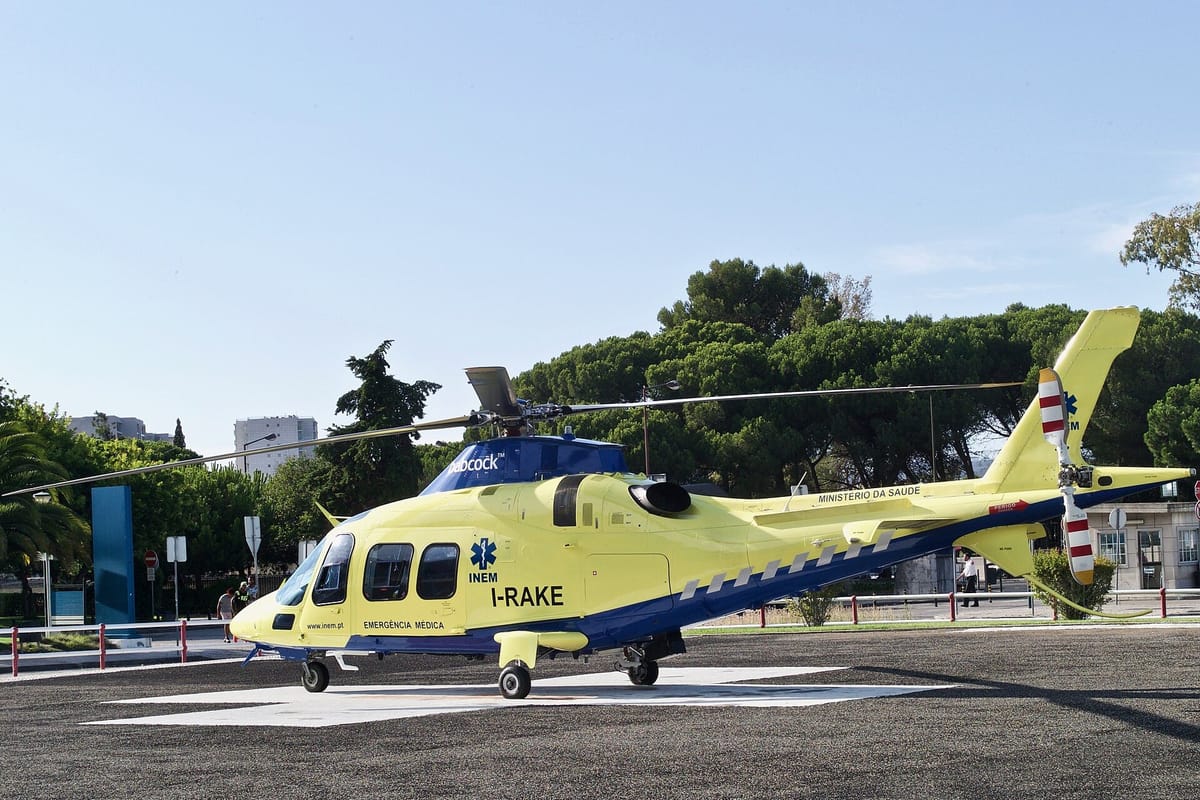
The company that flies INEM's four medical emergency helicopters says the rise in jet fuel prices threatens the sustainability of the service, and has asked the government to include it in the fuel support already given to other emergency services, such as the volunteer fire brigades.
"We are absorbing costs that nobody could have foreseen when the contract was signed," Simon J Camilleri, chief executive of Gulf Med Aviation Services, told Lusa. The company has run the service since July 2025.
The numbers behind the complaint
The Jet A1 fuel the helicopters burn now costs 1.90 euros a litre, according to the company. When it bid in the public tender in December 2024, the price was 1.04 euros; by the time operations began it had already reached 1.34 euros. Since the start of the operation, Camilleri says, aviation fuel has risen by about 80 percent.
The helicopters are also flying more. On the company's own count, they are in the air on average 35 percent more hours a month than in 2025. Figures Lusa obtained show the four aircraft flew 1,285 hours in the first eight months of 2026, against 715 hours in 2025; last year's figures run only from July, when the service began, so they cover a shorter period. The Évora helicopter flew the most, 420 hours, against 250 last year.
The same caveat applies to the other totals. The service flew 454 missions in 2025 and about 980 in 2026 by the end of August. Night work has grown fastest, from 35 night missions last year to 232 so far this year. The helicopters carried 635 patients in the first eight months, against 308 in 2025.
The company says night flying brings its own costs, because refuelling out of hours carries extraordinary surcharges, and that higher fuel prices also hit its support vehicles, crew travel and the logistics of keeping teams on duty at four bases away from home.
A contract with no price review
Gulf Med first ran the service under a direct award from INEM worth about 4 million euros, which ran from July to October 2025. Since October 2025 it has operated under a 77.5 million euro contract won in an international public tender, which requires four aircraft to be available 24 hours a day.
Unlike many other public contracts, even shorter ones, this one has no price revision mechanism, a gap the company says it flagged to INEM from the start and raised again when fuel prices began to climb. "We are facing an abnormal and unforeseeable change of circumstances, which justifies restoring the financial balance of the contract," Camilleri said.
He said the company will make no adjustment that compromises the service, but warned that a helicopter burns far more fuel per hour than any ambulance on the road, and that "there is no way to reduce this activity without putting lives at risk." The service is the only emergency resource in some situations, the company added, and the one that uses most fuel per hour of operation, yet it has been left out of every fuel support scheme so far.
What happens next
No public response from INEM or the Health Ministry had been reported by Sunday morning. The request comes as fuel costs weigh across the economy: diesel at the pump ran 30 percent above last year in August. On the ground, INEM has just finished placing an emergency ambulance with every fire brigade in the country.
For patients, nothing changes for now: the helicopters remain on call around the clock, and the decision on who absorbs the extra cost rests with INEM and the government.