AICEP Recovered 5.1 Million Euros From Qimonda's Insolvency Last Year, 17 Years After the Vila do Conde Chipmaker Failed, and More May Follow
Portugal's trade agency got 5.1 million euros in 2025 from the bankruptcy of Qimonda's Dutch holding company, money owed for subsidies given before the 2009 collapse. The German administrator says Portuguese public claims should be met almost in full.
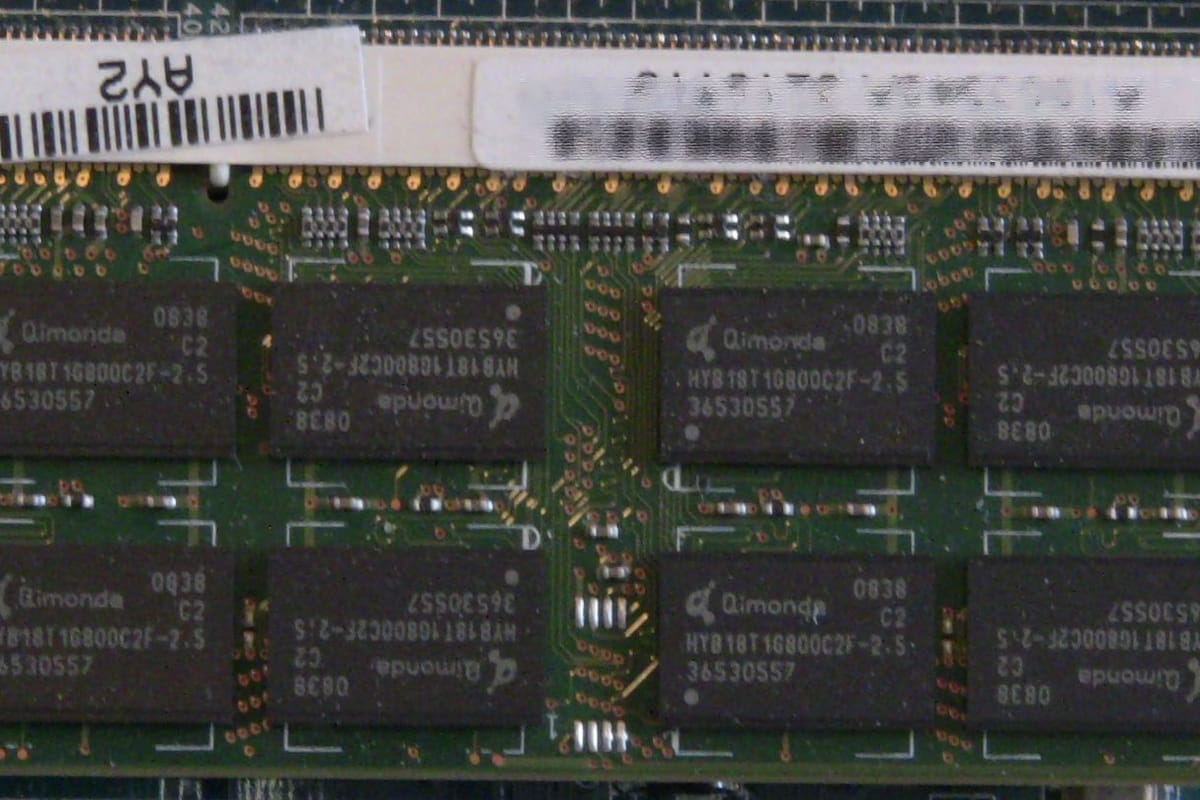
Seventeen years after the chipmaker Qimonda collapsed, the Portuguese state is still recovering money from it. AICEP, the trade and investment agency, received 5,118,008 euros in 2025 from an interim payout in the insolvency of Qimonda Holding BV, the group's Dutch holding company, according to the agency's 2025 report and accounts. Jornal de Negócios reported the receipt on 18 October. More may follow, because the German insolvency proceedings are not yet closed.
Where the money comes from
Before the collapse, Portuguese public bodies had granted subsidies to Qimonda's factory in Vila do Conde, north of Porto. Qimonda AG, spun off from Germany's Infineon in 2006 and employing 13,500 people worldwide at its peak, filed for insolvency in January 2009, according to its administrator, Michael Jaffé. Negócios recalls that the Portuguese unit was once the country's biggest exporter.
To settle the state's claims, the plant was relaunched as Nanium. The state received 2,682,446 shares, held in AICEP's name, and two banks, BCP and BES (whose stake later passed to Novo Banco), took the rest. When Nanium was sold to the American group Amkor in May 2017, AICEP's accounts say the state was paid 7,183,886 euros straight away for subsidies still owed, plus 478,684 euros for its shares. It also kept a stake in anything later recovered from the Qimonda insolvencies: the plant passes such sums to its three former shareholders, and AICEP's share is 17.88 percent.
The payout traces back to August 2024, when Jaffé settled his last big lawsuit, against Infineon, for 800 million euros. In December 2024 he paid creditors of Qimonda AG a third interim instalment. That brought the total paid out to more than 550 million euros, or 33 percent of recognised claims, and he said the subsidiaries, Qimonda Holding BV among them, would pass their share on during the following year. His December 2024 statement named public bodies in Germany and Portugal that had granted subsidies among those who would benefit. In August 2024 he had said their claims would probably be met almost in full.
What happened to the plant and the jobs
The factory never closed. Nanium employed about 550 people when it was sold in 2017, ECO reported at the time. Now Amkor Technology Portugal, it says on its own website that it has been operating since 1997 and offers wafer-level, MEMS and sensor packaging and chip testing, with a focus on Europe's car industry. A 150 million euro expansion, begun at the end of 2023 and due to finish in 2027, has 18.9 million euros of national support. In January 2025 ECO put the workforce at about 850, with a target of 1,200.
Portugal still competes hard for plants like this one: it drew 186 foreign investment projects in 2025, and AICEP has had a new chief since 1 October.
What it means for taxpayers
The money is not AICEP's: the agency books it as owed to the Portuguese state. By the end of 2025 that balance stood at 5,596,692 euros, including the 2017 share proceeds. AICEP warns that the payments are one-offs and depend on how the insolvency cases go.
Residents need do nothing. The next step is the closure of the German proceedings, which Jaffé says should bring creditors further payments in the hundreds of millions of euros; any further sum for Portugal would appear in AICEP's 2026 accounts. Set against an export performance that stood still in 2025 and another fall in industrial output, the sum is small, but it shows that subsidies to a company that later fails are not always lost.