Galp's Global Innovation Director Takes Over Portugal's Foreign Investment Agency on 1 October
Ana Paula Casaca replaces a chair who resigned, inherits a mandate that expires at the end of the year, and keeps her seat on the board that steers European deep-tech money.
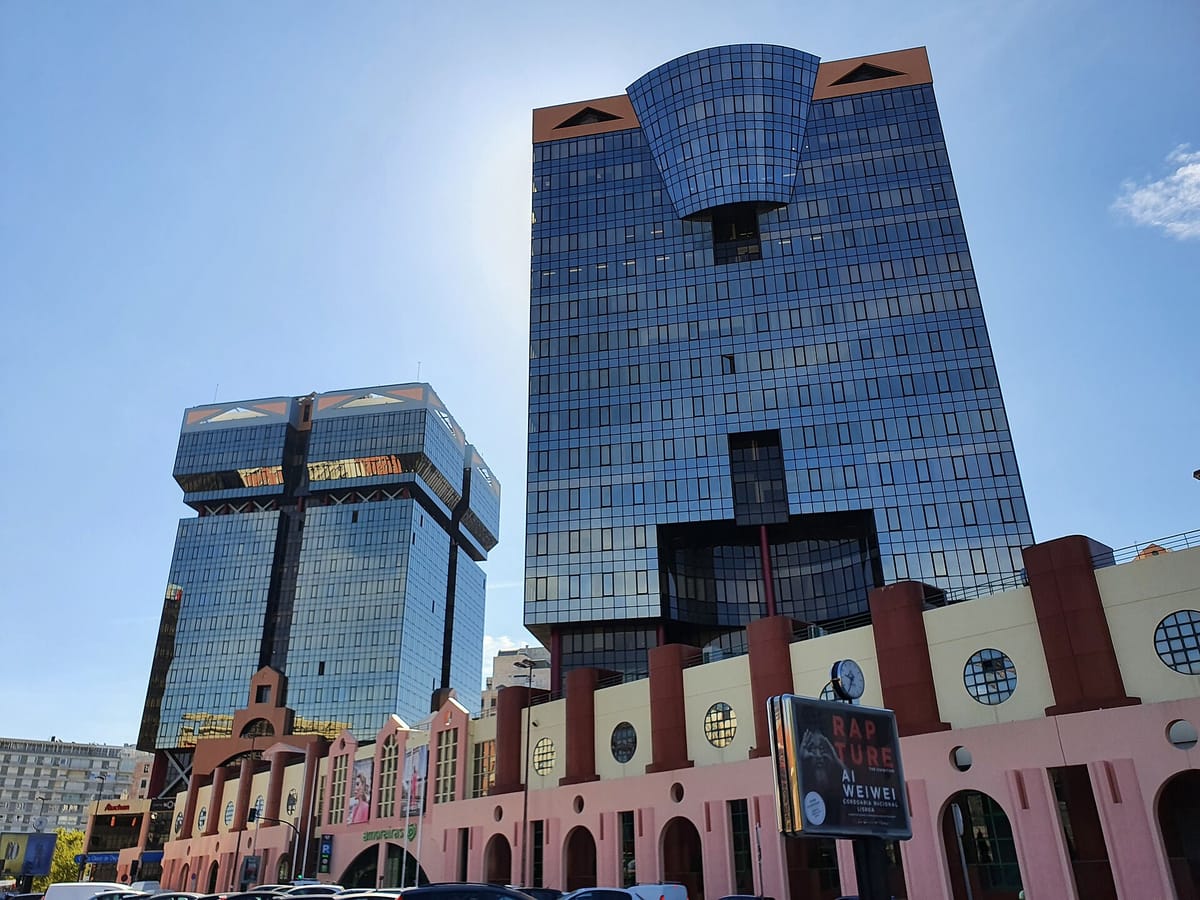
Portugal's foreign investment and trade agency has a new chair, and she comes from an oil and energy company rather than from diplomacy or the civil service. Resolução do Conselho de Ministros n.º 183/2026, approved on 9 September and published on Friday, appoints Ana Paula Casaca to the presidency of the board of AICEP with effect from 1 October.
The appointment fills a vacancy rather than opening a new term. The resolution records that it follows the resignation of Maria Madalena de Sousa Monteiro Oliveira e Silva from the chair, and that the new president serves out what remains of the three-year 2024 to 2026 mandate of the board appointed in June 2024. That board has now been altered four times in two years.
Who she is
Casaca has been Global Innovation Director at Galp since 2020. Before that she was director of digital transformation at Worten, part of the Sonae group, and for nine years to 2019 was director of innovation and sustainability at the José de Mello group.
Her first degree, from the Universidade Católica Portuguesa in 2000, is in microbiology. She added an MBA at Porto Business School, the International Directors Programme at INSEAD, an intellectual property evaluation course at Cranfield and an internship in science and technology ventures at Columbia. She teaches as an invited professor at Porto Business School, the Católica and ISEG, evaluates proposals for the European Commission's Horizonte Europa programme, and writes a monthly column in Jornal de Negócios.
She has also been close to Portuguese science policy, sitting on the working group that revised the Science and Innovation Law and on the monitoring commission for the research and innovation agency.
The two jobs she is allowed to keep
Point 3 of the resolution is unusual enough to be worth reading. It authorises the incoming president, under the public manager statute, to combine the AICEP role with two outside activities: teaching at public higher education institutions or institutions of public interest, and serving on the board of the European Innovation Council.
The EIC seat is the interesting one. It is the body through which she advises the European Commission on the council's strategy and execution and on Europe's agenda for scaling deep tech companies. Whoever runs AICEP spends a large part of the job persuading foreign companies to put capital into Portugal, and a seat at the table where European deep-tech money is steered is not an obvious conflict so much as an obvious asset. The government has evidently taken the same view.
What lands on her desk
AICEP is the state agency responsible for attracting foreign direct investment and supporting Portuguese exporters, and its pipeline has been substantial. In May it was tracking 85 foreign investment projects worth roughly 22 billion euros, alongside a long-running argument about how quickly Portugal can license them.
The appointment carries a favourable opinion from CReSAP, the public administration recruitment and selection commission, whose sign-off is required for this class of post. Pay follows the standard scales set in 2012 for state-owned enterprise managers.
The timing is tight. Her term of office expires with the board's, at the end of 2026, which leaves a new chair roughly a quarter to settle in before the government has to decide whether to reappoint the whole board.