Portugal Lifts the Biodiesel Ceiling in Road Diesel to Ten Percent on 1 October, and Drops the Guarantee of Low-Ethanol Petrol
Decreto-Lei n.º 188/2026 raises the FAME limit in diesel from 7 to 10 percent and makes keeping a 7 percent grade on sale a legal duty backed by a fine. On the petrol side, the obligation to offer a maximum-5-percent-ethanol grade is repealed.
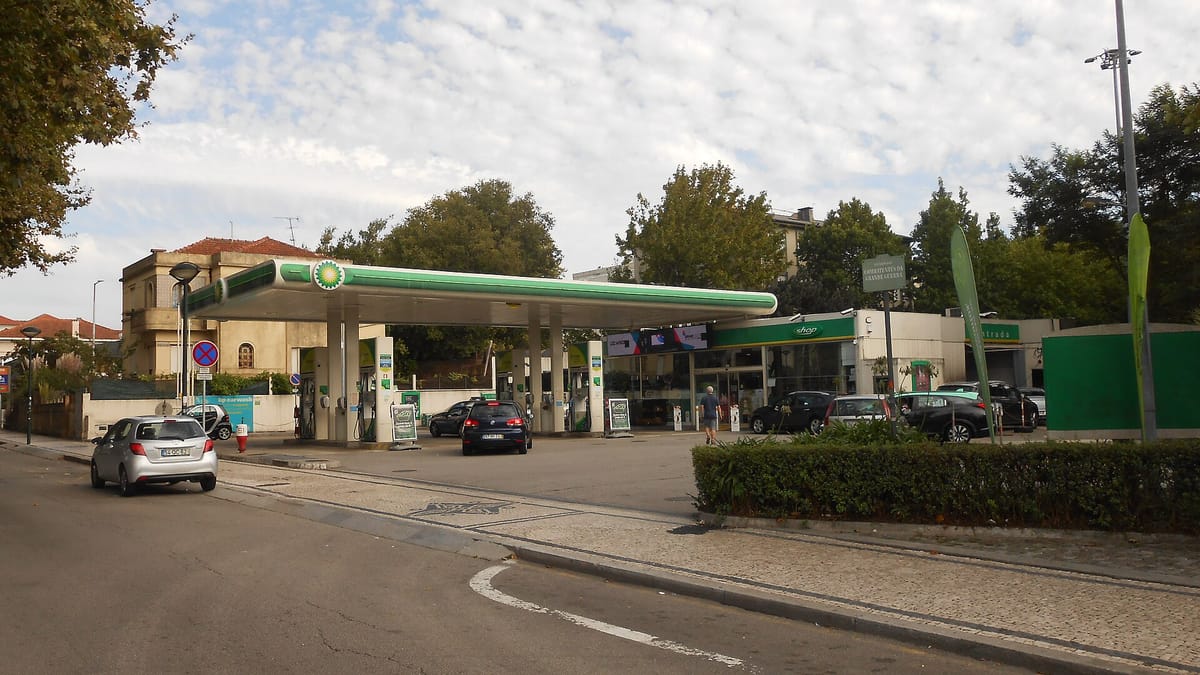
A decree-law published in Monday's Diário da República (Official Gazette) raises the legal ceiling on biodiesel in Portuguese road diesel from 7 percent to 10 percent, and at the same time makes it an obligation, backed by a fine, for suppliers to keep a 7 percent grade on sale for the cars that cannot take the stronger blend. On the petrol side it does the opposite: the standing guarantee that a low-ethanol grade will be available disappears. Decreto-Lei n.º 188/2026, published on 21 September in Série I of the gazette, takes effect on 1 October.
The act is the fourth amendment to Decreto-Lei n.º 89/2008 of 30 May, the law that sets the specifications every litre sold in Portugal must meet, and it transposes part of Directive (EU) 2023/2413, the recast renewable energy directive known as RED III. The directive lifted the maximum permitted content of fatty acid methyl ester, or FAME, in diesel from 7 percent to 10 percent, and removed the option member states previously had to allow anything above that limit at all.
Two diesel ceilings, and a duty to keep the lower one
Annex V to the 2008 decree, which is the table an inspector actually reads, now carries two FAME limits rather than one: 7.0 percent by volume, tested against the EN 590:2025 standard, and 10.0 percent, tested against EN 16734:2022. The rest of the table sets the familiar limits: a minimum cetane number of 51, a sulphur ceiling of 10 mg/kg and the seasonal cold-filter plugging points that shift between 0°C from April to mid-October and minus 10°C in the depths of winter.
The important part is what sits alongside the higher ceiling. A new paragraph 8 in article 7 requires suppliers to guarantee that road diesel with a maximum FAME content of 7 percent is placed on the market. Failing to do so becomes a distinct offence under a new subparagraph (l) in article 15. The directive's reasoning, restated in the Portuguese preamble, is blunt: a protection grade is needed because of the number of vehicles on European roads that are not compatible with a 10 percent blend, and that fleet is expected to still be circulating until at least 2030.
Drivers are also given a way to find out what they are buying. Article 7 now obliges suppliers to make information available on the biofuel content of diesel, and specifically on the FAME content of road diesel, with a notice displayed at the filling station telling customers the information exists and can be consulted. The same information has to appear on the website of whichever company released the fuel for consumption. Both failures are punishable under article 15. Pump labelling, meanwhile, has to follow the NP EN 16942 standard and its national annex, the scheme behind the B7, B10, E5 and E10 markings on nozzles and dispensers, and suppliers get 30 days to conform whenever that standard changes.
The petrol guarantee goes
The change on the petrol side is the one most likely to catch people out, because nothing about it is visible at the pump. The preamble states plainly that the decree "eliminates the obligation to make available on the market petrol with a maximum oxygen content of 2.7 percent and a maximum ethanol content of 5 percent", and the revocation article duly repeals paragraph 4 of article 5, the provision that carried it.
Annex III, the petrol table, has been consolidated in line with Annex I to Directive 98/70/EC. It sets a minimum RON of 95 and MON of 85, a maximum oxygen content of 3.7 percent by mass, and permits ethanol up to 10.0 percent by volume, along with ceilings for methanol, the propyl and butyl alcohols and ethers. The government goes out of its way in the preamble to say this does not create a single grade of petrol and does not prohibit the sale of Euro super or Super plus, both of which may continue provided they fall inside the annex limits. What it does remove is the legal assurance that somewhere on the forecourt there will be a grade with no more than 5 percent ethanol in it.
Fleets running high blends get two years
Article 10 of the 2008 decree, the regime under which operators could be authorised to market blends above the ceiling for captive fleets, is revoked outright. A transitional rule gives suppliers who are currently selling diesel blends above 10 percent under that article 24 months from the date the decree comes into force to carry on doing so, which runs to 1 October 2028, and keeps the old article 10 and parts of the old penalty article applicable to those sales in the meantime.
Two administrative changes ride along with the substance. Enforcement of the decree, the instruction of proceedings and the application of fines now sit with the specialised inspection body for the energy sector, which must report concluded cases and the penalties imposed. And references to the Direção-Geral de Energia e Geologia (Directorate-General for Energy and Geology, DGEG) are to be read as references to the Agência de Geologia e Energia, I.P. from the moment that agency takes over its powers under Decreto-Lei n.º 58/2026 of 20 February. Elsewhere the act adds two alternative quantitative methods for measuring hydrogen sulphide in liquefied petroleum gas and in auto LPG, and aligns the non-road diesel specifications with Portaria n.º 293/2023 on coloured and marked fuel.
The decree was notified to Brussels under the technical-regulations procedure, the Azores' own governing bodies were heard, and hearings were sought from Madeira's and from the Conselho Nacional do Consumo (National Consumer Council). It was approved in the Council of Ministers on 9 July, promulgated by President António José Seguro on 2 September and countersigned two days later.
What this means for you
- Nothing in any tank changes on 1 October: what moves is the legal ceiling. Whether and when a 10 percent blend actually appears at a given brand's pumps is a commercial decision, and the labelling rules are what will tell you it has happened.
- Check your car before you assume B10 is fine: compatibility is a manufacturer question, usually answered by the sticker inside the fuel flap or the handbook. Older diesels, and some imported ones, are the vehicles the protection grade exists for.
- The 7 percent diesel is not going away: keeping it on the market is now an obligation on suppliers rather than a market habit, and failing it is a punishable offence. That is a stronger guarantee than existed before Monday.
- If you run a classic car, a motorcycle or ethanol-sensitive machinery, the petrol position weakens: the guaranteed maximum-5-percent-ethanol grade loses its legal footing on 1 October. Super plus and Euro super continue on sale, but within an annex that allows up to 10 percent ethanol, so the label on the pump becomes the thing to read.
- You are entitled to ask what is in the diesel: stations must display a notice that FAME content information is available, and the supplier must publish it online. If neither exists, that is an offence, not an oversight.
- None of this touches the price: the fuel-tax rebate and the excise rates move on their own schedule, most recently with another one-cent cut in diesel tax. The longer-term cost pressure is the carbon permit obligation arriving in 2028.
Portugal has spent this year arguing about the tax on a litre of diesel. Monday's decree is about what is in the litre, and it settles two things at once: the blend is allowed to get stronger, and the weaker one becomes a legal duty rather than a courtesy. Petrol drivers get the reverse trade, and nobody is required to tell them so.