Thirty-Nine Years of Fixing NATO's Radar Planes: TAP's Maintenance Arm Wants a Share of Europe's Rearmament
TAP has maintained NATO's AWACS fleet since 1987. Its maintenance division now says national defence work and European partnerships are where it grows next, and that the privatisation could help it get there.
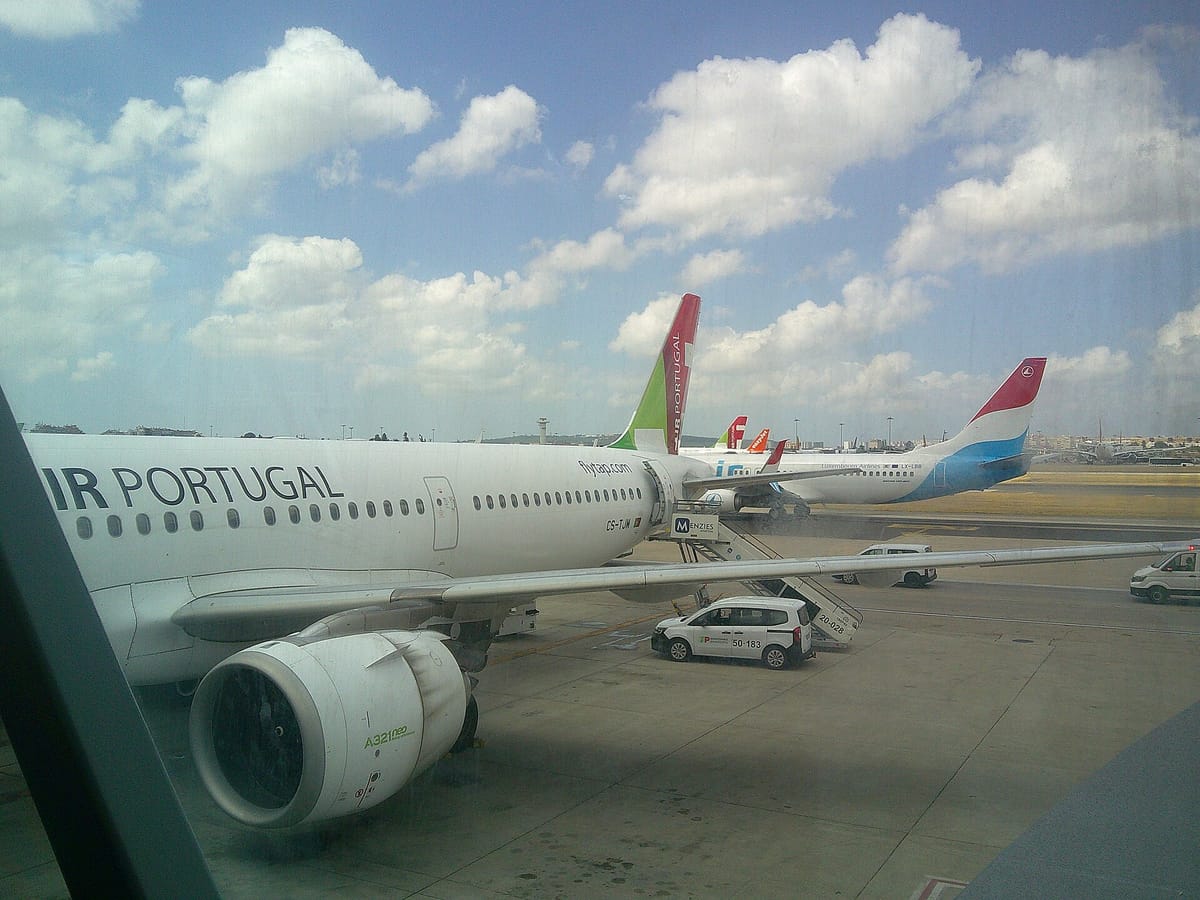
TAP has been looking after NATO's radar planes since 1987. The Portuguese airline's maintenance and engineering arm, TAP M&E, now wants that thirty-nine-year sideline to become a proper business, and it says the sale of the company could help it get there.
Asked by the economics daily ECO where the maintenance division goes next, TAP answered that Europe's rearmament has opened "notable opportunities" and that its future "will involve supporting national defence and collaborating in international programmes, through strategic partnerships for Europe". The company said it has built and kept contacts with institutional and industrial partners in the defence sector, at home and abroad, leaning on decades of accumulated technical competence and on what it calls a privileged location.
What TAP already does for defence
The NATO work is the anchor. Since 1987 TAP has held a contract with the Alliance, which began with modifications to the Boeing 707-E3 AWACS, the airborne early warning aircraft that serve as flying radar stations and command centres. NATO operates a fleet of fourteen of them, an unusual arrangement in that the aircraft belong to and are flown by the Alliance itself rather than by a member state. Portugal is one of sixteen countries inside the programme management organisation that runs them.
The work later widened from airframe modifications to general overhauls of engines, landing gear and other hydraulic components. Alongside that, TAP told ECO, its defence customers buy calibration of equipment and tooling, machining, and electrolytic treatment of parts. The company also disclosed a contract it held for more than ten years with a European defence ministry, supplying two Airbus A340s, pilot training, operational support and full maintenance, with teams stationed on site and following that air force's missions worldwide.
The capabilities it wants to sell into the new cycle are component maintenance, landing gear and auxiliary power units, for helicopters as well as fixed-wing aircraft. Engine maintenance, it says, "is also being evaluated".
The prize on the table
The obvious target is the replacement of the Portuguese Air Force's F-16 fleet, a purchase that could run to between fourteen and twenty-eight aircraft and between three and five billion euros. Three manufacturers have positioned themselves: Lockheed Martin, Saab and Eurofighter. All three are pitching Portuguese industrial participation, including maintenance performed in Portugal, as a competitive argument. Eurofighter's combat air sales campaign manager, Iván González Expósito, named TAP specifically in an interview with ECO in May.
That is the logic behind the airline's line about privatisation. A defence ministry choosing where to place decades of sustainment work tends to prefer an industrial partner with a stable, well-capitalised owner, and TAP's ownership has been unsettled for years. The government expects a decision on the sale in the coming weeks, and the prime minister has argued the process will recover the 3.2 billion euros the state put in.
Why this is happening now
Portugal cleared NATO's 2 percent of GDP spending benchmark and has been steering the extra money toward domestic suppliers, a shift that has already had Portuguese defence firms courting American money. The state is also buying support services directly from the Alliance's procurement agency, most recently 21 million euros of NATO procurement work to rebuild the Alfeite naval base.
For readers watching the airline rather than the arms budget, the significance is narrower but real. Maintenance, repair and overhaul is the part of TAP that earns money from customers who are not passengers, and defence contracts are long, indexed and comparatively insulated from the traffic cycle. Whoever buys TAP is buying that hangar in Lisbon as well as the route network, and the company has just told the market what it thinks the hangar is worth.