Portugal Buys €21 Million of NATO Procurement Services to Rebuild the Alfeite Naval Base for Its Next Warships
Resolucao do Conselho de Ministros 172/2026 authorises the Navy to spend up to €21 million buying procurement services from NATO's NSPA to repair, improve and expand the maritime and port support installations at Alfeite, ahead of the new ships Portugal has on order.
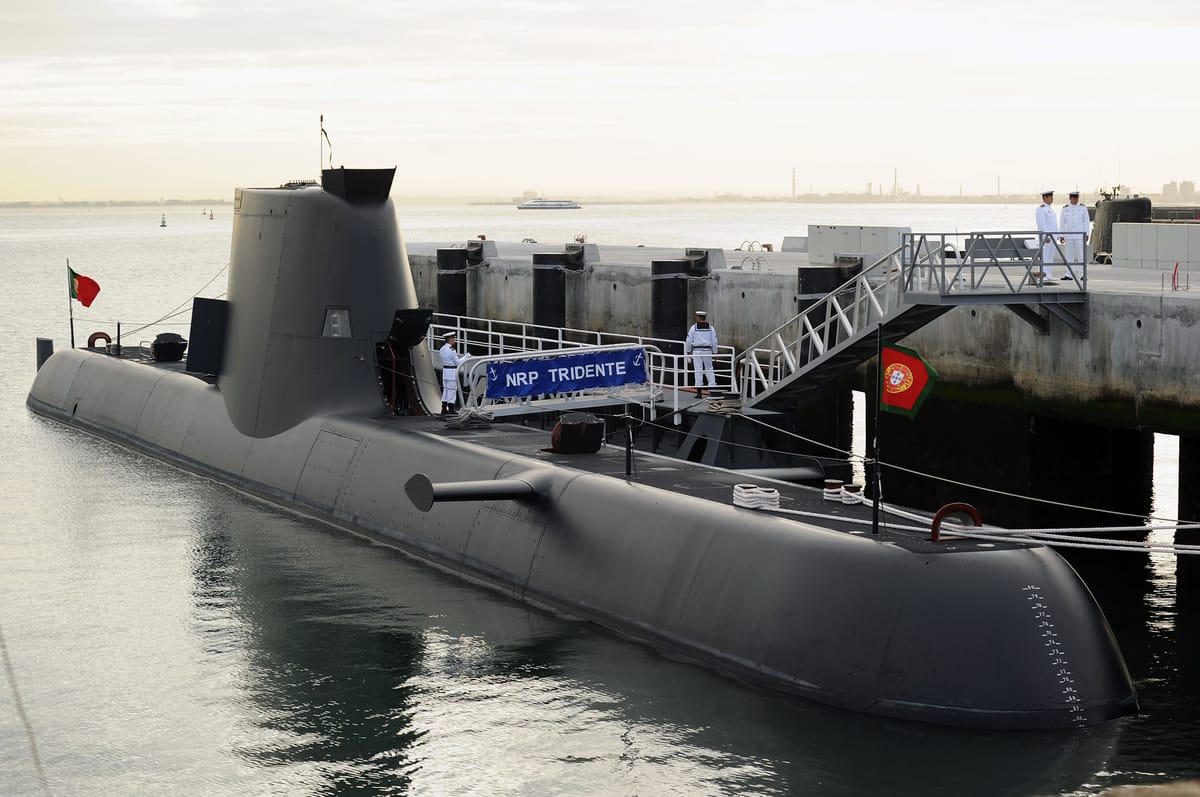
Portugal has authorised its Navy to spend up to €21 million buying procurement services from NATO, so that the quaysides and shore facilities at the Lisbon Naval Base can be rebuilt in time for the ships the country has ordered but does not yet have anywhere proper to berth.
Resolução do Conselho de Ministros n.º 172/2026, published in the Diário da República (the Official Gazette) on Friday, 21 August 2026, authorises the Marinha (Navy) to contract the NATO Support and Procurement Agency (NSPA) for "the design, construction and supervision of the works of repair, improvement and expansion of the maritime and port support installations of the Lisbon Naval Base at Alfeite". The ceiling of €21 million covers everything: the works, the fees owed to the agency for its services, and any taxes falling on the acquisition.
Where the money goes, and where it does not
The whole €21 million is booked to the 2026 financial year and comes from the Navy's existing budget. As with a growing number of defence resolutions this year, the text closes off the usual escape hatches: there is to be "no budgetary reinforcement by recourse to the provisional allocation or other allocations centralised in the Ministry of Finance, nor by recourse to chapter 60, managed by the Treasury and Finance Entity, during budget execution".
Powers to sign everything that follows are delegated, with the faculty of subdelegation, to the minister responsible for national defence. The resolution takes effect from the date of its approval, which was 6 August 2026. It is signed by Prime Minister Luís Montenegro.
Alfeite is the constraint, not the ships
The Lisbon Naval Base sits on the south bank of the Tagus at Alfeite, in the municipality of Almada, opposite the city it is named after. It is the operational home of the Portuguese fleet and the site of the Arsenal do Alfeite shipyard.
The resolution's reasoning is unusually direct about why the money is needed now. Portugal, it says, needs "to give capacity to the Navy's current infrastructure, namely the maritime and port support installations of the Lisbon Naval Base at Alfeite, for the arrival of new naval assets and to allow the process of modernising and updating its operational capabilities to continue".
That is the crux. A navy can order ships faster than it can rebuild the concrete it ties them to. Portugal has committed to a run of new hulls over the next few years, and quay length, depth alongside, shore power, moorings and handling facilities all have to be there when they arrive. Reporting on the decision when it was taken in early August put the expected arrivals at a drone-carrying vessel, new replenishment ships and three frigates acquired under the European Union's SAFE loan programme.
Why buy the procurement itself
The unusual feature of this contract is that Portugal is not tendering the works directly. It is buying the procurement function from NSPA, the NATO agency created under Article 9 of the Washington Treaty and answering to the North Atlantic Council.
The resolution sets out the case in its own words. NSPA's procurement activity, it says, meets acquisition needs "especially those linked to the defence industry, with savings of time, security, confidentiality and quality", while allowing "swift and secure access to the international market and a potential integration of requisitions from several countries", so that demand from multiple allies can be pooled into a single competitive process.
In practice this is a way of borrowing an institution. NSPA already has the frameworks, the vendor lists and the contracting staff for military infrastructure work. Portugal pays a fee and skips the years it would take to build the same capability in-house. It also means the tender does not run through the Portuguese public-contracts code, which is why the resolution leans on the Lei de Defesa Nacional (National Defence Law) and the Administrative Procedure Code rather than the usual procurement statute.
The wider defence build-out
The resolution places the spending inside the Grandes Opções (Major Options) for 2025 to 2029, approved by Lei n.º 73-B/2025 of 31 December, which contain what it calls a "plan for the strategic reinforcement of investment in defence". That plan is meant not only to modernise equipment and infrastructure but also to strengthen Portugal's international position by "anticipating the fulfilment of commitments with the North Atlantic Treaty Organization".
The missions the text invokes for the Navy are broader than warfighting: acting in national maritime spaces, meeting obligations to the European Union, NATO and the United Nations, search and rescue at sea, and cooperating with national and international authorities against narcotrafficking and irregular immigration.
It is the second defence-infrastructure decision to reach the gazette this month. On 20 August the Council of Ministers recognised a national public interest in setting up a final assembly line for the A-29N Super Tucano, naming Air Base No. 11 at Beja as the intended site. The pattern is consistent: buildings and industrial capacity, not just platforms.
What This Means for Expats
- If you live in Almada or Seixal: a multi-year works programme is coming to the Alfeite waterfront, with the design and supervision contracted before the construction phase. Expect heavy-vehicle movements and site activity from 2027 onwards rather than immediately.
- If you follow the public finances: €21 million out of the Navy's own 2026 budget, with the Finance Ministry explicitly refusing a top-up, is a small but telling data point. Defence budgets are growing, and the Treasury is holding the line on supplementary allocations within them.
- If you work in construction or engineering: the tender will be run by NSPA to NATO rules, not by a Portuguese contracting authority under the national code. Firms that want the work need to be registered with the agency, not just watching Base.gov.pt.
- If you care about the Tagus estuary: "repair, improvement and expansion" of maritime and port support installations implies work in and around the water. Any dredging or in-water construction will need its own environmental clearances, which are published separately.
- If you are tracking NATO spending targets: Portugal has consistently been at the lower end of allied defence spending as a share of GDP. Infrastructure of this kind counts toward the total, and there is likely to be more of it.
The authorisation is now in force and the delegation to the defence minister is in place, so the next visible step is the contract with NSPA itself. After that, the works schedule for a naval base that has to keep operating while it is rebuilt.