Supreme Court Trims Manuel Pinho's Corruption Sentence to Eight and a Half Years, and His Lawyers Seek His Release From House Arrest
The STJ set a single sentence of eight years and six months for the former economy minister, down from ten, citing the time since the crimes, his age and his clean record. It did not revisit the convictions. His defence is appealing to the Constitutional Court.
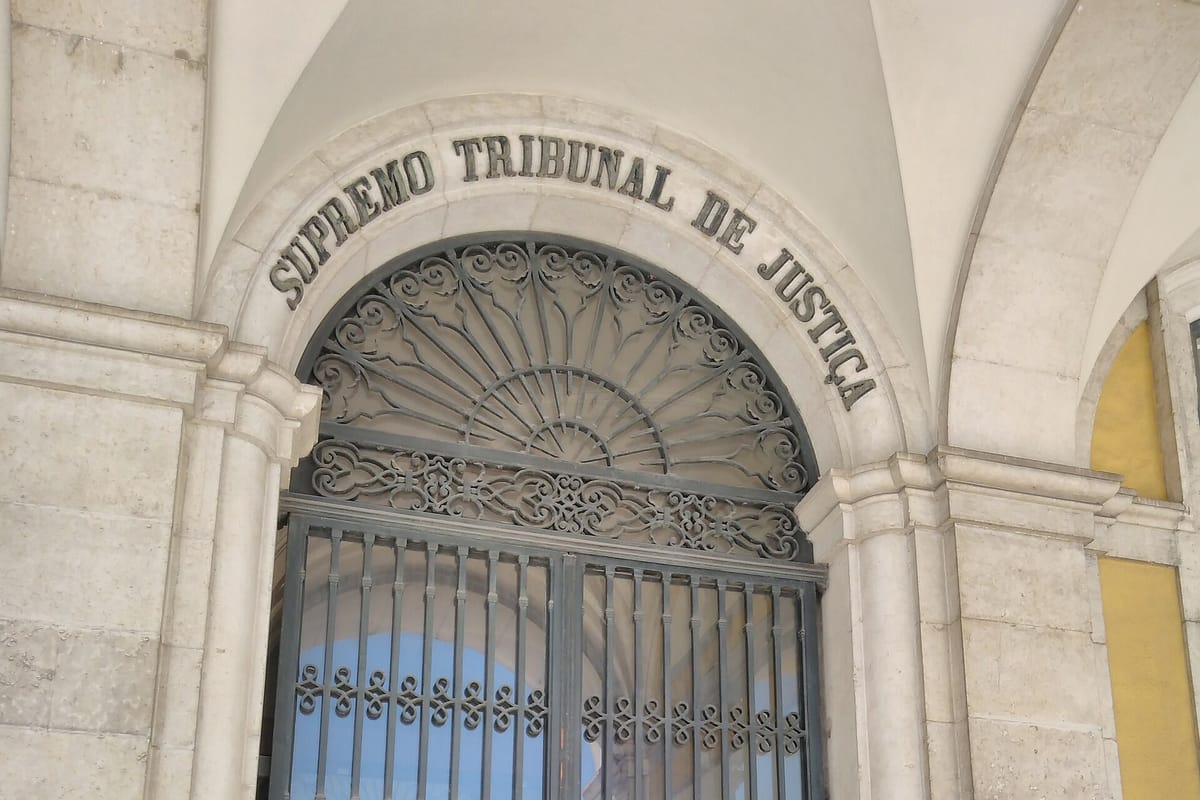
The Supremo Tribunal de Justiça (Supreme Court of Justice, STJ) on Thursday 15 October set a single combined prison sentence of eight years and six months for Manuel Pinho, economy minister from 2005 to 2009 in José Sócrates's first government. Two lower courts had given him ten years. His lawyers are appealing to the Constitutional Court and asked the same day for his release from house arrest.
What the Supreme Court decided
According to its press note 12/2026 (case 184/12.5TELSB.L1.S2), the STJ found, on existing law and case law, that it could rule only on the single sentence imposed for the combination of crimes, not on the individual convictions behind it. It did not reopen the guilty verdicts.
Those convictions, as described by Observador and ECO, are two counts of passive corruption, one of tax fraud and one of money laundering. The first-instance court found that Pinho took about 4.9 million euros from the Grupo Espírito Santo (Espírito Santo Group), including a monthly payment of about 15,000 euros while he was a minister, to favour the group and its bank, BES. The STJ note does not mention the order, upheld on appeal in 2025, that he pay the state 4,943,410 euros.
Why the sentence came down
The STJ acknowledged the "marked seriousness" of the crimes but cited the long time since the events, Pinho's lack of any criminal record or new offences, his current age (he is 71), his family and social integration, his distance from public office and the lower need to deter him personally. These justified more mitigation than the lower courts had allowed, it said, and a lower sentence can still be "a severe and unequivocal" censure.
At the 1 October hearing prosecutors argued ten years was not excessive, ECO reported; Pinho sought acquittal or, failing that, at most seven and a half years.
How the case got here
The Juízo Central Criminal de Lisboa (Lisbon Central Criminal Court) sentenced Pinho to ten years in June 2024. In the same trial, the former BES chairman Ricardo Salgado received six years and three months for active corruption and money laundering, and Pinho's wife, Alexandra Pinho, a suspended sentence for tax fraud and money laundering. The Tribunal da Relação de Lisboa (Lisbon Court of Appeal) upheld all three in April 2025.
Thursday's ruling concerned Pinho's appeal alone. Salgado could not take his case to the STJ because his sentence was below eight years, ECO reported in April 2025, and Observador reports that it is already final. Last month prosecutors shelved a third corruption file against Pinho.
What happens next
The sentence is not yet final. Pinho's lawyers, Ricardo Sá Fernandes and Sandra Águia, say the STJ was wrong to refuse to examine the individual convictions and call that position unconstitutional. They say their Constitutional Court appeal will have suspensive effect. A complaint to the European Court of Human Rights, lodged in August 2025, is pending.
Pinho has been under house arrest since December 2021, about four years and ten months. The defence cites article 215(6) of the Código de Processo Penal (Criminal Procedure Code): once a conviction is upheld on appeal, a defendant can be held before the sentence is final for at most half of it. Half of eight and a half years is four years and three months, so they argue he must be freed at once. No ruling on that request had been reported by Thursday evening.
Time under house arrest is deducted from the sentence. Observador notes that once the ruling is final, the Tribunal de Execução de Penas (sentence enforcement court) could consider parole, although Pinho would probably first have to begin serving the sentence.