Prosecutors Shelve a Third Corruption Case Against Manuel Pinho, Finding No Proof He Sent a Million Euros of Tourism Money to the Firm That Hired His Son
The Ministério Público has closed the third corruption file to grow out of the EDP case against José Sócrates's economy minister. Prosecutors could not prove he steered a state tourism contract to the consultancy that later employed him, his son and his stepdaughter.
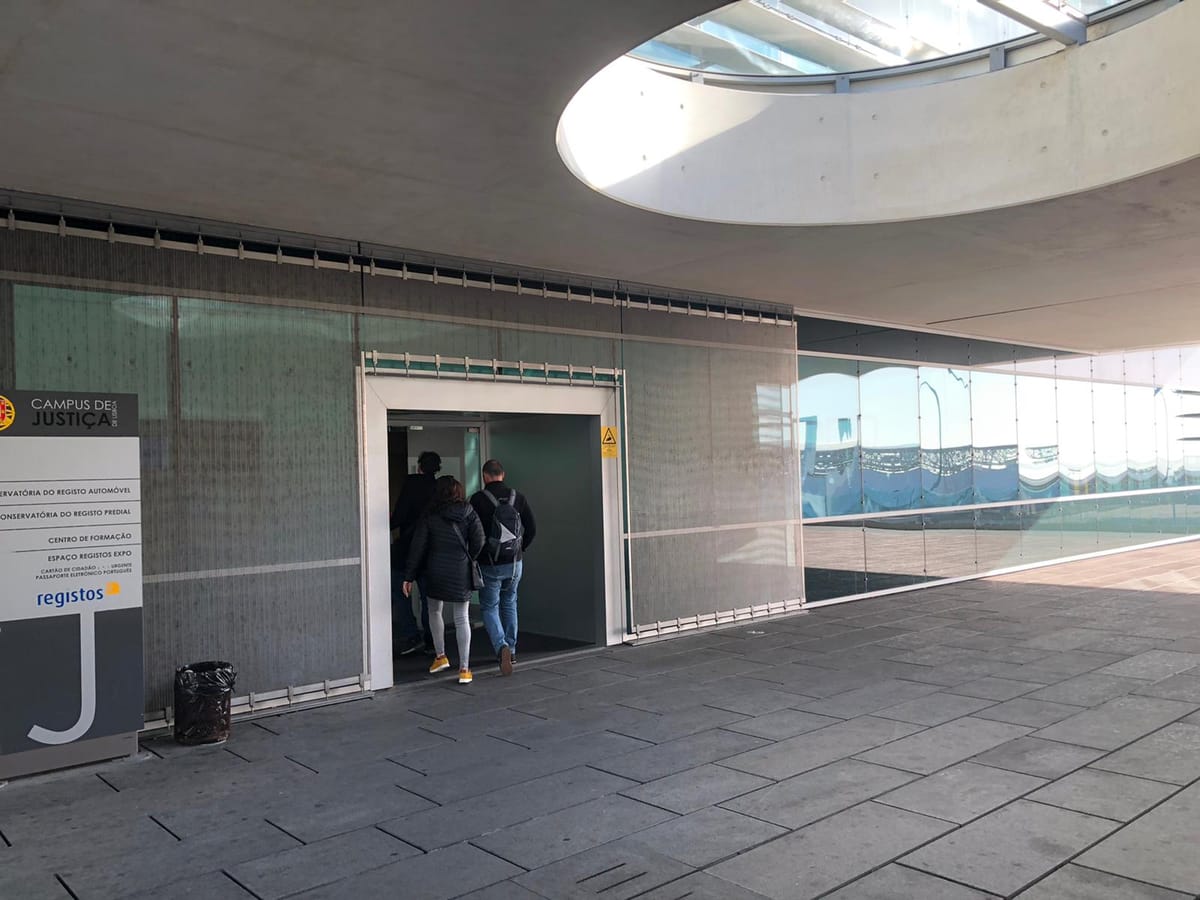
The Ministério Público (Public Prosecution Service) has closed, without charges, the third corruption investigation to grow out of the EDP case against Manuel Pinho, José Sócrates's economy minister between 2005 and 2009. The archiving order ends a line of inquiry that asked whether a German consultancy paid roughly a million euros of public money for a tourism plan had returned the favour by putting the minister, his son and his stepdaughter on its payroll.
The decision was reported on Saturday by Observador, which had revealed the existence of the file in October 2022. The prosecutors who signed it, Hugo Neto and Carlos Casimiro, are the same pair who built the two cases that did reach court.
What the prosecutors were investigating
Three crimes were on the table: two counts of passive corruption (corrupção passiva) and one of influence peddling (tráfico de influência). Manuel Pinho was the principal suspect. So was António Bernardo, then the managing partner of Roland Berger in Portugal and a senior figure in the German consultancy's European holding company.
The chain the investigators were trying to close had four links:
- Between 2006 and 2008, Turismo de Portugal (the national tourism authority), which answered to Pinho's ministry, paid Roland Berger roughly one million euros of public money, principally for the Plano Estratégico Nacional do Turismo (National Strategic Tourism Plan, or PENT).
- On 5 November 2007, Sebastião Pinho, the minister's son, joined Roland Berger's Spanish arm on a salary of 30,000 euros a year. The largest single tranche of the Turismo de Portugal payments, 558,000 euros, was made that same year.
- In July 2010, a year after leaving government, Pinho set up a consultancy called Main Priority Serviços de Consultadoria. It was engaged by Roland Berger Strategy Consultants, a Spanish company in the same group, and was paid about 231,102 euros between August 2010 and June 2013.
- Mafalda Laranjo, Pinho's stepdaughter, was hired by the consultancy between September and December 2014.
Two details in that sequence drew the prosecutors' attention. The first invoice Pinho's company issued charged 55,000 euros for what it called extraordinary services, and in the whole three-year relationship he claimed the contractually agreed 5 percent business-origination commission only once. Separately, the investigators established from the minister's own diary that he had dined with Roland Berger, the consultancy's founder and namesake, on 28 September 2007, between 20:30 and 21:30, roughly two months before his son was taken on.
Why it was archived anyway
An arquivamento is not an acquittal and it is not a finding of innocence. It is a prosecutor's conclusion that the evidence gathered would not support a charge, and it closes the file unless new evidence appears.
Two gaps decided this one. The prosecutors could not establish that it was Pinho who designated Roland Berger to Turismo de Portugal for the PENT in 2006, and they could not establish that it was António Bernardo who drove the hiring of Pinho's son and stepdaughter. Without either link, what remains is a sequence of events that looks uncomfortable but does not amount to a proven exchange.
The order does not let the former minister off lightly on the point of conduct. It records that Pinho never once sought to recuse himself, an escusa in the Portuguese term, from matters that touched Roland Berger directly or indirectly, while the company was being paid by a body under his ministry.
There is also an evidential hole that cut in an awkward direction. Roland Berger itself was unable to produce documentation showing what services Pinho's company had actually performed for the fees it received, and told the prosecutors as much. Bernardo's explanation, given to Observador in 2022, was that the 55,000 euros was not a commission at all but payment for a strategy document on the energy sector covering Spain, Latin America and Africa. An absence of paperwork is not, on its own, proof of a bribe, and the prosecutors treated it that way.
Where this leaves Manuel Pinho
The archived file was always the least advanced of three. The other two remain very much alive.
Pinho has already been sentenced to ten years of effective imprisonment for passive corruption and money laundering, a conviction confirmed by the Tribunal da Relação de Lisboa (Lisbon Court of Appeal) and now under appeal at the Supremo Tribunal de Justiça (Supreme Court of Justice), where it has sat since February. That case rested on his having received roughly 15,000 euros a month from the Grupo Espírito Santo slush fund in every month he served as economy minister, while taking decisions that favoured the Espírito Santo family. He is currently under house arrest at a farm in Braga, with the sentence not yet final. Readers following the wider Espírito Santo litigation will recognise the cast from the suspension of Ricardo Salgado's combined thirteen-year sentence on grounds of incapacity.
A second charge, brought in October 2024, names Pinho alongside António Mexia and João Manso Neto, the former leaders of EDP. That one has still not completed its instrução, the pre-trial phase in which a judge decides whether the case goes to trial at all.
The investigation that has now been closed also turned up material that has nothing to do with tourism. Emails recovered from Pinho's account show him, in June and July 2014, weeks before the Espírito Santo group collapsed and the Bank of Portugal resolved Banco Espírito Santo, still trying to position his son close to the bank. In one message he anticipates the elevation of Amílcar Morais Pires to chief executive, an appointment the governor at the time, Carlos Costa, refused outright.
What this means for readers in Portugal
- An archiving is not the end of the story, and not the end of this defendant. Portuguese criminal files are routinely split, with pieces extracted into separate investigations that move at different speeds. Pinho's three files were carved out of the same EDP inquiry and have reached three different destinations: one conviction under appeal, one charge stuck in pre-trial, one closed.
- Prosecutors can criticise conduct they cannot prosecute. The censure over the missing recusal is worth noting for anyone working with or for the Portuguese state. Conflict-of-interest rules and criminal corruption law are not the same instrument, and falling short of the first does not automatically breach the second.
- Timelines here are measured in decades. The conduct under investigation dates from 2006 to 2014. The file was reported in 2022 and closed in 2026. If you are following a Portuguese case that affects you, whether as a party or a creditor, plan around years rather than months. Our guide to the providência cautelar covers the one route that does move quickly.
- Public procurement is where these questions start. The suspicion began not with a bribe but with a contract: a public body buying consultancy from a private firm while the minister above it had ties to that firm. That is the ordinary shape of the problem, and it is why contract-award scrutiny matters more than headline arrests.
Neither Pinho nor Bernardo faces further action on this file. The Supremo Tribunal de Justiça appeal, which will decide whether the ten-year sentence becomes final and whether a former economy minister actually goes to prison, remains the case to watch.