Montenegro Predicts the TAP Privatisation Will Recover the State's €3.2 Billion, as a Decision Nears in September
Prime Minister Luís Montenegro says he is convinced the TAP sale will fully recover the roughly €3.2 billion the state sank into the airline. Air France-KLM and Lufthansa filed binding bids for up to 49.9%, and a preferred buyer could be chosen by September.
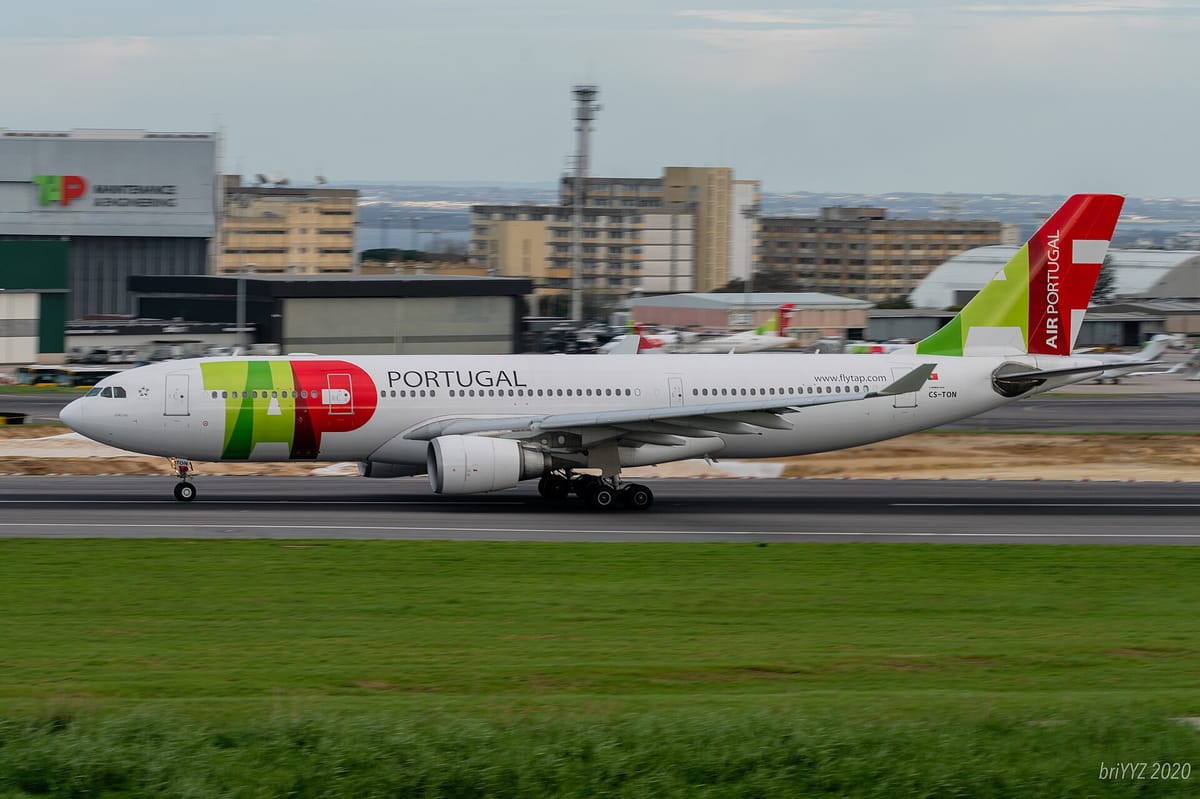
The sale of TAP Air Portugal, the long-delayed centrepiece of the government's privatisation agenda, has entered its decisive phase — and the prime minister is signalling confidence that it will not just find a buyer but recoup the vast sums the state poured into keeping the flag carrier alive. Speaking on 14 August, Luís Montenegro said he was "convinced" the process would turn out "better than anticipated," and would allow the "total recovery of the value the Portuguese invested" in the airline.
That value is substantial. Across 2020 and 2021, the Portuguese state injected roughly €3.2 billion into TAP's pandemic-era restructuring — of which about €2.6 billion took the form of public aid — a rescue that kept the airline flying but left taxpayers heavily exposed. Montenegro's claim is that the combination of the sale price and future dividends will, over time, return that money. It is worth stressing that this is the prime minister's own prediction and political framing, not an audited figure: the actual proceeds will depend on the final bids, the terms agreed and how TAP performs under new ownership.
The field has narrowed to two of Europe's biggest airline groups. On 29 July, the last day of the deadline, Air France-KLM and Lufthansa submitted binding final offers, according to reporting by SOL and RTP. The privatisation on the table is for up to 44.9% of TAP to a strategic partner, with a further 5% earmarked for the airline's employees — bringing the potential private stake to just under half, at 49.9%. IAG, the group that owns Iberia and British Airways and had been seen as a natural suitor, dropped out of the race earlier in the year, leaving the Franco-Dutch and German groups to fight it out.
The timeline now runs through the state holding company Parpública, which has around 30 days from the bid deadline to evaluate the offers and report to the government. On that schedule, a preferred bidder could be chosen by September, with a period of co-management of the airline beginning later in 2026 before any deal fully completes.
For residents, the diaspora and the tourism industry, the stakes go well beyond the public finances. TAP is Portugal's principal long-haul connection — the backbone of links to Brazil, Africa and North America, and a major carrier of the inbound visitors on whom large parts of the economy depend. Whichever group prevails will shape decisions about routes, the size of the Lisbon hub, and jobs: the central anxiety in Portugal has long been whether a foreign owner would keep building Lisbon as an intercontinental gateway or gradually reduce it to a feeder for a hub elsewhere in Europe.
Those questions will be answered in the months ahead, not this week. But after years of false starts — the on-again, off-again privatisation has outlived more than one government — the process has rarely looked as close to a conclusion as it does now. By the government's own timetable, Portugal should know within weeks which of two European giants will hold a stake in its national airline, and on what terms. On where the TAP sale has actually got to, our report on the Council of Ministers declining to pick a winner for TAP, opening a three-week negotiation round with Air France-KLM and Lufthansa and extending the deadline for the whole sale to 31 December 2026 sets the latest reference.