
The EU and China Reach an Understanding to Restrain Chinese Hybrid Car Exports, Reportedly Capped at 350,000 a Year
Brussels confirms a deal with Beijing to moderate China's hybrid and plug-in hybrid exports. The 350,000 cap from 1 December comes from a document reported by Bloomberg. In Portugal, hybrids are 41 percent of new cars this year and Chinese brands have doubled their share.
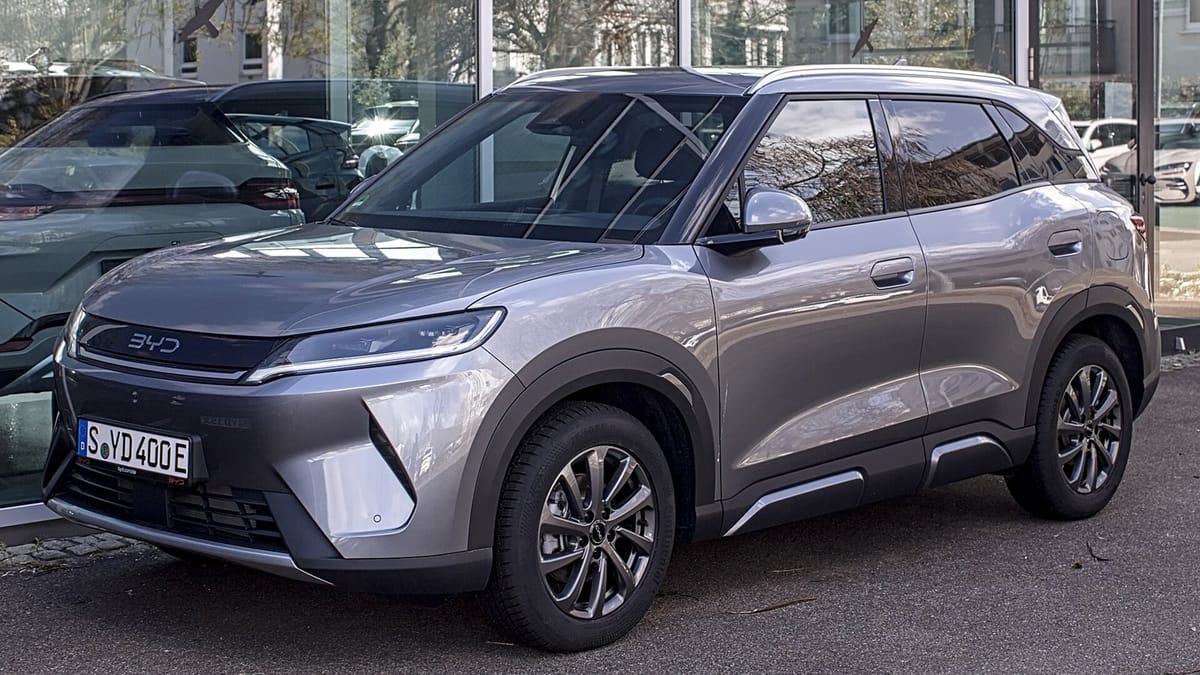
The European Union and China have reached what both sides call an understanding on trade in hybrid cars, the European Commission confirmed on Friday 9 October after two days of talks in Beijing between the EU trade commissioner, Maroš Šefčovič, and China's commerce minister, Wang Wentao. The details that matter most to buyers are not official. They come from a document reported by Bloomberg and relayed on Sunday by Jornal de Negócios.
What the two governments have confirmed
The joint statement issued after the meeting says only that "both sides have reached an understanding on trade in hybrid vehicles in a WTO compliant manner". Mr Šefčovič went further in his press remarks: the two sides agreed "to moderate China's exports of hybrids and plug-in hybrids to the EU", which he said "opens the prospect of cutting China's exports by more than a half". He added that Commission President Ursula von der Leyen will discuss the outcome with EU leaders at the coming European Council, "where the final decision lies".
China's Ministry of Commerce (MOFCOM) put it differently. Its Europe department said on 10 October that the talks on electric and hybrid car trade had avoided an escalation and protected Chinese companies' actual export interests and the stable development of hybrid trade with the EU. In September it had called voluntary export restraints a serious breach of WTO rules.
What rests on the reported document
According to the document seen by Bloomberg, as reported by Jornal de Negócios, imports of China-built hybrids would be capped at 350,000 a year from 1 December, with the ceiling rising 6 percent a year from the second year, for up to four years. The paper also reports that Renault's chief executive welcomed the deal as a major milestone. Neither the Commission nor MOFCOM has published these figures or said how a cap would be shared out.
Why hybrids escaped the 2024 duties
Since October 2024, Commission Implementing Regulation (EU) 2024/2754 has charged countervailing duties on new battery electric cars from China: 7.8 percent for Tesla's Shanghai plant, 17.0 percent for BYD, 18.8 percent for Geely, 20.7 percent for other cooperating makers and 35.3 percent for SAIC and everyone else. The regulation covers only cars propelled "solely by one or more electric motors", so plug-in and conventional hybrids were never included. Friday's statement says the two sides will also continue the procedures on price undertakings by individual companies in that electric car case.
What it could mean in Portugal
Over the year, hybrids still outsell fully electric cars in Portugal, despite September's jump in electric sales. Figures from ACAP, the Associação Automóvel de Portugal (Automobile Association of Portugal), show 77,759 hybrid passenger cars registered from January to September, 41.2 percent of the total, against 29.0 percent fully electric. Of those hybrids, 28,328 were plug-ins. Hybrids were already behind all of last year's growth in car traffic.
Chinese brands have doubled their share in a year. Brands including BYD, MG, Omoda, Jaecoo, Leapmotor and Xpeng took 18,617 of the 188,912 new passenger cars registered in the first nine months, 9.9 percent, against 4.9 percent in the same period of 2025. In September alone they registered 490 plug-in hybrids and 276 conventional hybrids, roughly one in six of the plug-in hybrids registered in Portugal that month.
ACAP counts registrations by brand, not by the country where a car was built, so these numbers do not show how many hybrids sold here came from Chinese factories, which is what the reported cap targets. No official source has said how a quota would affect prices or choice. Until EU leaders decide and the Commission publishes a legal text, the 350,000 figure and the 1 December start remain reported, not confirmed.



