Portugal's Ombudsman Urges a National Catastrophe Fund After Reviewing the Storm-Kristin Response
The Provedoria de Justiça, reviewing the response to storm Kristin and the 2025 wildfires, issued 38 recommendations to protect the most vulnerable in disasters and called for a dedicated catastrophe fund built on mandatory home insurance with public support for poorer families.

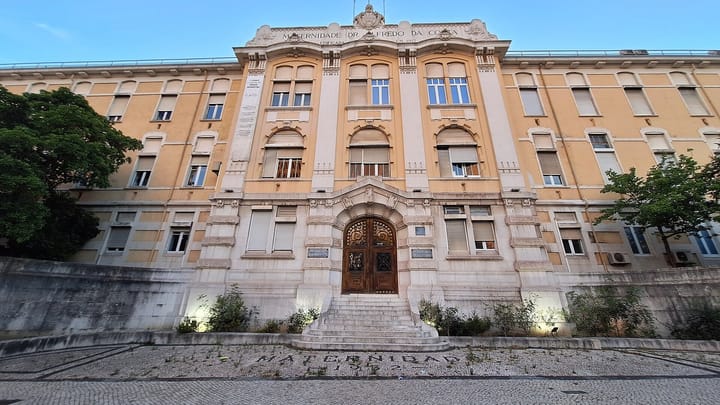
Portugal's Ombudsman has used World Humanitarian Day to deliver a pointed verdict on how the state looks after its most exposed residents when disaster strikes — and to call for a standing fund to pay for the rebuilding. In two studies published on Tuesday, the Provedoria de Justiça (Ombudsman's Office), headed by Provedora de Justiça Luísa Neto, examined the public response to storm Kristin, which battered central Portugal from the morning of 28 January, and to the 2025 wildfires, and set out 38 recommendations to better protect vulnerable people in future emergencies.
The first study weighed the aid that flowed to households after Kristin. The Ombudsman found that the machinery worked, but improvised. "The constraints observed did not, for the most part, stem from the absence of solutions, but from the need to build them during the very execution of the measures," the report concluded. Support programmes were assembled mid-crisis; eligibility rules over which damage qualified were unclear; public aid and private insurance payouts were poorly coordinated; and applications for housing reconstruction were slow to process. Underpinning it all was a thin cushion of multi-risk home insurance and widespread underinsurance among those hit.
By way of scale, the Ombudsman's tally recorded 1,936 family-assistance claims approved out of 4,840 requests, worth about €1.42 million, and 158 of 382 applications from IPSS (Instituições Particulares de Solidariedade Social, private social-solidarity institutions) approved, worth €2.98 million, alongside 953 approved simplified lay-off requests and 948 payment-agreement approvals.
Its central proposal is structural: an integrated framework for managing calamities, a single digital platform to run it through, and a dedicated fund for natural and seismic catastrophes. That fund would rest on a mandatory insurance system for homes and business premises, paired with public support to help more vulnerable families afford the cover — an attempt to stop the next disaster from again being financed from scratch, as Kristin's recovery largely was.
The second study, on evacuations, is where the 38 recommendations sit, and its focus is squarely on those least able to fend for themselves. It urges alert systems tailored to the elderly, people with disabilities and foreign citizens; the prior identification of at-risk residents through joined-up work between civil protection, health and social services; standardised evacuation procedures for care homes and childcare units; and family emergency plans for dependent people. It also lays bare how stretched the front line is: Marinha Grande, among the towns worst hit by Kristin, had a municipal civil-protection service staffed by just three people.
Enforcement, too, drew scrutiny. The GNR (Guarda Nacional Republicana, the national gendarmerie) made arrests for disobeying evacuation orders during the emergencies, but the report acknowledges that compelling people to leave is "operationally very difficult" in the heat of a crisis — a tension between individual choice and collective safety that better planning, rather than force, is meant to ease.
The through-line of both studies is a plea the Ombudsman framed simply: "a more prepared, coordinated and transparent public response." For residents in flood- and fire-prone areas — a description that fits much of the country as it heads into another dangerous fire season — the recommendations are a marker of where the safety net still frays. Whether the government adopts the catastrophe fund is now the open question; no formal response had been issued by publication. Our guide to complaining to the Ombudsman (Provedor de Justiça) in Portugal explains who can complain about a public body, how to file, and what the Ombudsman can do.