Portugal's Marine Corps Gets 75 Galician-Built Tactical Vehicles, and the €133 Million Comes From EU Defence Loans
The Defence Ministry confirms a €133 million order for 75 Urovesa VAMTACs for the Navy's fuzileiros, financed by the EU's SAFE instrument, with a Portugal to Spain memorandum signed in Porto and deliveries running from 2027 to 2029.
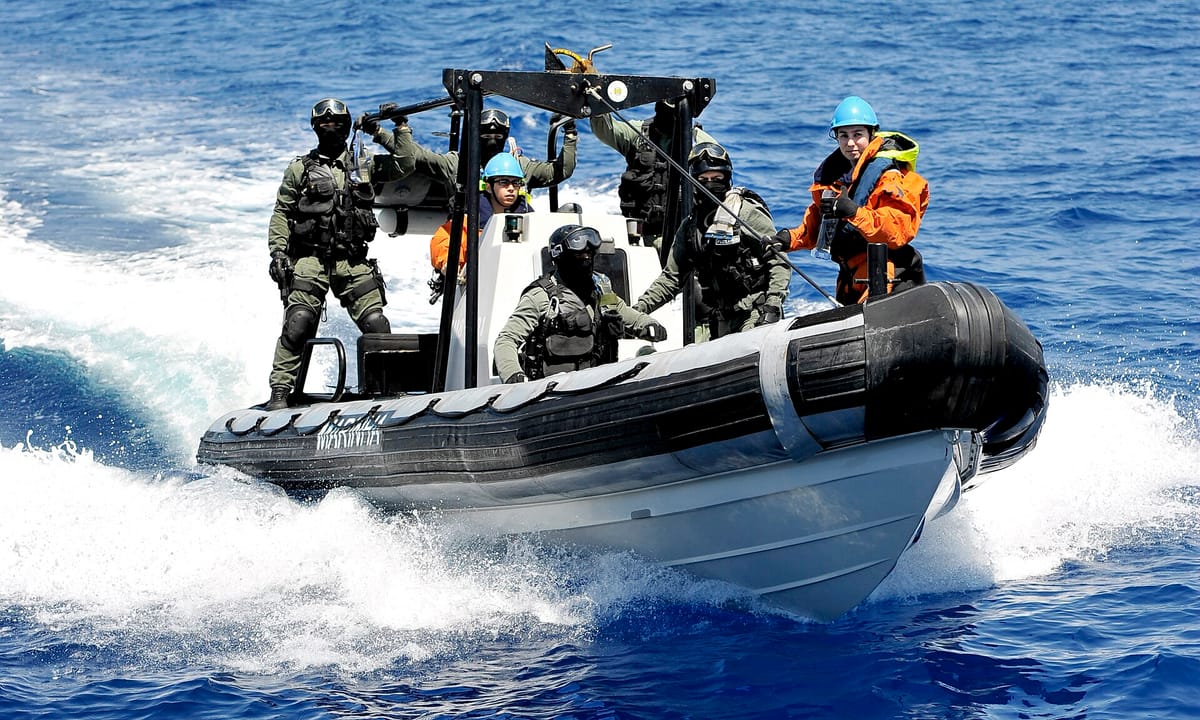
Portugal is buying 75 tactical vehicles for the Navy's marine corps from a Spanish manufacturer in a €133 million deal financed by the European Union's new defence lending instrument, the Ministério da Defesa Nacional (Ministry of National Defence) confirmed on Thursday. Deliveries run in phases between 2027 and 2029.
The vehicles are VAMTAC models built by Urovesa, a manufacturer based in Galicia. The terms of the Portuguese-Spanish cooperation behind the order are being formalised on Thursday with a memorandum of understanding signed at the Forte de São João Baptista da Foz in Porto, by Rear Admiral António Mateus, deputy director-general for armament, and María Amparo Valcarce García, Spain's Secretary of State for Defence. Defence ministers Nuno Melo of Portugal and Margarita Robles Fernández of Spain are both attending.
Why a Spanish vehicle
Asked by the Lusa news agency to explain the choice, the Defence Ministry gave two reasons beyond the technical and operational requirements. The vehicles will carry Portuguese industrial content, and the Exército (Army) already runs "more than a hundred" VAMTACs, which the ministry says allows Portugal to "optimise capabilities that already exist" rather than introducing a second fleet with its own spares chain, training pipeline and maintenance contracts.
That logic matters more than it sounds. Small armed forces lose a disproportionate share of their budgets to fragmentation: every additional vehicle type multiplies the cost of holding stock, certifying mechanics and keeping a platform serviceable at the far end of a deployment. Choosing a Galician supplier over an American or Israeli competitor also keeps the money inside the EU industrial base, which is the stated point of the loan scheme paying for it.
The money behind it
The €133 million comes out of SAFE, the Security Action for Europe instrument: EU loans offered at favourable rates that member states must spend by 2030. Portugal has signed up for €5.8 billion of that money to re-equip its armed forces, and the marine corps order is the second concrete purchase to emerge from the envelope after the €3.9 billion order for three Italian-built frigates in July.
Both purchases have drawn scrutiny, though of different kinds. The frigate contract triggered a political fight after it emerged that Portugal would pay roughly 25 percent more than Italy for near-identical ships. The oversight architecture around the whole €5.8 billion has been faulted by a transparency watchdog as little more than after-the-fact control, since the Tribunal de Contas (Court of Auditors) gets no binding prior say on individual contracts.
The VAMTAC order is small by comparison, and the reuse-what-we-have rationale is easier to defend on paper than a hull price. It is also the first SAFE-funded land purchase Portugal has announced, which makes it an early test of whether the envelope buys equipment on schedule or simply books commitments before the 2030 deadline. The Army bought a €1.3 million laser combat simulator earlier this month on the same instinct of taking proven kit off a running production line.
What this means for foreign residents
- Public spending: SAFE money is borrowed, not granted. The €133 million is a loan Portugal repays, inside the €5.8 billion the state has committed to service over three decades alongside its other obligations.
- Industrial jobs: The ministry's reference to national industrial content points to Portuguese subcontracting on the vehicles, concentrated in the metalworking and defence-electronics suppliers already serving the Army's fleet.
- Timeline to watch: Nothing arrives before 2027, and deliveries run to 2029. Announcements under SAFE will keep outpacing deliveries, so treat a signing ceremony as a commitment rather than a capability.
- Scrutiny gap: SAFE contracts escape binding prior review by the Court of Auditors. That is the structural criticism to keep in view as the envelope is spent down.
Melo has said the remaining SAFE contracts will be closed by the end of this year. On that timetable the marine corps order is not the last announcement of 2026 but one of the first in a run of them, and the question shifts from whether Portugal signs the deals to whether the equipment shows up when the paperwork says it will.