Lisbon's Oriente Station Would Gain Three Tracks, and Chelas a Metro Link, Under a 688 Million Euro Rail Plan Open for Comment Until 25 November
Infraestruturas de Portugal wants to finish four-tracking the Linha de Cintura, add three tracks at Oriente and link a new Chelas station to the Olaias Metro, preparing for high-speed trains. The environmental study is open for comment until 25 November.
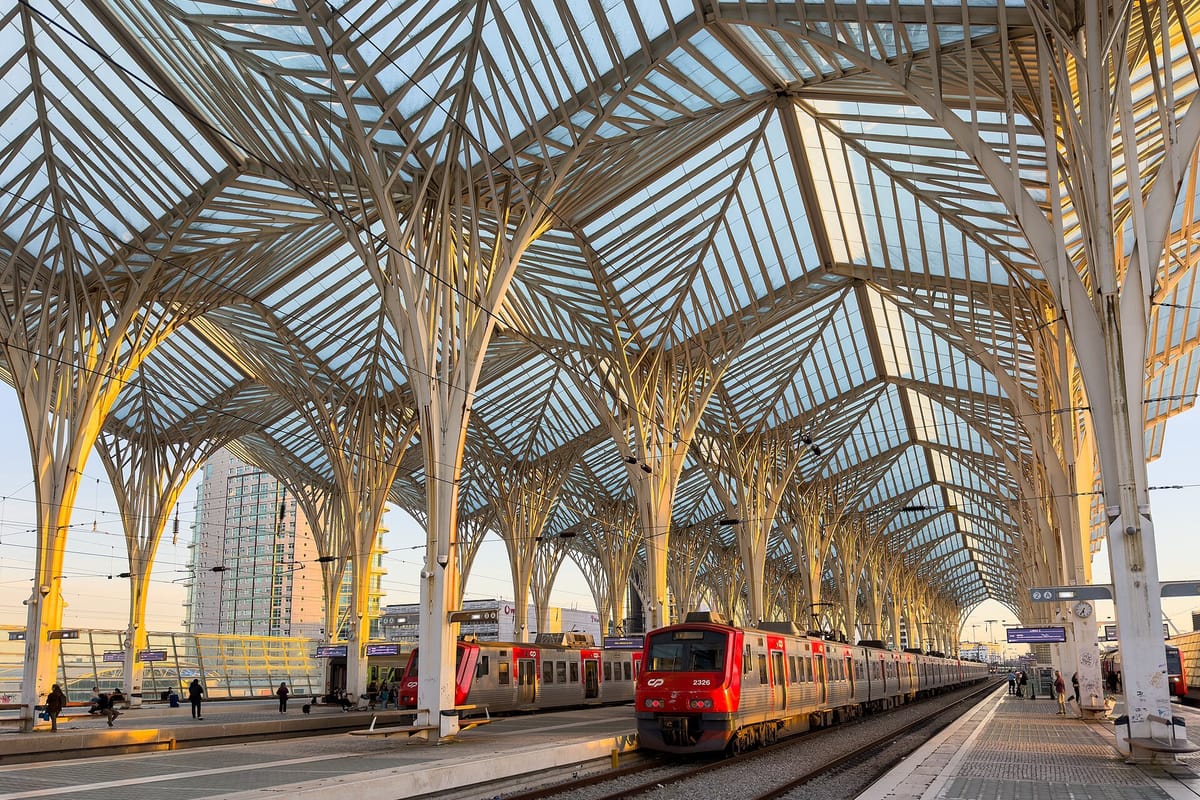
Lisbon's Gare do Oriente would gain three tracks, for 11 in all, and a rebuilt station at Chelas would connect with the Olaias Metro stop, under a rail plan for the east of the city that Infraestruturas de Portugal (IP, the state rail infrastructure company) has put out for public comment. The environmental impact study is open on the Participa portal of the Agência Portuguesa do Ambiente (APA, the Portuguese Environment Agency) from 15 October to 25 November.
What would be built
The plan's core is the Linha de Cintura, the arc of track that links almost every line entering Lisbon. Since the 1990s it has run on four tracks between Sete Rios and Roma-Areeiro, but the stretch on to Braço de Prata still has two. IP proposes to finish that quadrupling and to modernise the Linha do Norte (Northern Line) between Braço de Prata and Sacavém.
At Oriente, three new tracks would be added on the western side. The study's non-technical summary says the station would then have 11 tracks, four platforms for suburban and regional trains and two new platforms for long-distance services. Santiago Calatrava, who designed the 1998 station, drew the extension around a new arch bridge. The bus station beside it would be rebuilt with five bays, and a technical terminal nearby would clean, cater and park trains so they spend less time occupying platforms.
Chelas would get a new station with an interchange to the Olaias Metro station, Marvila and Braço de Prata would be rebuilt, and a footbridge would replace the pedestrian level crossing at Chelas.
Why, and at what cost
The study says the works would allow a significant increase in the number of trains on both lines and prepare for future high-speed services from Lisbon to Porto and Madrid. One of three new viaducts in the Chelas valley would carry two tracks reserved for the future third Tagus crossing, which Observador reports would run between Chelas and Barreiro. The first stretch of the Lisbon to Porto high-speed line is already under way in the north.
The summary puts the line works at 400 million euros, the Oriente extension and refurbishment at 245 million, the short transition viaduct at 400,000 and the technical terminal at 42.5 million: about 688 million euros in all. It gives no start date and does not say how the work would be paid for.
What changes for passengers and neighbours
Work on the two lines would take 37 months and the track works at Oriente 20 months, while the full extension and refurbishment of the station would take about 43 months. The construction plan relies on night-time closures and a series of 48-hour weekend closures to switch tracks. Around Oriente, road and pedestrian routes would be diverted, with temporary paths kept open to the bus terminal. The station already has a poor record on lifts: the Ombudsman counted five of 14 platform lifts out of service in an inquiry reported in September.
The project covers 75.6 hectares, and about 28 percent of it lies outside railway land and would have to be expropriated. Several buildings would be demolished; the study says most are not permanent homes and many are derelict. The sports grounds of the Clube Ferroviário de Portugal would be lost entirely. Twenty-nine noise barriers of 2 to 5 metres are planned, which the study says would cut the number of residents exposed to noise above the legal limit for mixed areas (65 decibels over the day) from about 4,147 today to about 1,957.
Anyone can register for free on participa.pt to read the documents and send a comment until 25 November. APA then issues its environmental decision, which is binding on the project.