Too Few Complaints Sent Portugal's Ombudsman Into the Metro, and 25 Recommendations Came Back Out
The Provedoria de Justiça opened its inquiry into transport accessibility in Lisbon and Porto precisely because so few people were complaining. At Oriente it counted five of fourteen platform lifts out of service, and in Lisbon a fifth of the bus fleet is not accessible.
Portugal's Ombudsman usually opens an inquiry because complaints pile up. This one opened because they did not. Hardly anybody with a disability was complaining about public transport in Lisbon and Porto, and the Provedoria de Justiça (Ombudsman's Office) wanted to know whether that meant the system worked or whether it meant something worse.
The answer runs to 199 pages. The thematic report, Deficiência, Inclusão e Mobilidade: Transportes públicos e soluções de estacionamento (Disability, Inclusion and Mobility: public transport and parking solutions), was published in July 2026 and covers field work carried out between 2024 and 2026. Its central finding is that people with disabilities and reduced mobility face barriers that make using public transport extremely difficult and in some cases impossible, and that many of them respond by giving up on it without ever filing a complaint.
The office says so plainly in its account of the method. The report did not arise from a high number of complaints received, but precisely from their scarcity. It mattered to know whether that figure reflected the real scale of the problem or concealed difficulties that never reached the formal complaint channels. The teams also recorded something they had not planned to measure: across every bus, tram, train and metro, every stop and every station they visited, they crossed paths with very few people with disabilities.
How it was done
The study updates a 2012 report on the Lisbon metro and widens it to every mode of collective transport in the country's two largest cities. It rests on direct observation of accessibility conditions, documentary research, and interviews with people with disabilities and reduced mobility. Field visits covered railway stations, metro stations, bus stops, vehicles and their infrastructure.
The office also met the sector: CP (Comboios de Portugal), Metropolitano de Lisboa, Metro do Porto, Carris, STCP (Sociedade de Transportes Coletivos do Porto), Infraestruturas de Portugal, the AMT (Autoridade da Mobilidade e dos Transportes, the mobility and transport regulator), the IDiPD (Instituto para os Direitos das Pessoas com Deficiência, the institute for the rights of people with disabilities, created by Decreto-Lei n.º 60/2026 out of the restructuring of the former INR), the councils of Lisbon and Porto, and civil society organisations including Associação Salvador.
What the lifts were doing
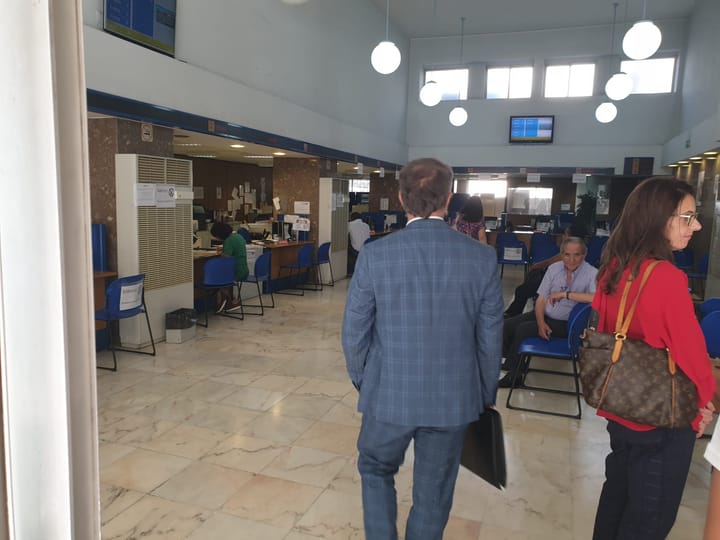
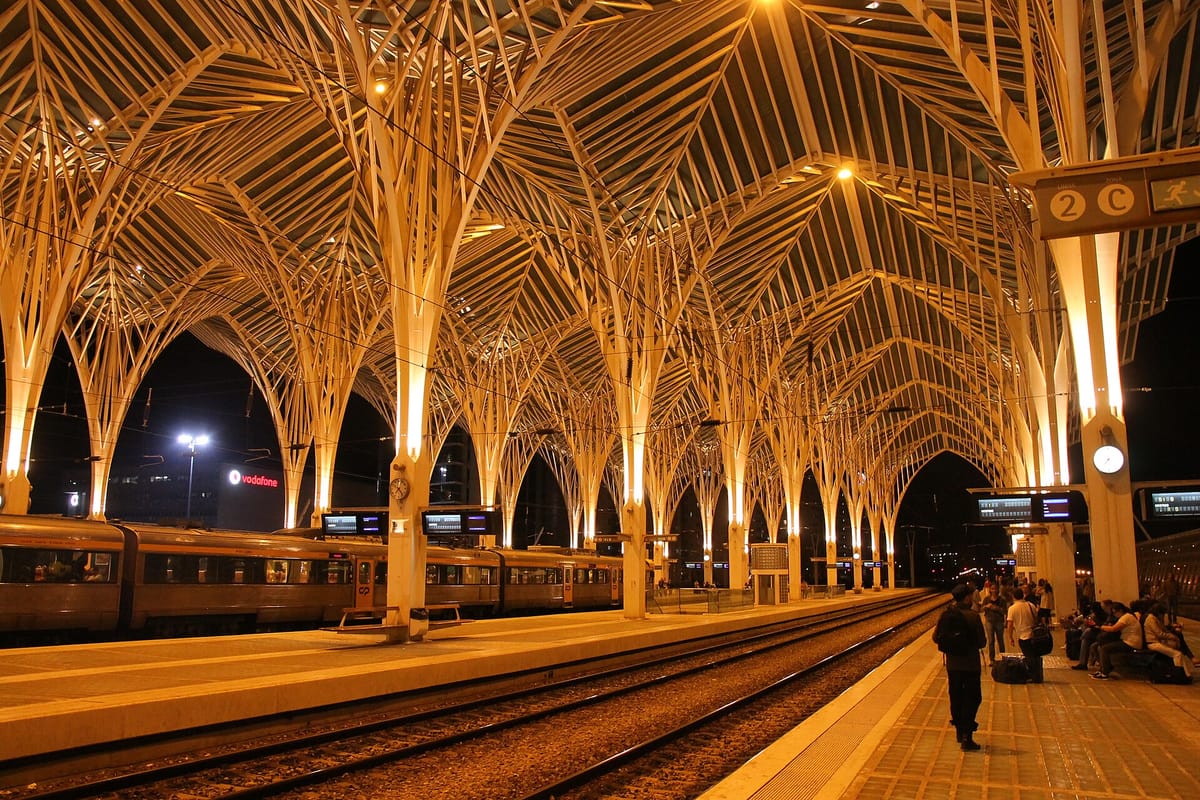
The most concrete findings concern equipment that either works or does not. At Lisbon's Oriente station, an interchange between metro and rail that is classified as accessible, the teams counted five of the fourteen lifts serving the platforms out of service on the day of their visit, and four of the twenty escalators not working.
Reliability of information was a separate failure. In the 2024 field work, in roughly a quarter of the metro stations visited, the state of the lifts did not match what could be checked online. The report is careful to record that in the 2026 visits no such mismatches were found, which is a genuine improvement. But it explains why the 2024 gap mattered so much: unreliable information can block or interrupt a journey that has already begun on the strength of it.
One episode in the report makes the point better than any statistic. A couple, one of them a wheelchair user, reached a platform level with no lift and had to be carried up the pedestrian stairs by a station agent. Their destination was Baixa-Chiado, but the Metro website showed lifts out of order there and at the nearest stations. They tried Restauradores instead, where equipment was also broken, and the wheelchair had to be abandoned again for the climb to street level, this time with the Ombudsman's own team helping.
At Rato, in Lisbon, a person with a visual impairment told the teams that the surface lift was permanently out of order, a situation the office confirmed on both its 2024 and 2026 visits. Rather than cross the Largo do Rato, that passenger used a more distant entrance to avoid the traffic, the crossings, the traffic lights and the steps.
Lift and escalator failures at the Lisbon metro, and repairs that sometimes take months or even years, are listed among the report's headline problems, explicitly in contrast with what the office observed at Metro do Porto.
The websites, scored
The report also scored the operators' own websites, using the Observatório Português da Acessibilidade Web (Portuguese Web Accessibility Observatory) as consulted on 12 May 2026. Infraestruturas de Portugal came top on 9.8. Metro de Lisboa and Metro do Porto both scored 7.3, Carris 6.1, CP 5.9 and STCP 4.1. Of the six, only Metro de Lisboa had published an accessibility declaration. None of the road and rail operators' websites had been awarded the usability and accessibility seal.
Lisbon and Porto are not the same place
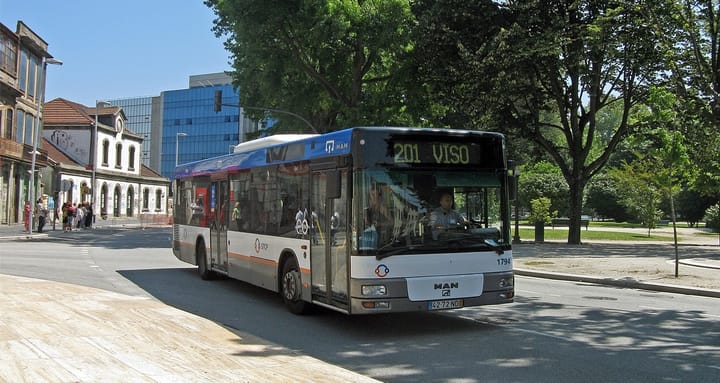
On the road, the divide is structural. In Lisbon a significant share of the fleet, around 20 percent, is not accessible, so on-board assistance is limited to the accessible routes. In Porto that limitation does not arise. Where a bus is accessible, help is given on the spot by the driver and needs no booking, but the report notes how much sits on that one person: helping with buying or validating tickets, intervening when a reserved space is occupied, safety when the vehicle pulls away, passing on information the audio and visual systems did not, and watching for passengers who need to get off.
On rail, assistance is confined in practice to boarding and alighting, platform to train to platform. The report finds that assistance to a person already in transit, inside the carriage, is not assured, despite being provided for in law. It also notes that there are no staff dedicated specifically to travel assistance; the task falls to employees with other jobs, such as ticket inspectors, who have to be told in advance of each request.
Assistance dogs, and a certificate that does not exist
One conclusion stands out for pointing at a gap nobody is filling. The national legal framework guarantees people with disabilities accompanied by assistance dogs the right of access to all public transport. But there is no national certification system for those animals, and the cost of training and maintaining them is high, which the office finds limits access to the resource in practice.
What the report says is going right
The office lists genuine improvements: the spread of digital solutions for buying and loading tickets; the fact that CP's SIM assistance service is free; the creation of Circula.PT, the fare scheme that since January 2025 has given a 50 percent discount on monthly passes to people certified at 60 percent incapacity or more, regardless of income or age; and the potential effect of the European Disability Card once it is implemented.
That last one carries a warning. The proposed European card does not show the holder's degree of disability, a point CP raised with the office, and Portuguese fare discounts are indexed precisely to that degree. Unless the transposition deals with it, benefits tied to an incapacity percentage will need another route to proof.
Twenty-five recommendations, and one about enforcement
The report closes with 25 recommendations directed at transport operators, infrastructure managers, municipalities, the AMT and the ANSR (Autoridade Nacional de Segurança Rodoviária, the road safety authority). They group into information, boarding places and infrastructure, vehicles and equipment, travel assistance and enforcement, and parking.
Among them: publish reliable, complete, up to date information on accessibility, timetables and fares in plain language and inclusive formats including audio, braille and high contrast text; give real time information on whether lifts and escalators are working; make sure that calling a station "accessible" corresponds to conditions someone can actually use; prioritise the maintenance and rapid repair of lifts and escalators; keep vehicle ramps permanently operational; guarantee wheelchair spaces in every carriage and vehicle; and coordinate between Infraestruturas de Portugal and CP so that rail assistance is effective and complete.
Recommendation 19 sets the direction of travel: reduce dependence on human assistance and promote autonomous use of the system, and while full autonomy is not possible, train and reinforce the staff assigned to assisting passengers with reduced mobility. Recommendation 21 is the one with teeth. It asks the AMT to step up its supervision of compliance with the rights of passengers with disabilities, and to use the sanctioning mechanisms available when legal obligations are not met. The report's own conclusions say why: supervision of compliance with these passengers' rights is insufficient, and information about their rights, along with the collection of data on their specific difficulties and complaints, is very limited.
On parking, the office found abusive occupation of reserved spaces and the use of forged, expired or improperly used cards, and asks for enforcement to be intensified and made uniform. It also questions the practice of reserving a space to one number plate or one card holder, which it says creates conflicts and leaves spaces underused. Our guide to the disabled parking card covers how those rules work today, and why they vary by council.
Nothing in the report binds anyone. The Provedoria de Justiça recommends; it does not order. What it has done is put a measured, sourced account on the record of a problem its own complaint numbers had been hiding.