Portugal Is Outside Every EU Migratory Pressure Category, but Brussels Places It Second for Hits on Return Alerts Relative to Its Size
The Commission's second annual migration report leaves Portugal off all three pressure lists, so it pays into the Pact's Solidarity Pool rather than drawing from it. Relative to GDP and population, it had the second-most hits on Schengen return alerts.
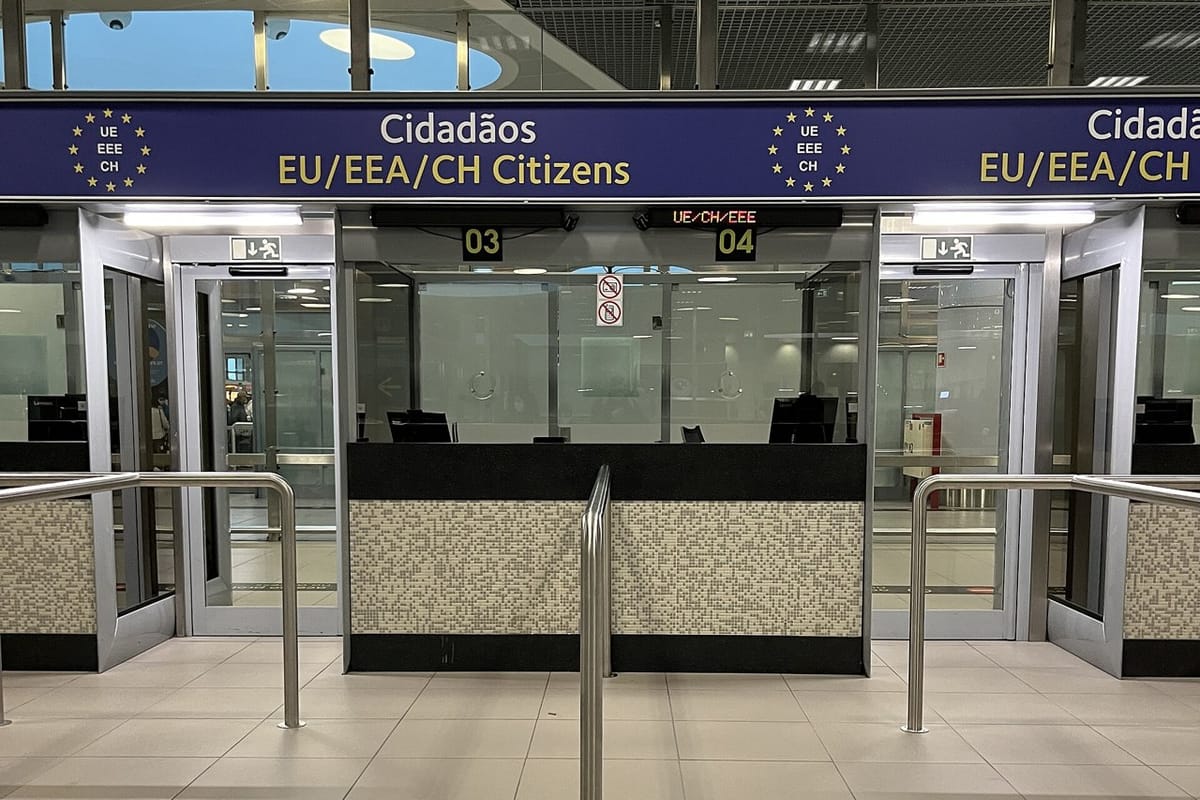
Portugal is not under migratory pressure, not at risk of it and not facing a "significant migratory situation", the European Commission decided on Friday 6 November. Its second European Annual Asylum and Migration Report still singles out one Portuguese figure: relative to its GDP and population combined, Portugal had the second-highest number of hits on return alerts in the EU "as country of destination".
The report covers 1 July 2025 to 30 June 2026, and is the first since the EU's Pact on Migration and Asylum came into application on 12 June 2026.
Where Portugal sits
The Commission's implementing decision places Greece, Spain, Italy and Cyprus under migratory pressure. Fifteen, including Germany and France, are at risk of it; six, among them Austria and Poland, face a significant migratory situation after five years of cumulative arrivals. Portugal appears on none of the three lists.
The report names Portugal, Malta, Slovakia, Sweden and Hungary as countries that "do not fall under any category" but "face specific situations that should be acknowledged". For Portugal, that is return alerts: Schengen Information System (SIS) records of people under an order to leave, where a hit is a check that matches one. The report gives no further breakdown. DN reported it as Portugal being second in the EU "in return alerts"; the Commission's wording is narrower.
The other Portugal figures in the report:
- Relative to GDP and population, Portugal issued the third-highest number of return orders, after Cyprus and Croatia. Most went to nationals of Brazil, India and Angola.
- Portugal hosted 68,310 people under temporary protection, mostly from Ukraine. They made up more than half of the people in its asylum reception system.
- Portugal increased its accommodation capacity for asylum seekers.
- Portugal is one of eight countries yet to fully set up the independent body that monitors fundamental rights in border screening and asylum border procedures.
EU-wide, member states issued 463,000 return orders (down 5 percent) and returned 142,000 people (up 11 percent). The EU-wide return rate rose from 26 to 31 percent, which the Commission still calls "too low".
What the status means
Only countries under migratory pressure can draw on the Pact's annual Solidarity Pool. All the others contribute to it. They choose how: by relocating asylum seekers, taking responsibility for applicants already on their territory, paying money or providing staff and equipment. The Commission says no country is obliged to accept relocations. The 2026 pool was set at 21,000 relocations and 420 million euros.
According to RTP, Portugal chose last year to pay 8.44 million euros rather than take 420 asylum seekers, citing a lack of reception capacity. The Commission's proposal for the 2027 pool stays confidential until the Council adopts it, expected before the end of the year; each country's pledge then becomes public and binding.
What it means for residents
Nothing in Friday's decision changes the rules for people living in Portugal. The return figures point the same way as recent changes at home, however: a residence refusal from the Agência para a Integração, Migrações e Asilo (AIMA, the immigration and asylum agency) now comes with an order to leave within 20 to 30 days. Eurostat data had already shown Portugal issuing the EU's second-highest number of orders to leave in the second quarter, with few actual returns.
By early afternoon on Friday, the Portuguese government had not published any reaction to the report.
If you receive a refusal with an order to leave, get legal advice quickly: the deadlines are short, and the Ordem dos Advogados (the Bar Association) runs free advice rotas in 17 councils.