Portugal Orders Three Italian-Built Frigates for €3.9 Billion in Its First Purchase Under the EU's New SAFE Defence Fund
Portugal has agreed to buy three FREMM EVO frigates from Italy's Fincantieri for €3.9 billion, delivered 2029-2030 and financed through the EU's new €150bn SAFE loan programme. It is the first known state-to-state contract under the scheme, and includes work for the Alfeite shipyard near Lisbon.
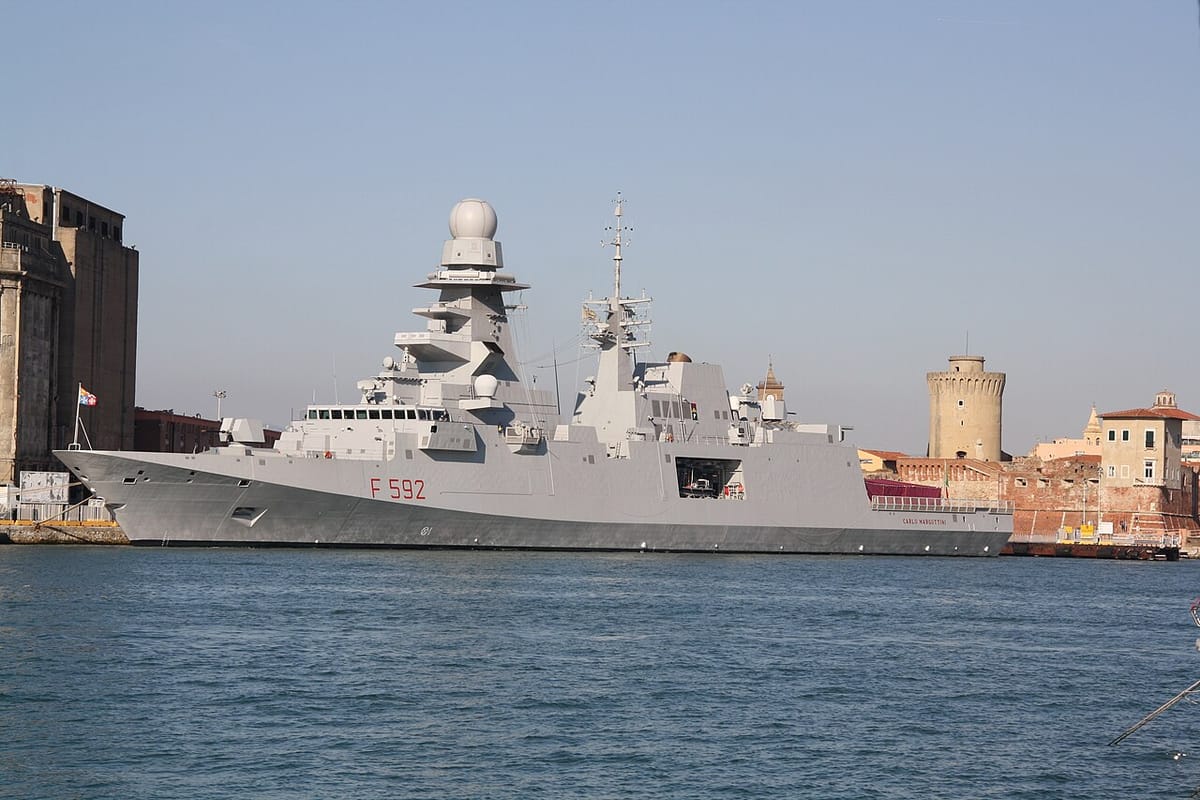
Portugal has agreed to buy three new frigates from the Italian shipbuilder Fincantieri in a deal worth €3.9 billion, the largest single defence procurement in the country's recent history. The agreement was announced in Rome on 20 July at the end of a meeting between Prime Minister Luís Montenegro and his Italian counterpart, Giorgia Meloni, and marks the first known state-to-state contract signed under the European Union's new military-financing instrument.
The vessels are FREMM EVO multi-mission frigates, an evolution of the class already in service with the Italian and French navies. They are due to be delivered to the Portuguese Navy (Marinha Portuguesa) between 2029 and 2030, replacing ageing surface ships and giving Lisbon a modern platform for anti-submarine, air-defence and patrol duties across its vast Atlantic waters.
Financed by Europe's rearmament push
The purchase is wrapped inside the EU's Security Action for Europe (SAFE) programme, a €150 billion pot of low-interest loans that Brussels created to help member states re-equip their armed forces amid heightened tension on the continent's eastern flank. Portugal has secured an allocation of roughly €5.8 billion under the scheme, and the frigate order is the first tranche it has committed to spending.
Portuguese officials stressed that the contract is not simply an off-the-shelf import. The agreement bundles in industrial cooperation, the involvement of national companies, technology transfer, and the revitalisation of the Arsenal do Alfeite (the Alfeite naval shipyard) on the south bank of the Tagus. Earlier parliamentary discussions had floated investment of €150–200 million in the yard, though the exact figure tied to this deal has not been disclosed. France's Naval Group had also been bidding for the order.
The decision lands as Portugal wrestles with wider fiscal choices: it recently trimmed its 2026 growth forecast to 2 percent even as Eurostat ranked it among the EU's few budget surpluses. Because SAFE money arrives as debt rather than grants, the frigates will eventually have to be repaid, much like the borrowing behind other big-ticket EU-backed projects such as the proposed power line to Morocco.
What This Means for Expats
- Public spending: €3.9 billion is a substantial commitment for a country of Portugal's size. It is financed through EU loans rather than immediate tax rises, but the repayments will sit on the national balance sheet for years.
- Jobs and industry: The promised work for the Alfeite shipyard and Portuguese suppliers could support skilled engineering jobs near Lisbon, a rare piece of high-tech industrial activity.
- Strategic direction: The deal signals that Portugal, long a modest defence spender, is moving to meet NATO and EU expectations on military investment — a shift that will shape budgets well into the next decade.
- Timeline: Nothing changes on the water until 2029 at the earliest, so the immediate impact is fiscal and political rather than operational.
For now the frigates exist on paper and in Fincantieri's order book. The harder questions — crewing three sophisticated warships at a time when the armed forces are already short of personnel, and absorbing the long-term debt — will play out long after the ink in Rome has dried.