Portugal's Journalists' Union Tells Newsrooms to Stay Away When the Prime Minister Speaks Without Taking Questions
The Sindicato dos Jornalistas says Luis Montenegro has made a habit of statements that end without questions, and is asking editors to stop sending reporters. The mandate it invokes was passed by a journalists' congress in 2017.
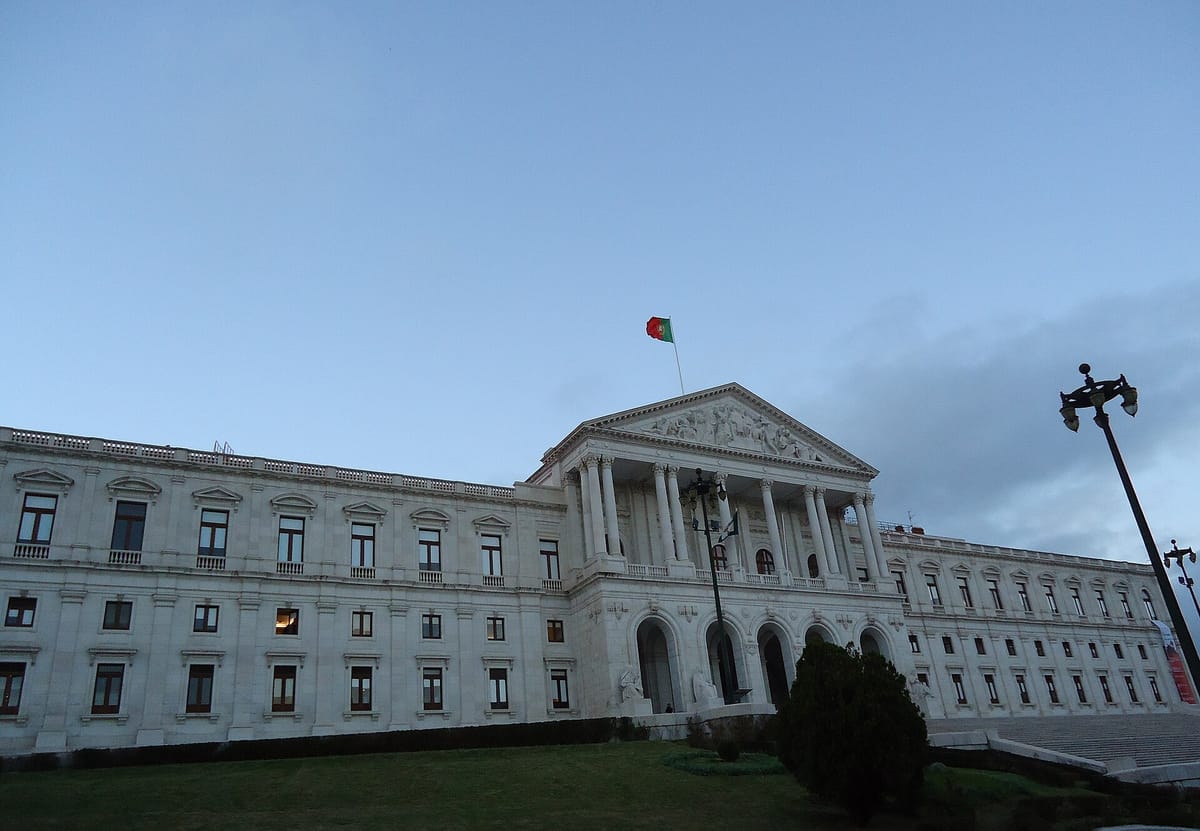
The Sindicato dos Jornalistas (Journalists' Union) published a communiqué on Friday under a blunt title: "If Montenegro does not accept questions, boycott the statements". It asks Portuguese newsrooms and heads of information to stop sending reporters to public appearances by the prime minister when no questions are allowed afterwards.
The complaint is about a format rather than a single incident. The union says Luís Montenegro has made a habit of summoning the media to hear declarações (statements) instead of holding a conferência de imprensa (press conference). The difference is narrow and consequential: the second ends with reporters putting questions, the first does not. The most recent example it cites is Thursday's appearance after the Conselho de Ministros (Council of Ministers), where the prime minister set out the measures the government had just approved and then left without being asked about any of them.
What the union is asking newsrooms to do
"If they do not allow questions to be put, journalists should not be present," the communiqué says, appealing for what it calls "a position of strength" from newsrooms and editorial managements. It frames the choice as one about complicity rather than access: "Preventing questions is preventing the practice of journalism. It is imperative to question people in positions of power, whether public or private decision-makers. Without that possibility, transmitting their statements is taking part in an exercise of propaganda; better that they send a press release."
That last clause is the practical core of the argument. The union is not asking outlets to ignore what the government announces. It is asking them to stop supplying the pictures and the live feed that the statement format depends on, and to treat an unquestioned announcement as what it is on paper: a press release, reportable as such.
A mandate from 2017
The appeal rests on a decision the profession already took. The 4th Congress of Portuguese Journalists, held in Lisbon from 12 to 15 January 2017, approved a proposal to boycott press conferences at which journalists were not permitted to ask questions. A 5th Congress has been held since. The mandate being invoked is therefore nine years old and has plainly not been applied consistently, which is why the communiqué is addressed to newsroom managers rather than to individual reporters. A boycott only works if rival outlets hold the line together; any single newsroom that stays away while others attend simply loses the story.
The text closes with a historical jab. The union recalls that Salgueiro Maia, the captain who led the column that surrounded the Quartel do Carmo on 25 April 1974, took fourteen minutes during the siege to answer reporters' questions about the coup then under way, standing with his back to the GNR soldiers refusing to surrender. Half a century on, it writes, it would be reasonable to expect the head of a PSD and CDS government to extend the same courtesy.
This lands in a year that has already produced several disputes between the Portuguese press and the institutions it covers, from a mayor accused in April of a serious press freedom violation to a ministry that barred a journalist from a briefing in July. Restricting the question period is a milder instrument than either, and a harder one to contest, because nothing obliges a prime minister to take questions at all. No government response had been reported when the union's text circulated.
What this means for you
- How to read a government announcement: when coverage of a new measure carries no journalist's question and no official pushback, it is worth checking whether anyone was allowed to ask. A statement and a press conference produce very different reporting.
- Policy detail arrives later: Thursday's measures, which include changes to income tax and a pensioner supplement, were presented without scrutiny at the podium. The thresholds and start dates that matter to a household budget tend to surface only once the legal text reaches the Diário da República (Official Gazette).
- Press freedom is a live file here: Portugal's media sector has seen repeated union action through 2026, including over the statute governing the Lusa news agency. If you rely on Portuguese outlets for practical information, disruption to them is not an abstract concern.
- Nothing changes at the counter: this is a dispute about political communication, with no effect on residency, tax or public service processes.
The next test will be the government's following post-Council of Ministers appearance. If the format is unchanged and the press benches are full anyway, the union will have learned what its 2017 resolution is worth in practice.