Portugal Will Pay About 25% More Than Italy for Near-Identical Frigates, and Its Own Coalition Wants the Minister to Explain
Expresso reports Portugal will pay around 25% more than Italy for near-identical Fincantieri frigates — over €1 billion a ship against Italy's €750 million. The government blames the inflation clause in the EU's SAFE defence loans; the governing coalition wants Nuno Melo to explain.
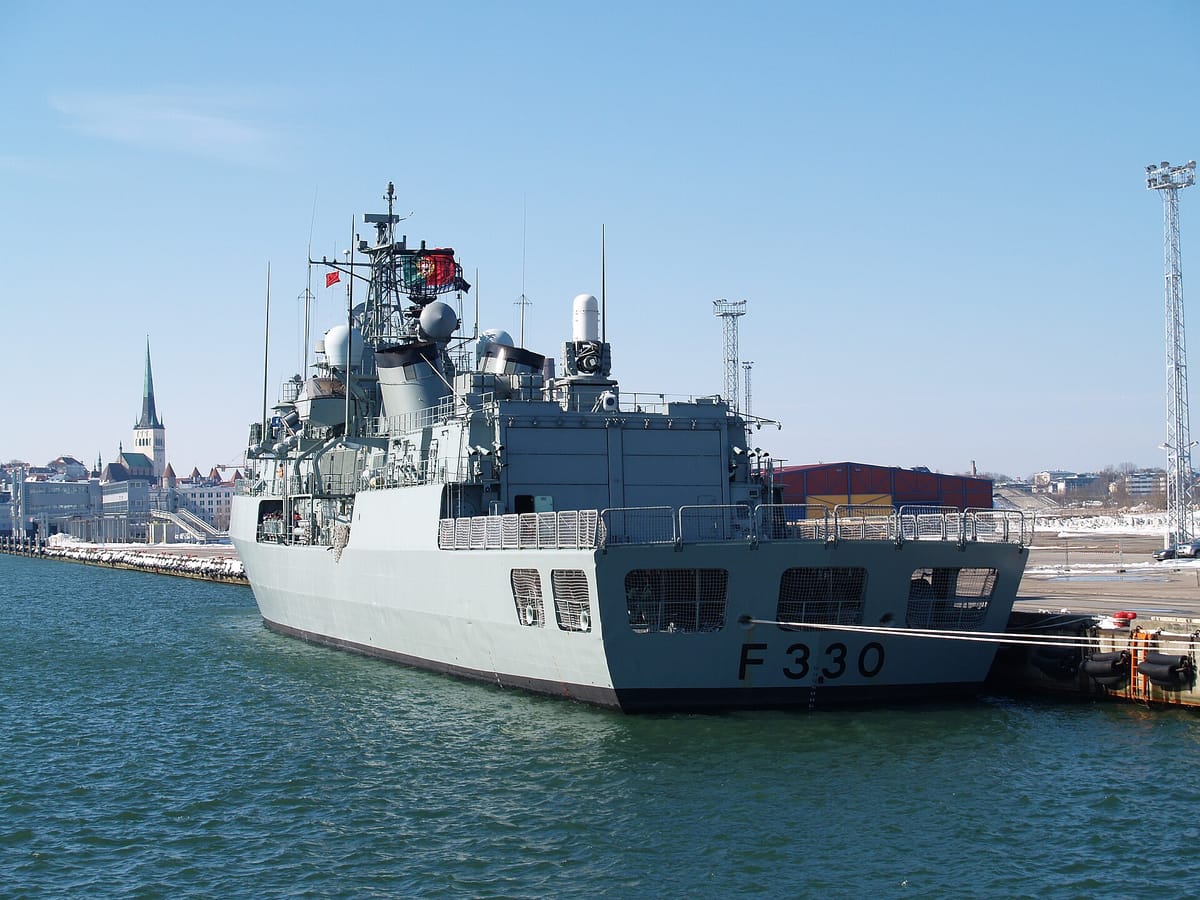
Three weeks after Portugal signed a €3.9 billion deal to buy three Italian-built warships, the price tag has become a political problem. According to a report in Expresso on 13 August, Portugal will pay around 25% more than Italy for near-identical frigates — and the two parties in the governing coalition have asked to haul the defence minister before parliament to explain why.
The same ships, a quarter more expensive
The vessels are FREMM EVO frigates (Fragata Europeia Multi-Missão, the European Multi-Mission Frigate in its latest "Evolution" configuration), built by Italy's state-controlled shipbuilder Fincantieri with combat systems from Leonardo. Portugal has ordered three, for delivery in 2029 and 2030, to renew a navy surface fleet built around the ageing Vasco da Gama-class (MEKO 200) frigates that have been in service since the 1990s.
The ships Portugal is buying are, on Expresso's account, about 95% identical to frigates Italy's own navy is acquiring from the same builder — yet they cost substantially more. The newspaper reports that Italy contracted two of the vessels in 2024 at €750 million per ship, while Portugal will pay more than €1 billion per platform. Those per-ship figures sit inside the wider €3.9 billion programme, which also covers missiles and roughly three decades of maintenance and support. On top of the hulls, Portugal faces extra spending on weapons and on works at the Base Naval de Lisboa, because the new frigates are too large for the current layout of the Arsenal do Alfeite shipyard where they are to be maintained. (The euro figures originate with Expresso, whose full report sits behind a paywall; they were relayed in detail by Observador.)
The government's answer: an inflation clause
The Ministry of National Defence, led by Nuno Melo, does not dispute that Portugal will pay more. A source in the minister's office told Expresso that the price of the Portuguese FREMMs "will potentially be higher" than what Italy paid, and pinned the gap on the way the purchase is financed.
The order is Portugal's first under the European Union's new SAFE programme (Security Action for Europe), a €150 billion facility of loans — not grants — that member states are using to rearm; Portugal's reported allocation runs to about €5.8 billion. Because the borrowing is repaid as sovereign debt, the whole cost lands on the Portuguese state.
The ministry's explanation is that SAFE's rules require the contract to be signed at a fixed price that builds in inflation up to the point of delivery. In its own words: "The national contract will be signed at a fixed price, owing to the type of SAFE financing mechanism and its rules; there is therefore a need to build in a correction for prices by inflation up to the delivery of the ships, in 2029 and 2030." In other words, Portugal is paying tomorrow's price for ships that Italy contracted at 2024 prices — which, the government argues, accounts for much of the difference.
The coalition wants Nuno Melo in parliament
The price revelation is the latest turn in a procurement that has drawn scrutiny for weeks. On 13 August, the PSD and CDS-PP — the two parties that make up the governing coalition — formally requested a parliamentary hearing (audição) of Nuno Melo at the Assembleia da República (the Assembly of the Republic), saying they wanted to "dissipate any doubts" raised in news reports and on social media about the supposed sidelining of a Portuguese company from the frigate deal. That a governing coalition should ask to question its own minister is unusual, and a measure of how sensitive the file has become.
Earlier in the month, opposition parties had accused the ministry of a lack of transparency around the contract. The Defence Ministry responded that parliament would be given all the relevant documents, and Nuno Melo stressed at the time that the purchase contract had not yet been finalised. Expresso, for its part, ran an opinion column on 13 August under the headline "Fincantieri, or the eclipse of transparency," capturing the newspaper's broader critique of how the deal has been handled.
Why it matters
The frigate order is the single largest item in Portugal's rearmament, and the first big test of whether SAFE loans deliver value for money. The government's case is that the higher headline price reflects the financing mechanism and inflation to 2029, not overpayment — and that the programme brings a "notable" economic return through work at Portuguese yards over the ships' lifetime. Its critics counter that paying a quarter more than Italy for the same vessels, on borrowed money the taxpayer must repay, demands a fuller explanation than has so far been given. The parliamentary hearing, once scheduled, is where that argument will play out. Separately, on what Portugal is spending on Ukraine this year, the resolution that raised the 2026 Ukraine ceiling to 207 million euros sets out Resolução do Conselho de Ministros n.º 182/2026, the thirteen new spending headings it added, and the clause that sends any reimbursement for donated equipment back into re-equipping the Portuguese armed forces.