Defence Ministry Promises a 'Notable' Economic Payback From Portugal's €3.9 Billion Order for Three Fincantieri Frigates
Portugal is buying three FREMM EVO frigates from Italy's Fincantieri for €3.9 billion, its first SAFE-programme contract. The Defence Ministry says Portuguese firms will build combat systems, simulators and a floating dock, with €150-200 million more for the Arsenal do Alfeite.
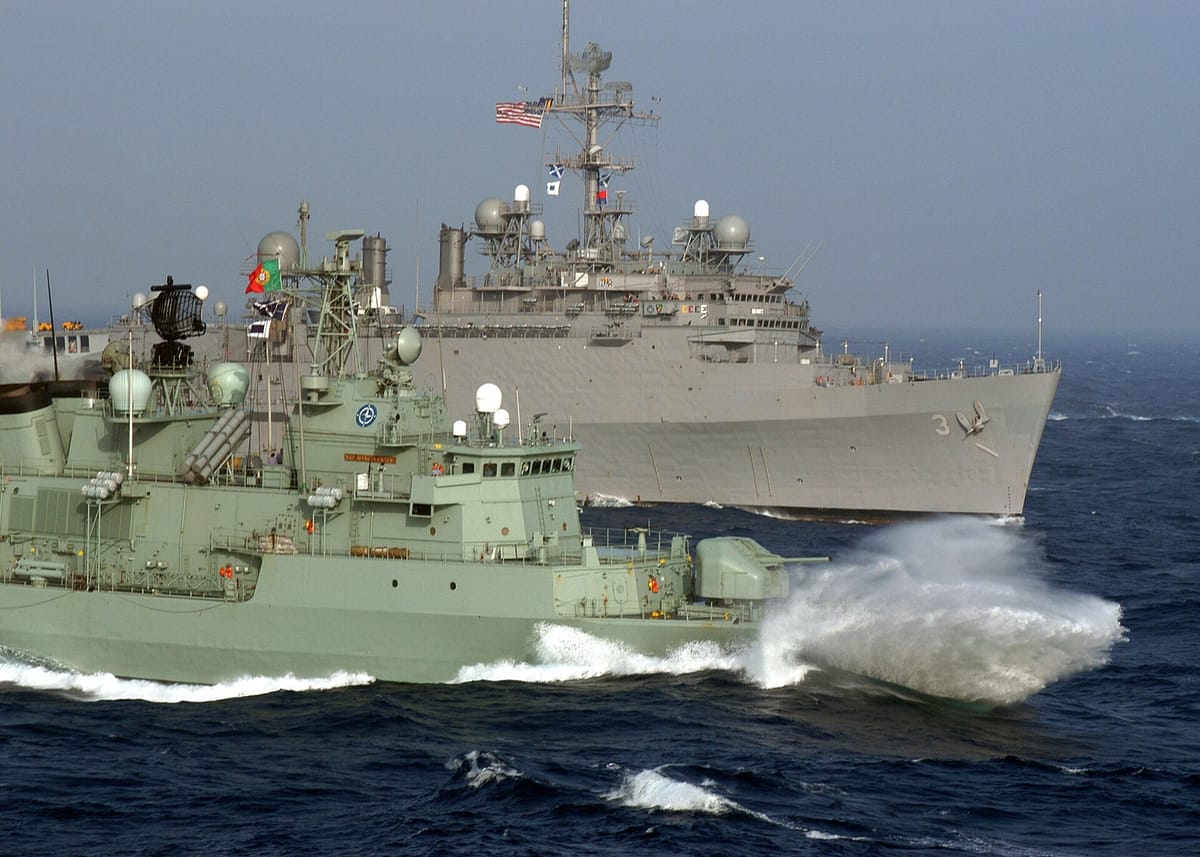
Portugal is spending €3.9 billion on three new warships, and the Ministry of Defence insists a large slice of that money will flow back into the Portuguese economy. Announcing the terms of the deal, Defence Minister Nuno Melo said the acquisition of three FREMM EVO frigates from the Italian shipbuilder Fincantieri would bring a “notable” return for the country — even as the ministry declined to put a precise figure on it.
The purchase is the biggest single item in Portugal's rearmament plans and the first contract the country has signed under SAFE, the European Union's new military-lending programme. On its own it absorbs €3.9 billion of the €5.8 billion Portugal has been allocated under the scheme.
The ships
The FREMM EVO is a multi-mission frigate: at 144 metres long and just under 20 metres in the beam, each ship is designed to run with a core crew of 145, with room for up to 179 aboard. The three vessels will replace ageing capacity in the Portuguese Navy and are meant to keep the country credible in the roles it is most often asked to perform — patrolling its vast Atlantic waters, contributing to NATO task groups and policing one of the largest maritime zones in Europe.
Where the “return” comes from
The ministry's case for domestic benefit rests on industrial participation rather than a cheque. Portuguese companies, it says, will supply and integrate the combat systems and operational software, build the simulators and integrated communications systems, and construct a floating dock to service the ships. The value of that work was not disclosed — the details would come “at an appropriate time” — which is precisely the gap critics will want filled before accepting the “notable return” framing.
A second strand runs through the Arsenal do Alfeite, the State naval yard on the south bank of the Tagus. Melo had already flagged in March an investment there of somewhere between €150 million and €200 million, covering dredging, modernised equipment, upgraded infrastructure and worker training — the kind of spending that would let a Portuguese yard take on more of a modern frigate's lifecycle work.
Part of a bigger build-up
The frigates are only the opening move. Portugal's SAFE-financed shopping list also includes armoured vehicles, satellites and drones, with the government promising that a meaningful portion of the production will happen on Portuguese soil. The strategy echoes a wider European push to convert record defence budgets into domestic industrial capacity rather than simply importing finished hardware.
What it means for residents
For taxpayers, the honest summary is that €3.9 billion is a very large commitment justified partly on security grounds and partly on an economic-return argument that has not yet been quantified. The security rationale is straightforward enough; the industrial payback is a promise whose value depends on contracts still to be detailed and an Arsenal do Alfeite upgrade still to be delivered.
The upside, if the ministry is right, is a defence programme that also seeds high-skill engineering, software and shipbuilding work in Portugal for years — jobs and know-how that outlast the ships themselves. The risk is the familiar one with big procurement: that the headline spend is certain and immediate, while the promised local return arrives slowly, if at all. Portuguese firms and the workers at Alfeite have a direct stake in which of those turns out to be true.