ISN Mans the 1 June Praia-Vigiada Surveillance Window Across the Portuguese Coast — Nadadores-Salvadores Deploy Through 30 September, the Bandeira Verde-Amarela-Vermelha Frame Operates and Praias Não Vigiadas Carry the Severity Tail
Monday 1 June 2026 opens the canonical Praia-Vigiada surveillance window — ISN nadadores-salvadores deploy through 30 September under the Lei 44/2002 / Decreto-Lei 100/2003 frame, the Bandeira Verde-Amarela-Vermelha tape operates and Praias Não Vigiadas carry the structural drowning-severity tail.
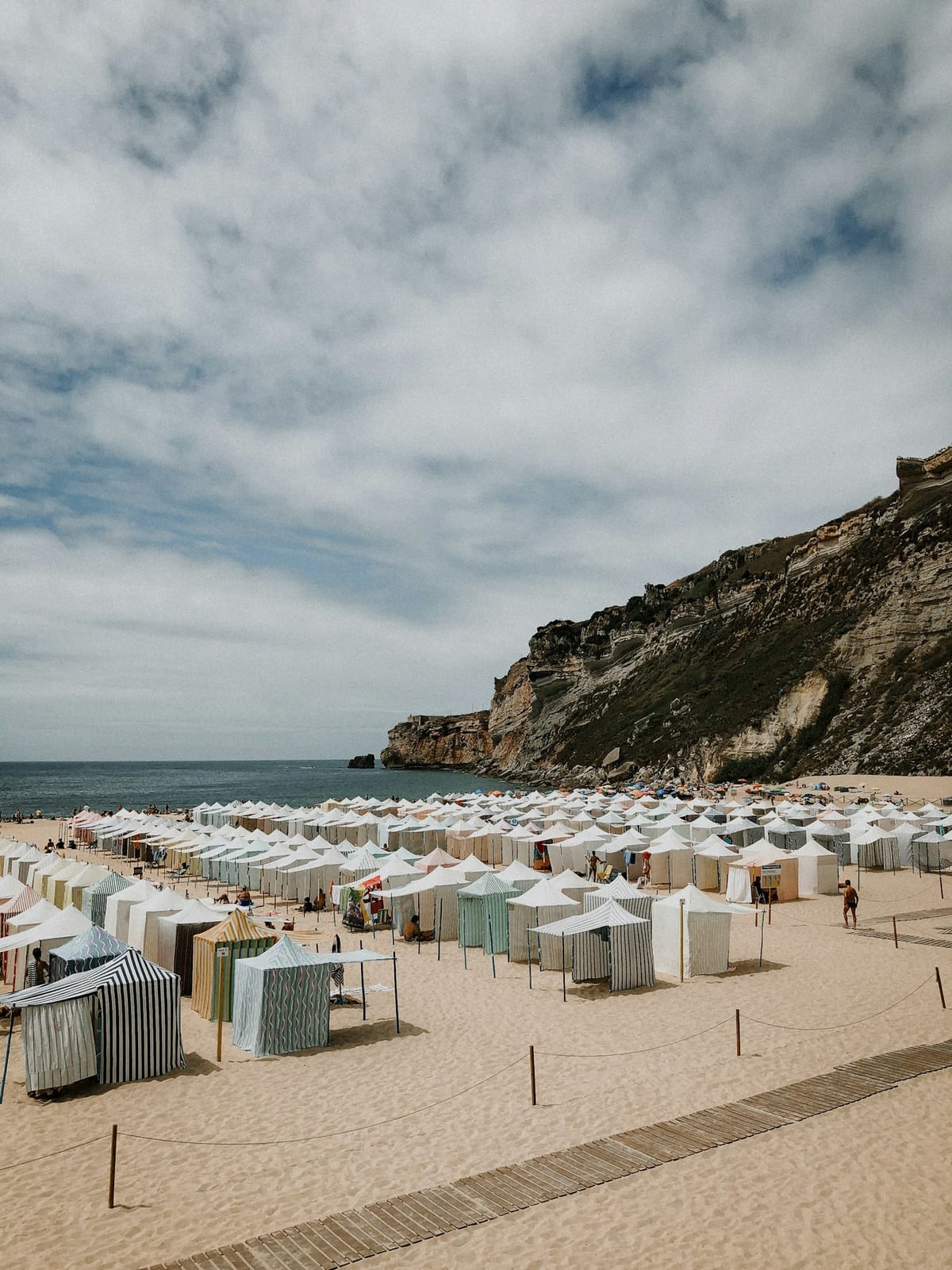
Monday 1 June 2026 opens the canonical Época Balnear 2026 across continental Portugal — the annual 92-day praia-vigiada surveillance window running uninterrupted through Monday 15 September 2026 under the Instituto de Socorros a Náufragos (ISN) and the wider Autoridade Marítima Nacional (AMN) framework. The dispositivo deploys credentialed nadadores-salvadores under the Portaria n.º 53/2014 framework across the praias formally classified as vigiadas by the joint Capitania-Câmara Municipal protocol — typically 350-plus praias along the Continental, Açorean and Madeiran coasts — and activates the bandeira verde-amarela-vermelha-quadriculada daily-reading system that governs swimmer admissibility under the AMN supervision. The Algarve, Cascais-Estoril-Sintra, Costa de Lisboa, Costa Verde Norte and the Açorean-and-Madeiran perimeters carry the structurally highest visitor and resident-bather flows during the peak July-August window.
The Statutory Frame — Lei 44/2002 and the AMN Architecture
The Portuguese praia-vigiada framework is anchored statutorily in three nested instruments. Lei n.º 44/2002 of 2 August (consolidated through subsequent amendments) establishes the Autoridade Marítima Nacional as the umbrella body for maritime sovereignty, search-and-rescue, fisheries protection and shoreline assistência aos banhistas, with the Marinha Portuguesa Chief of Staff (Chefe do Estado-Maior da Armada) serving ex officio as the AMN. Decreto-Lei n.º 44/2002 of the same date sets the operational structure — the Direção-Geral da Autoridade Marítima (DGAM) as the lead executive arm, the ISN (Instituto de Socorros a Náufragos) as the specialised bather-assistance agency, the SAM (Sistema de Autoridade Marítima) as the inter-agency coordination layer, the Polícia Marítima as the enforcement police, and the Capitanias dos Portos network as the territorial command structure (Caminha to Vila Real de Santo António on the Continental coast, plus Açores and Madeira). Decreto-Lei n.º 100/2003 of 23 May establishes the Regulamento da Assistência aos Banhistas — the operational rulebook for the praia-vigiada surveillance, the bandeira-system semantics, the nadadores-salvadores deployment ratios and the Capitania-Câmara classification protocol.
The complementary instruments are Portaria n.º 53/2014 (and updates) on the Regulamento dos Nadadores-Salvadores — the professional credentialing chain, the technical training requirements (CTNs at ISN-credentialed schools), the medical-fitness chain and the continuing-education obligations — and Decreto-Lei n.º 135/2009 on the regime jurídico de utilização do domínio público marítimo, which sets the concessão-de-praia operational frame for the privately-managed praia-vigiada operators (the apoios de praia, the concessões balneares, the equipamentos de apoio).
The Bandeira System — What Each Colour Means
The four-colour bandeira system is the load-bearing daily-readout instrument for swimmer-admissibility decisions, raised at the praia-vigiada lifeguard tower at the start of each surveillance window and updated dynamically through the day in response to changing maritime, meteorological and visibility conditions.
Bandeira verde — the green flag — signals 'praia segura', with calm-or-moderate sea conditions, good visibility, no riptide concentration and the nadadores-salvadores fully deployed. Swimming is permitted within the boia-balizada (buoy-marked) safe perimeter typically extending 200-400 metres along the praia front and 50-100 metres seaward.
Bandeira amarela — the yellow flag — signals 'praia perigosa', with caution conditions: above-moderate ondulação, riptide presence, visibility-or-water-temperature concerns. Swimming is discouraged; wading and short-perimeter activity is tolerated for adults under their own responsibility, but minors and weaker swimmers should remain dry.
Bandeira vermelha — the red flag — signals 'praia proibida': water-entry is prohibited beyond the wet-sand line. The nadadores-salvadores enforce the line on direct observation; the contraordenação framework operates for repeated infraction (€100-€500 individual fines under the AMN regulamento).
Bandeira xadrez (quadriculada preta-e-branca) — the chequered flag — signals 'praia sem vigilância' or that surveillance has been temporarily suspended (lunch rotation, weather event, equipment recall). Swimming is statutorily-tolerated but operationally discouraged; the praia loses its vigiada status for the duration.
The Nadadores-Salvadores Deployment Ratio
The Portaria 53/2014 framework sets minimum nadadores-salvadores deployment ratios by praia classification: two nadadores-salvadores per praia vigiada as the baseline minimum, scaling upward by total praia length and total expected daily bather count. Large peak-season praias on the Algarve (Praia da Rocha, Albufeira, Falésia, Quarteira, Praia da Marinha-Carvoeiro perimeter) typically deploy five-to-eight nadadores across the surveillance window; large Costa de Caparica praias deploy four-to-six; mid-tier praias along the Centro and Norte coasts deploy two-to-four. Nadadores-salvadores operate 09h30-19h00 across the surveillance window; outside those hours, the praia formally loses its vigiada status and the chequered flag operates.
The Praias Não Vigiadas Severity Tail
The structurally elevated drowning-risk perimeter sits on the praias não vigiadas — beaches not formally classified by the joint Capitania-Câmara protocol and operating without nadador-salvador surveillance. Historical AMN data carries the praias não vigiadas at roughly four-to-six times the drowning-fatality risk per bather-day compared with the vigiada perimeter — a gap driven by the combination of unsupervised water access, the typical isolation of the praias-não-vigiadas (rugged Costa Vicentina, isolated Açorean and Madeiran coves, remote Trás-os-Montes river-pool perimeters), the riptide-concentration profile of unrated swimming areas and the absence of any rapid-response medical chain. The Costa Vicentina (Sagres to São Vicente, Carrapateira, Bordeira, Amado, Odeceixe), the Costa Alentejana wild perimeters and the Açorean rocky-pool coves carry the structurally highest fatality readings, even though absolute daily flows are far lower than on the Algarve developed-perimeter.
The Bandeira Azul Programme — Separate From Praia Vigiada
The Bandeira Azul programme (Foundation for Environmental Education-FEE / ABAE Portugal) — covered separately in the Quercus Qualidade de Ouro 2026 list and the Zero Poluição 2026 roster — is an environmental-quality classification framework, not a surveillance framework. A praia can carry Bandeira Azul (environmental-quality certification) without being a praia vigiada (surveillance classification), or vice-versa. The two systems are statutorily-distinct, with different anchor agencies (ABAE for Bandeira Azul, AMN/ISN for Praia Vigiada) and different operational triggers (annual quality certification vs daily-readout surveillance).
The SAR Chain — From the Bandeira Tower to the SAR Helicopter
The bandeira-tower-to-SAR-helicopter response chain runs through the 112 emergency line, the 117 SOS Floresta (for adjacent rural emergencies) and the local Capitania do Porto command structure. Maritime SAR is coordinated through the MRCC Lisboa (Maritime Rescue Coordination Centre) at the AMN HQ — Portugal carries one of the largest SAR sea-zones in the world (5.7 million km², roughly 60 times the country's land area) under the SAR Convention 1979 framework, with bilateral coordination with the Spanish, French, Moroccan and Cape Verdean Maritime Authorities. The Portuguese SAR helicopter fleet (Marinha Lynx, Força Aérea Merlin AW101 EH-101 Merlin and bilateral assets) sits at the response apex.
The Algarve and the Summer Peak
The Algarve receives the structurally largest summer flow — roughly 35-40% of total bather-days across the Continental coast during peak July-August on AMN/INE-internal frame — concentrated on the central Algarve corridor (Albufeira, Quarteira, Vilamoura, Faro, Olhão, Tavira) and the western Algarve (Lagos, Portimão, Carvoeiro, Praia da Rocha). Combined with the structurally elevated EES border-flow on the Faro airport perimeter (the Algarve hoteliers' petition for an EES pause on the summer peak rests on the same flow profile) and the typically-elevated short-let occupancy across the Vilamoura, Quinta do Lago and Carvoeiro perimeters, the Algarve nadadores-salvadores deployment runs the heaviest of any sub-region — 60-plus praias classified vigiada with the highest deployed ratios.
Expat-Relevant Practical Implications
Seven practical implications matter most for foreign residents and visitors during the 1 June to 15 September Época Balnear.
(a) Swim only on praias vigiadas during the 09h30-19h00 surveillance window — the official praia-vigiada list is published by each Capitania do Porto and aggregated at amn.pt; the daily bandeira reading is the operative input on the swim-or-not call.
(b) Respect the bandeira vermelha unconditionally — most peak-season fatalities concentrate on red-flag-day infractions or on praias-não-vigiadas swimming. The fine framework runs €100-€500 for individual infraction, but the structural risk is the operative concern, not the contraordenação.
(c) Riptide awareness is the load-bearing safety dimension on the western Costa, the Costa Vicentina and the Açorean perimeters — the typical Atlantic-Iberian riptide profile carries pulses of 1.5-2.5 m/s laterally; the survival drill is to swim parallel to the shore until clear, then return diagonally, not to fight the current directly.
(d) Children require continuous adult supervision — Portuguese drowning-fatality data flags the under-12 cohort and the 50-65 cohort as the two structural peaks; the former on lapsed supervision, the latter on undiagnosed cardiovascular events in cold-water entry. Both cohorts benefit from the praia-vigiada-only rule.
(e) The 112 emergency line is the load-bearing reporting channel — Portuguese 112 dispatch routes maritime emergencies to MRCC Lisboa and the local Capitania; speaking English is acceptable and dispatcher proficiency is generally high on the Algarve and Lisbon perimeters.
(f) Costa Vicentina, Costa Alentejana and the remote Açorean-Madeiran coves carry the elevated risk profile — these are scenically the most spectacular Portuguese coastlines but operationally the most exposed; only swim where a praia-vigiada designation is in force.
(g) Sun and heat safety run alongside the bather-safety frame — the DGS Plano de Contingência Calor, currently at Nível 1 since 27 May 2026, is the parallel framework on heat-stress incidents and the SNS-24 response chain. The Algarve, Alentejo interior and Vale do Tejo carry the structurally hottest July-August perimeters.
Sources
Tier 1 institutional sources: Lei n.º 44/2002 of 2 August (dre.pt) — Tier 1 — for the AMN umbrella statutory frame. Decreto-Lei n.º 44/2002 (dre.pt) — Tier 1 — for the DGAM, ISN, SAM, Polícia Marítima and Capitanias operational frame. Decreto-Lei n.º 100/2003 of 23 May (dre.pt) — Tier 1 — for the Regulamento da Assistência aos Banhistas — the bandeira-system semantics, the surveillance-window framework and the Capitania-Câmara classification protocol. Portaria n.º 53/2014 (dre.pt) — Tier 1 — for the Regulamento dos Nadadores-Salvadores. Decreto-Lei n.º 135/2009 (dre.pt) — Tier 1 — for the regime jurídico de utilização do domínio público marítimo. Convenção SAR 1979 (imo.org) — Tier 1 — for the maritime SAR international framework. Autoridade Marítima Nacional (amn.pt) — Tier 1 institutional — for the Capitanias network, the praias vigiadas list, the daily bandeira reading and the MRCC Lisboa coordination. ISN (amn.pt/isn) — Tier 1 — for the bather-assistance operational frame. Direção-Geral da Autoridade Marítima (amn.pt/dgam) — Tier 1 — for the territorial-command frame. FEPONS — Federação Portuguesa de Nadadores-Salvadores (fepons.pt) — Tier 1 institutional — for the professional credentialing chain. ABAE Portugal (abae.pt) and FEE / Bandeira Azul (blueflag.global) — Tier 1 — for the parallel environmental-quality programme. APA (apambiente.pt) and Mar2030 (mar2030.pt) — Tier 1 — for the wider maritime-and-environmental frame. INEM (inem.pt) and SNS-24 (sns24.gov.pt) — Tier 1 — for the emergency-medical response chain.
Tier 2 Portuguese-language media: ECO (eco.sapo.pt), Observador (observador.pt), Público (publico.pt), Lusa (lusa.pt), Sul Informação (sulinformacao.pt) — for the Portuguese-language seasonal coverage and the Algarve / Costa Vicentina regional reporting.
Cross-referenced internally to the Quercus Qualidade de Ouro 2026 piece, the Zero Poluição 2026 roster, the Going to the Beach practical guide, the Surfing in Portugal guide, the IPMA 35°C Alentejo forecast piece, the DGS Plano de Contingência Calor Nível 1 piece, the Algarve hoteliers EES petition piece, the Lisbon airport saturação piece and the wider tourism-and-safety series. Portugal Post not consulted (blacklisted). On the beach-safety, coastal-water and summer-health side of the file, our explainer on the Vibrio beach-safety risk sets the latest reference. On the fisheries and coastal-access side of the file, our guide to the recreational sea fishing licence sets the latest reference. On the recreational-boating and marina side of the file, our guide to the recreational boating licence sets the latest reference. On the coastal-environment, beach and marine-pollution side of the file, APA's survey of plastic litter on Portugal's beaches sets the latest reference.