As Europe's Seas Warm, the 'Flesh-Eating' Vibrio Bacteria Enter Portugal's Summer Beach Picture — What the Science Actually Says and How to Stay Safe
As a sixth heatwave warms Iberian waters, Europe's health authorities are flagging a summer risk from Vibrio, including the 'flesh-eating' V. vulnificus. Portugal's beaches stay graded excellent, but Porto researchers find the bacteria go unmonitored — here is the real risk, and how to stay safe.
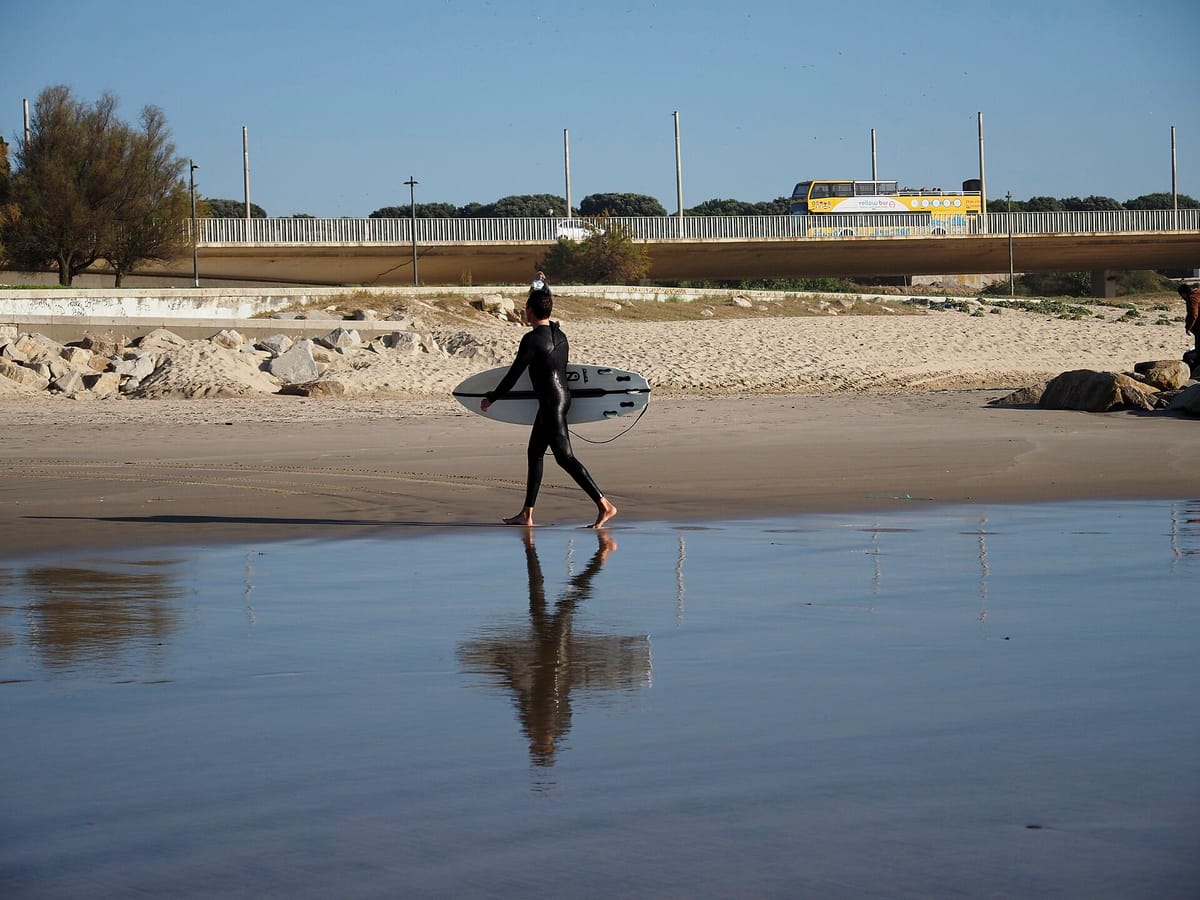
As a sixth heatwave of the summer bakes the Iberian Peninsula and sea temperatures climb, a warning that has spread along Europe's coastlines is worth understanding before you next wade in with a fresh cut on your foot. Health authorities across the continent have flagged a rising summer risk from Vibrio — a genus of naturally occurring marine bacteria, one species of which the headlines have nicknamed the "flesh-eating" or "flesh-rotting" bug. Spain has already closed beaches over bacterial contamination this season, and the European Centre for Disease Prevention and Control (ECDC) has warned of an elevated risk of Vibrio infections through the warmer months. Here is what the science actually says, how much of it applies to Portugal, and how not to be one of the rare unlucky cases.
What Vibrio is — and why "flesh-eating" is only half the story
Vibrio are bacteria that live naturally in warm, low-salinity coastal and estuarine water. Most of the genus is harmless; a handful of species are not. Vibrio vulnificus is the one that earns the lurid label: in rare cases it causes necrotising fasciitis (a fast-moving destruction of soft tissue), bloodstream infections and sepsis, and in the worst outcomes can lead to limb amputation or death. Other species — including strains of Vibrio parahaemolyticus and Vibrio cholerae — more commonly cause gastrointestinal illness (diarrhoea, vomiting, abdominal pain) after eating raw or undercooked shellfish, especially oysters.
Crucially, you do not "catch" it from the beach the way you catch a cold. Infection happens in two main ways: eating raw or undercooked seafood, or exposing an open wound, cut or recent piercing to contaminated brackish or sea water. Swimming with intact skin and eating well-cooked shellfish are, for the overwhelming majority of people, low-risk activities. The ECDC is explicit that the serious complications — necrotising fasciitis, sepsis, amputation — arise from untreated wound infections, which is why speed of treatment matters more than avoidance of the sea.
The European picture: a warming-driven, northward shift
The reason Vibrio is in the news is climate. The bacteria thrive as water warms, so longer and hotter summers extend both the season and the geography in which they flourish. The ECDC's highest-concentration hotspots are not the Mediterranean but the Baltic Sea, the Baltic-and-North-Sea transitional waters and the Black Sea, where several northern countries have reported increases in recent years, particularly during summers with extended heatwaves. Europe logged 445 Vibrio cases in 2018 — more than triple the 2014–2017 median of 126 — the kind of spike that follows a hot season. The Mediterranean, one of the fastest-warming seas on the planet, is increasingly part of the conversation, and Spain's Galicia has recorded serious Vibrio outbreaks tied to shellfish over the past two decades.
Where Portugal actually stands
Portugal's Atlantic waters are cooler than the Baltic shallows or the Mediterranean, and official bathing water here remains, by the standard measures, among the best in Europe. But "best by the standard measures" hides a gap that Portuguese scientists have flagged. Researchers at Porto's Instituto de Ciências Biomédicas Abel Salazar (ICBAS – Abel Salazar Institute of Biomedical Sciences), working under a project studying beach water safety, monitored ten northern beaches — among them Afife, Ofir, Póvoa de Varzim, Árvore, Matosinhos, Salgueiros, Aguda, Paramos, Cortegaça and São Jacinto — and detected bacteria of the Vibrio genus, some of them pathogenic and even antibiotic-resistant, in waters officially classified as "excellent" for bathing.
How can water be graded excellent and still carry these bacteria? Because the two things measure different risks. The routine analyses run by the Agência Portuguesa do Ambiente (APA – Portuguese Environment Agency) and the regional health administrations test for faecal indicator organisms — Escherichia coli and intestinal enterococci — the markers of sewage-type contamination that drive beach closures. They do not screen for Vibrio, which occurs naturally in the sea rather than as a sign of pollution. The ICBAS team's point is not that Portuguese beaches are dangerous, but that a warming-linked, naturally occurring risk currently sits outside the official monitoring frame — an "uncounted" hazard that behaves most aggressively in exactly the high-summer, high-temperature conditions Portugal is now living through.
Who is genuinely at risk
Context matters more than alarm. Serious Vibrio disease is rare and concentrated in identifiable groups. The people who should take real care are those with weakened immune systems, chronic liver disease (including cirrhosis) or diabetes, and anyone with an open wound, surgical site, fresh tattoo or recent piercing. For a healthy adult with unbroken skin who cooks their seafood, the practical risk of a life-threatening infection this summer is very low.
What This Means for Expats
- Keep open wounds out of the sea: If you have a cut, graze, surgical wound, fresh tattoo or new piercing, stay out of warm coastal and estuarine water until it has healed — or cover it with a genuinely waterproof dressing.
- Rinse and watch: If seawater does get into a cut, wash it with clean fresh water. Seek medical help fast if a wound becomes rapidly more painful, swollen, red or discoloured in the hours after sea exposure — Vibrio infections move quickly, and early antibiotics are what prevent the worst outcomes.
- Cook your shellfish: The gastrointestinal risk comes mainly from raw or undercooked bivalves, especially oysters. If you are immunocompromised or have liver disease, treat raw shellfish as off the menu in hot weather.
- Read the flags, not the rumours: Portugal's beach status is published — a blue flag and "excellent" rating reflect faecal-pollution testing, and lifeguarded beaches fly warning flags for hazards. Interdictions to bathing are announced by APA and local authorities; check before assuming a closure.
- Know where to go: Registering with the public health service before you need it makes an urgent visit far smoother — see our guide to registering with the SNS and getting your Número de Utente. In an emergency, call 112.
The honest summary is neither "the beaches are poisoned" nor "there is nothing to see here." Vibrio is a real, climate-amplified risk that is creeping into the summer picture across Europe, Portugal included, and one that current bathing-water checks are not designed to catch. It is also, for most beachgoers, an easily managed one: heal your cuts before you swim, cook your shellfish, and treat a fast-worsening wound as the emergency it can occasionally become. As the heat that is straining the country becomes a more regular feature of Portuguese summers, expect the sea's warming to move from a scientific footnote to a standing part of the beach-safety conversation.