Spain and Italy Trade Passport Checks Over Ceuta — and Schengen's Open Borders Fray Around Portugal
From midnight Saturday, Spain is checking passports on arrivals from Italy, retaliating in a Ceuta-driven border spat. It leaves Portugal's frequent flyers a plain lesson: inside Schengen, open borders are more conditional than they look.
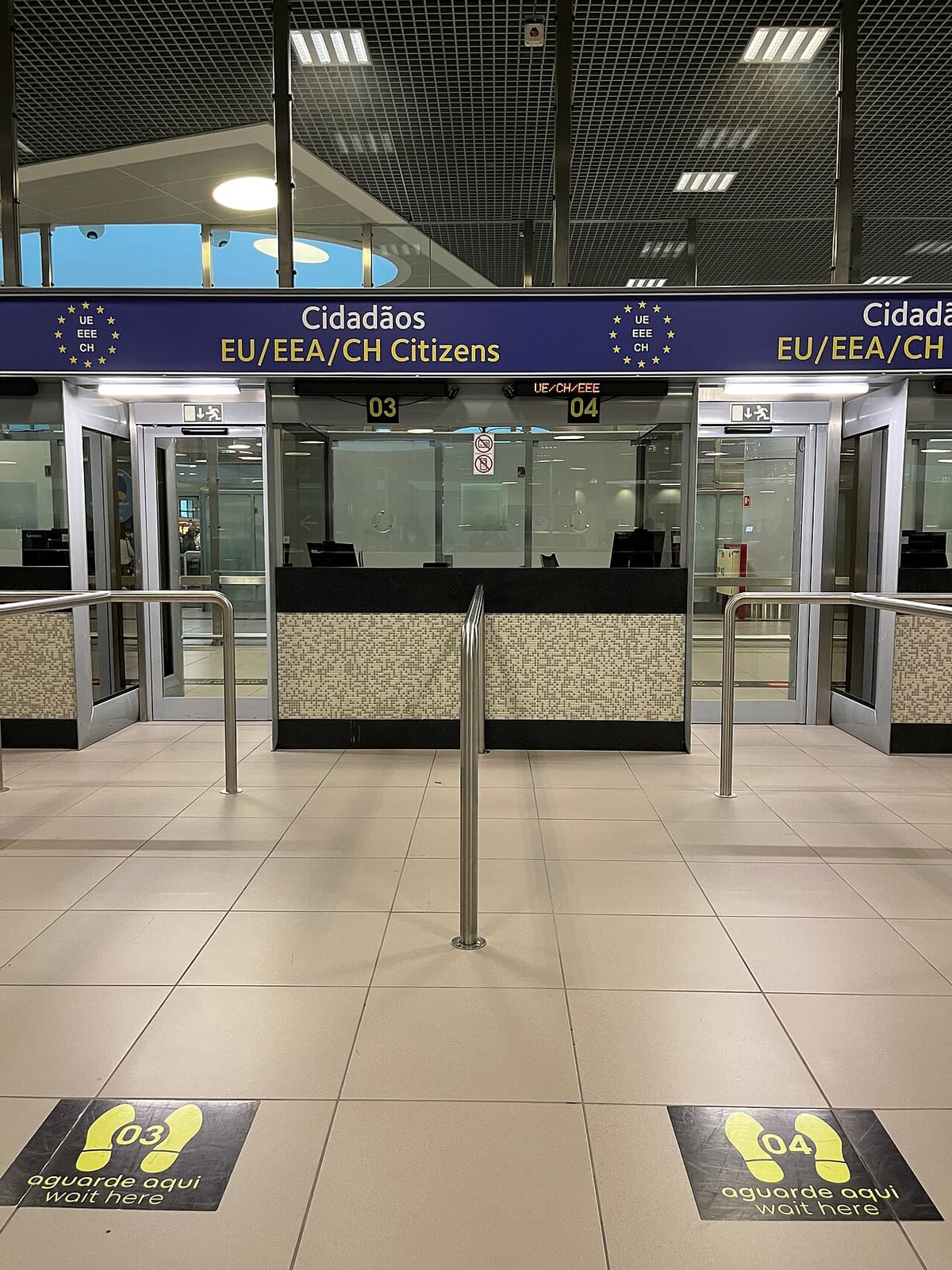
From midnight on Saturday, travellers flying into Spain from Italy have found themselves doing something that is supposed to be a relic inside Europe's borderless core: presenting a passport. It is the latest turn in an escalating standoff that has quietly punched holes in the Schengen free-movement area — and a reminder to anyone living in Portugal that “open borders” are more conditional than they look.
How it started
The trigger is the migration crisis in Ceuta, the Spanish enclave on the North African coast, where thousands of people recently crossed from Morocco, prompting Spain to deploy troops. At the end of July, Italy responded by reintroducing “targeted and selective” border checks on arrivals from Spain at its air and sea frontiers, saying the goal was to monitor the movement of non-EU nationals within Schengen.
Spain gave Rome a two-day ultimatum to drop those checks. When Italy refused, Madrid retaliated in kind: its own controls on travellers arriving from Italy took effect at midnight on Saturday and are scheduled to run until 7 September.
What it means in practice
In principle, EU citizens moving between the two countries are not the target — the measures are aimed at verifying the paperwork of non-EU travellers. In practice, checks at the gate mean queues, document inspections and the risk of being asked for identification that many Europeans have grown used to leaving in a drawer. A wrinkle this month: since 3 August, Italy's old paper identity cards are no longer valid for travel, so an electronic ID or a passport is now required.
None of this directly touches Portugal's own borders. The country's only land frontier, with Spain, remains open, and Lisbon has not moved to reinstate controls. But the episode lands squarely on a Portugal-based audience that flies around Europe constantly — for work, family and holidays — and that has come to treat a residence card as a universal passkey.
A pattern, not a one-off
The Spain–Italy spat is the most theatrical example, but it is not isolated. Several Schengen members, including France and Germany, have kept or revived internal border checks in recent years, citing migration and security. Each reintroduction is meant to be temporary and proportionate; collectively, they have made the once-invisible internal border a recurring feature of European travel.
Brussels has tried to hold the line — the European Commission has stressed that migrants who arrived in Ceuta cannot simply move on to other member states — while warning that tit-for-tat controls corrode the single biggest perk of EU membership.
The practical takeaway
For residents of Portugal, the lesson is unglamorous but useful: carry a valid passport, not just a residence permit, when flying within Europe this summer, and build in extra time at borders that until recently waved everyone through. Schengen has not collapsed. But the Ceuta standoff shows how fast one dispute can turn a frictionless flight into a passport queue — and how little say the ordinary traveller has when two governments decide to make a point of each other. On the flexibility the border forces have just lost, our account of what expired at the biometric border on 6 September, why the six-hour partial suspension ran that late, and what Portuguese airports have left when a queue builds sets the latest reference.