An 85-Percent-Complete Armoured Dinosaur Emerges From a Torres Vedras Sea Cliff, Possibly the Most Complete Ever Found in Portugal
An armoured dinosaur that died about 155 million years ago has been found roughly 85% complete in a cliff at the mouth of the Sizandro river in Torres Vedras. Preserved belly-down with its armour still in place, it may be the oldest ankylosaur yet identified in continental Europe.
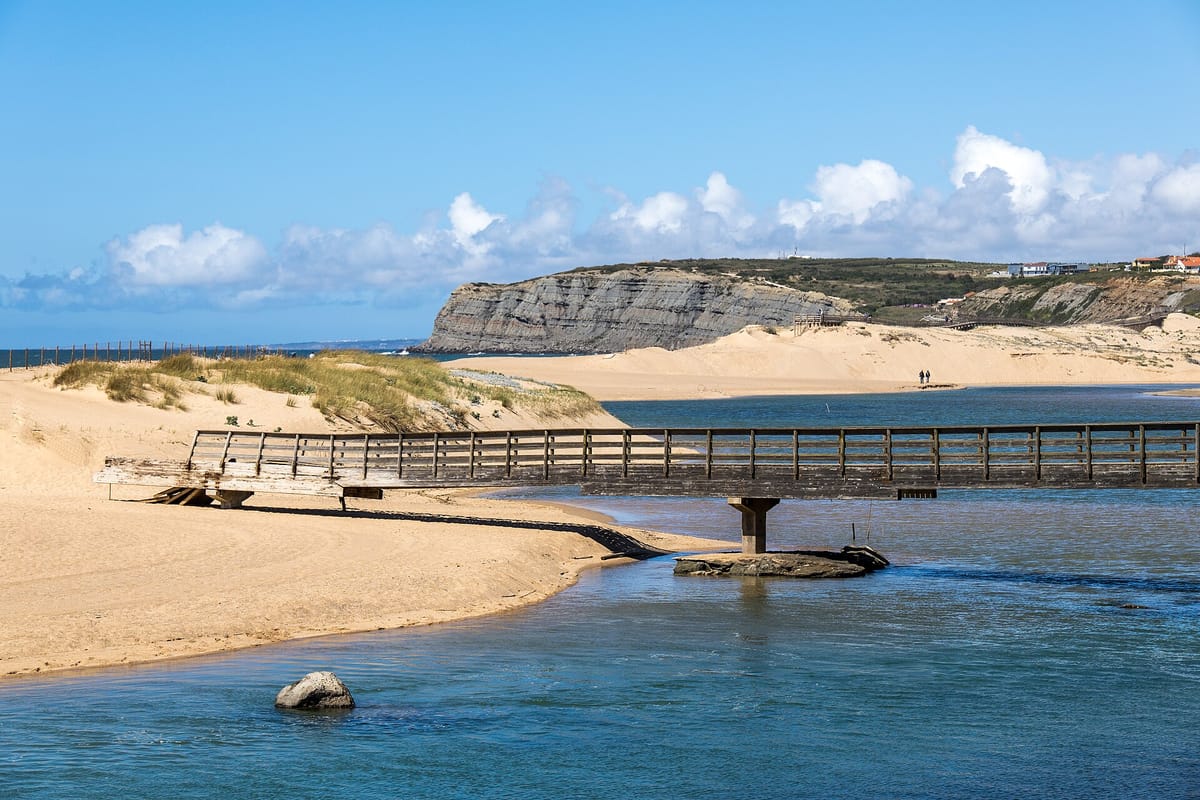
A cliff on the coast at Torres Vedras has given up what may be the most complete dinosaur skeleton ever recovered in Portugal — an armoured, tank-bodied animal that died roughly 155 million years ago and came to rest belly-down in the sediment, where it stayed until a fossil hunter noticed something protruding from the rock last summer.
The find sits in the arriba (sea cliff) at the mouth of the Sizandro river, a stretch of the Estremadura coast that has been yielding Jurassic bone for decades. Luís Domingos spotted the first fragments in June 2025. When the team from the Ci2Paleo (Centro de Investigação em Paleobiologia e Paleoecologia — the palaeobiology and palaeoecology research centre of the Sociedade de História Natural, the natural history society based in Torres Vedras) returned for a summer excavation campaign, the scale of what was buried there became clear.
They came away with a femur, tail vertebrae and around 45 osteoderms — the bony plates that formed the animal's natural armour. Those plates were the diagnostic clue. They place the specimen in Ankylosauria, the group of squat, four-legged, armour-plated herbivores whose bodies were sheathed in bone and flanked by spikes. “The dinosaur is around 85% complete,” said Bruno Camilo, director of the Ci2Paleo and a doctoral researcher at the Instituto Superior Técnico. It may prove to be more than that: the two front limbs are thought to be tucked beneath the mass of spikes and plates, still unexcavated.
What makes the skeleton unusual is not only how much of it survived but how it is lying. Most dinosaur skeletons are found on their side, collapsed as the carcass settled. This one was preserved in ventral position — on its belly, with the armour still arranged over the body rather than scattered. That is what allows researchers to talk about an intact armour system rather than a pile of loose plates, and it is why the specimen is expected to answer anatomical questions that isolated bones cannot.
The rock itself dates the animal. The bones sit in a unit from the Kimmeridgian, a stage of the Upper Jurassic running from roughly 157.3 to 152.1 million years ago — which makes this ankylosaur older than the others known from Portugal, and, on the team's reading, the oldest yet identified in continental Europe. For a group whose European fossil record is thin and fragmentary, a near-complete Late Jurassic individual is a substantial addition: researchers expect it to yield new information on the anatomy and evolution of European ankylosaurs, a lineage better known from later rocks and other continents.
Excavation is continuing through this summer, and the specimen has not yet been described in the formal scientific literature, so the superlatives remain provisional until the study is published. The Oeste region has become accustomed to that rhythm. Its cliffs and quarries have produced a steady run of Jurassic discoveries, and the institutions that handle them — municipal museums, university teams and societies like the one at Torres Vedras — have built a public face around the work, from open excavation days elsewhere in the country to a new state portal putting 90 monuments and museums online and reopened regional museums. For now, though, most of the animal is still in the cliff, and the sea that exposed it is the same force steadily working to take it away.