Vouzela Reaches Maximum Rural Fire Danger on Sunday and 48 More Municipalities Sit at Very High, Bringing Back Bans on Burning, Fireworks and Brushcutters
IPMA puts Vouzela at maximum rural fire danger today and 48 municipalities from Porto to Faro at very high. At both levels the law bans extensive burning, bonfires, rockets and smoking in rural areas, and limits brushcutters and chainsaws.
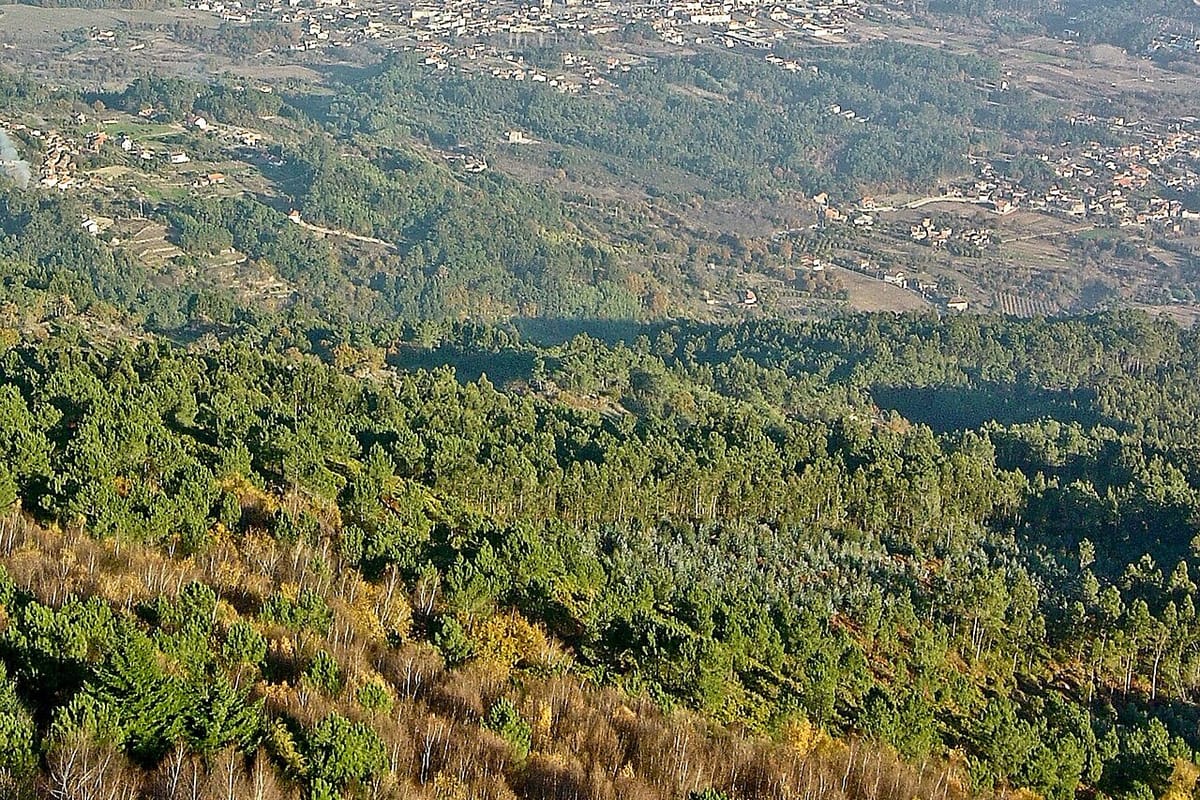
Vouzela, in the district of Viseu, is the only mainland municipality at the top of the rural fire danger scale on Sunday 18 October, according to the forecast published this morning by the Instituto Português do Mar e da Atmosfera (IPMA, the national weather institute). Another 48 municipalities sit one step below, at "very high". Both levels trigger the same legal limits on fire, fireworks and machinery.
The peak firefighting deployment stood down on 30 September, but the danger classes and the rules tied to them apply all year round. Mid-October is no exception.
Where the danger is highest
IPMA rates all 278 mainland municipalities daily on a five-step scale. Our count of today's file gives 1 at maximum, 48 at very high, 77 at high, 144 at moderate and 8 at low. The very high municipalities are spread across ten districts:
- Santarém (10): including Abrantes, Tomar and Ourém
- Viseu (10): including Viseu itself and Tondela
- Leiria (7): including Pombal and Batalha
- Coimbra (6): including Figueira da Foz and Cantanhede
- Aveiro (5): including Águeda and Anadia
- Porto (4): Paredes, Santo Tirso, Valongo and Trofa
- Portalegre (3): Portalegre, Marvão and Gavião
- One each in Castelo Branco (Vila de Rei), Faro (Monchique) and Guarda (Seia)
Monday looks calmer. IPMA's forecast for 19 October has no municipality at maximum and 24 at very high, Vouzela among them, with all ten in Santarém still on the list.
The south has a different problem today. IPMA has yellow thunderstorm warnings for Portalegre, Évora, Beja and Faro until 18:00, with locally heavy rain of 10 to 20 mm in an hour, small hail and gusts of 70 to 90 km/h.
What the law restricts
The rules are in Decreto-Lei n.º 82/2021 (the integrated rural fire management system), as amended in 2022 and 2023. In any municipality at very high or maximum danger:
- Extensive burning (queimadas, used to clear pasture or stubble) is banned outright (Article 65).
- Bonfires for leisure or festivals are banned in rural areas. Barbecues are allowed only at signposted sites such as picnic parks (Article 66).
- Burning piles of cut vegetation (queima de amontoados) needs the council's authorisation. Below very high, it still needs authorisation until 31 October (Article 66).
- Rockets and sky lanterns are banned. Other fireworks, apart from the lowest categories, need a licence from the council or parish (Article 67).
- Smoking or lighting any fire in rural areas, or on the roads that cross them, is banned (Article 67).
- Brushcutters, chainsaws, angle grinders and other spark-making tools may not be used in rural areas or around built-up areas. Exceptions include nylon-head brushcutters and essential farm work. Farm and forest machinery may run from sunset until 11:00, provided it carries extinguishers and spark arresters (Article 69).
Burning without authorisation counts in law as intentional use of fire.
What to do
Look up your municipality on IPMA's fire danger page, updated daily, which shows what is allowed. Every burn has to be registered on the Instituto da Conservação da Natureza e das Florestas (ICNF) burning app. In Aljezur, Castro Marim, Lisboa and São João da Madeira, which are not on the app, contact the council directly. ICNF's summary of the restrictions gives two helplines: 808 200 520 and 211 389 320. If the government declares an alert, its rules take precedence over the daily danger classes.
To report a fire, call 112. The Autoridade Nacional de Emergência e Proteção Civil (ANEPC, the civil protection authority) lists active incidents on its website. Late-season fires happen: see our Odemira wildfire report from late September.