Timor-Leste's 10 Million Dollar Gift Turns Into 23 Forest Fire Engines for 17 Northern Councils, One Year to the Day After Dili Approved It
CCDR-Norte signed 23 contracts in Penafiel on Thursday, worth up to €4,312,500, with volunteer brigades in Baião, Braga, Porto, Valpaços and thirteen other councils. The donation covers 75 percent of each truck, capped at €187,500, and they must be operational by 30 April 2027.
On Thursday afternoon, in a converted cultural centre in Penafiel, the president of the Comissão de Coordenação e Desenvolvimento Regional do Norte (North Regional Coordination and Development Commission) signed 23 contracts with 23 volunteer fire brigades. Each one buys a forest firefighting truck. The money behind all of them came from Timor-Leste.
Exactly one year earlier, on 27 August 2025, the Timorese Council of Ministers approved a donation of 10 million dollars, about 8.6 million euros at the time, to help Portugal recover from the rural fires that tore through the North and Centre in August and September of that year. The money went to the Portuguese State, which passed it on to the regional coordination commissions of the affected regions. Thursday is the day it turned into vehicles.
What was actually signed
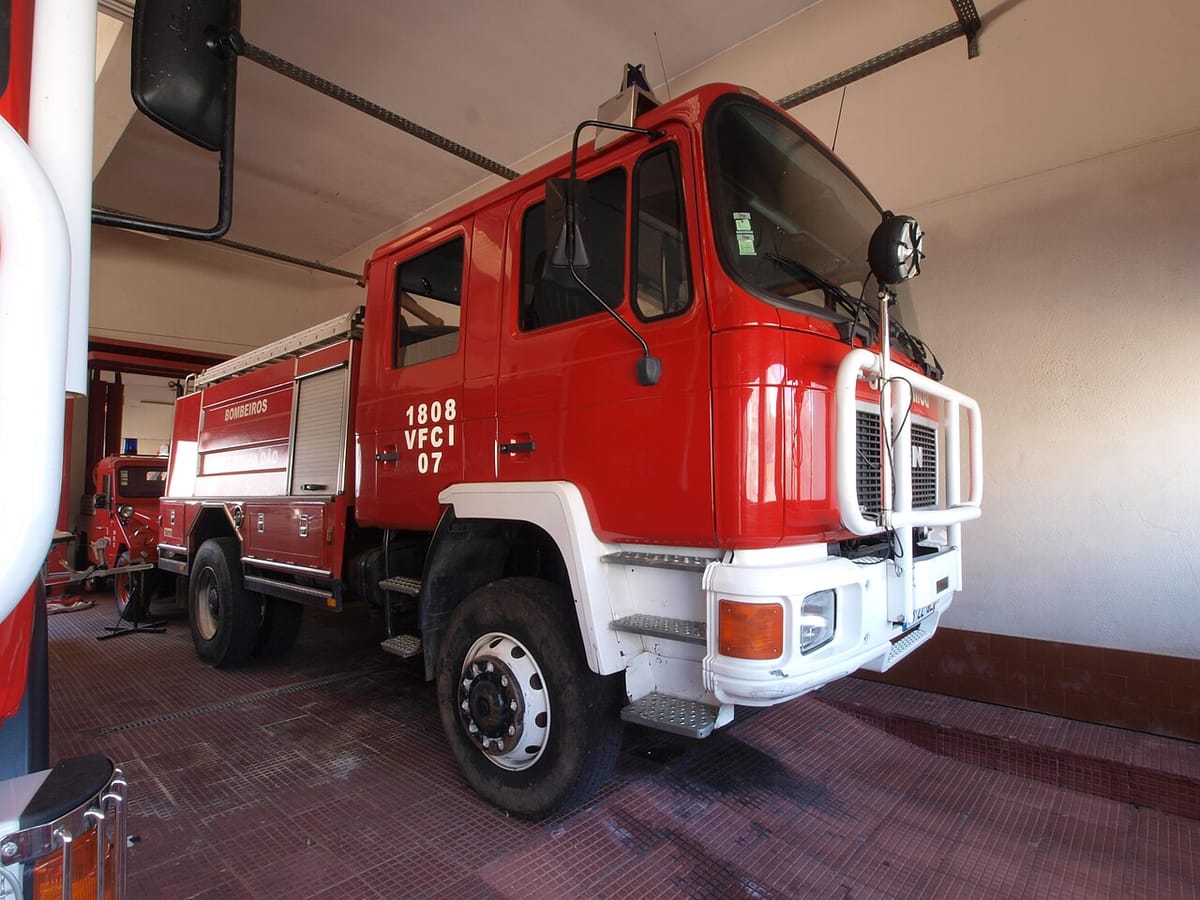
According to the CCDR-Norte statement sent to newsrooms, the 23 contracts cover Associações Humanitárias de Bombeiros (volunteer fire brigade humanitarian associations) across 17 councils, and provide a maximum global support of 4,312,500 euros for the purchase of Veículos Florestais de Combate a Incêndios (forest firefighting vehicles), the workhorse four-wheel-drive tanker that Portuguese brigades take into the hills.
The 17 councils are Baião, Braga, Felgueiras, Gondomar, Matosinhos, Oliveira de Azeméis, Paredes, Penafiel, Penedono, Ponte da Barca, Póvoa de Lanhoso, Porto, Santo Tirso, Sernancelhe, Valpaços, Valongo and Vila Nova de Gaia.
The arithmetic is worth reading closely, because the donation does not buy the trucks outright. Each contract sets a reference value of 250,000 euros per vehicle before VAT, which puts the 23 purchases at 5.75 million euros in total. The Timorese money covers 75 percent of the purchase price before VAT, capped at 187,500 euros per contract. The brigades find the rest.
Three further conditions come attached:
- A three-month clock on starting. The associations have to open their procurement procedures within three months of signing.
- An April 2027 deadline on finishing. The vehicles must be operational by 30 April 2027 so they can be counted into the Dispositivo Especial de Combate a Incêndios Rurais (Special Rural Firefighting Deployment), the seasonal force that Portugal scales up every summer, for the 2027 season.
- A twenty-year lock. The trucks are for operational firefighting only, must be kept available and ready, and cannot be sold, transferred or used as security for twenty years. The support also cannot be stacked with any other EU, national or public funding for the same vehicle or another of the same type.
Also on Thursday, under the same donation, eight brigades in the Guarda district signed for eight more vehicles. That is 31 trucks in a single day, from one gift.
A pattern, not a one-off
Timor-Leste has now written cheques to Portugal after three separate disasters in three years. In August 2024 it gave 2.2 million euros after the Madeira fire. In August 2025 it approved the 10 million dollars behind Thursday's contracts. In February 2026, after depression Kristin, it approved a further 4.2 million euros, money the Education Ministry later earmarked for rebuilding schools in Leiria and Marinha Grande damaged by the storm of 28 January.
The direction of travel is the point. Timor-Leste is a small economy whose state budget leans on its petroleum fund, and it is sending disaster relief to the country that colonised it until 1975. Nobody at Thursday's ceremony treated that as unremarkable. CCDR-Norte president Álvaro Santos thanked Timor-Leste for the gesture of solidarity and said the commission's job was to give it concrete application in protecting people and territory, which it does by turning the transfer into signed contracts with individual brigades.
The ceremony, held at the Ponto C cultural and creative centre in Penafiel, also heard from Penafiel mayor Pedro Cepeda, from Luís Elias of the Liga dos Bombeiros Portugueses (Portuguese Firefighters League), and from two secretaries of state: Silvério Regalado, for local administration and spatial planning, and Rui Rocha, for civil protection.
Why it took a year
Twelve months between a donor government's decision and a signature on a supply contract is not scandalous by the standards of Portuguese public administration, but it is long enough to be worth stating plainly. Foreign money arriving as a sovereign donation has to be received by the State, allocated, routed to a managing authority, converted into a support scheme with eligibility rules, and then contracted out one by one to the independent associations that will own the vehicles. The twenty-year non-disposal clause and the anti-double-funding clause are the visible residue of that process.
The practical consequence is that the fire engines bought with 2025's fire money will not fight a fire until the 2027 season at the earliest. Portugal has just come through another difficult summer: the country's burned area this year is a quarter of last year's, but it has lit more fires than in any year since 2022, and in the northern interior in August a fire near Vinhais injured five firefighters and destroyed a truck. Two of the 17 councils on Thursday's list, Valpaços and Baião, sit in the belt that has taken the worst of it.
The fleet question is not new either. In May this year Rui Rocha, the same secretary of state who spoke on Thursday, mapped out a 550 million euro firefighter modernisation plan over a decade, with vehicles at the centre of it. Against that number, 4.3 million euros from Dili is a rounding error. Against the balance sheet of a single volunteer brigade in Penedono or Sernancelhe, it is the difference between having a truck and not having one.
What This Means for Foreign Residents
- Your local bombeiros are probably a private association, not a public service. Most Portuguese fire brigades are Associações Humanitárias de Bombeiros: private non-profits that own the station and the vehicles and staff them largely with volunteers, funded by a mix of council money, membership subscriptions, ambulance transport fees and grants like this one. That is why a donation has to be contracted brigade by brigade rather than spent centrally.
- Which is also why the annual quota matters. If you live in a rural council and your brigade runs a subscription scheme, the annual fee is usually a small sum and goes into the same pot that has to find the other 25 percent of a 250,000 euro truck.
- Vehicle deliveries lag the fire season by years. When you read that a council has "received funding for fire engines", read the operational date. Here it is 30 April 2027, for money approved in August 2025.
- Prevention obligations sit with landowners, not the brigade. The fleet is the last line. If you own rural land, the fuel-management strip around your buildings and the rules on burning garden and farm waste are your legal responsibility, enforced with fines that run into five figures.
The next thing to watch is not in Penafiel but in the procurement notices. Twenty-three associations have three months to open tenders for a vehicle type that has a small number of European builders and a queue of buyers, and a hard operational date sixteen months later. Whether the trucks reach the stations in time for DECIR 2027 will say more about the state of the Portuguese fire-vehicle supply chain than about Timorese generosity, which has already done its part.