The Transport Regulator Puts Lisbon's River Ferries on a Monthly Report Card for Delays and Cancellations
After a rising tide of passenger complaints, the AMT has ordered Transtejo/Soflusa to file monthly returns on every service run, delayed or cancelled, with causes and remedies, broken down by line and by time of day.
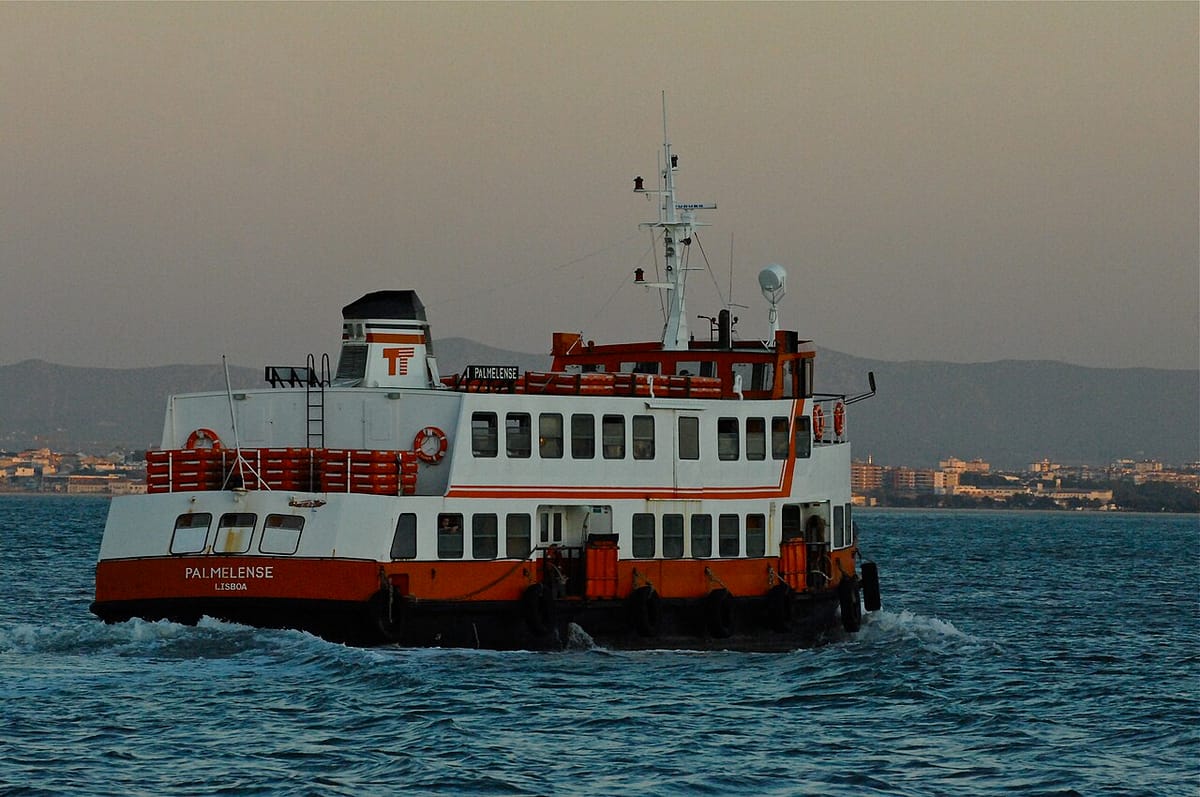
Anyone who has stood on the pontoon at Cacilhas watching a scheduled boat fail to appear now has an official ally. The Autoridade da Mobilidade e dos Transportes (AMT) has ordered Transtejo/Soflusa, the state ferry operator that carries commuters across the Tagus into Lisbon, to file monthly reports on every service it runs, delays and cancellations included.
The requirement is unusually specific. Each month the company must set out the services actually provided, those delayed and those suppressed; the cause of each disruption; the corrective or mitigating measures taken; and an estimate of the operational impact. The data has to arrive in a standardised format and be broken down by line and by time period, which is the detail that turns a report into something a regulator can audit.
Complaints did the work
The AMT opened its supervisory action after what it describes as a growing volume of passenger complaints, then reviewed the operator's record on delays and service suspensions over recent years. Its stated aim is to build a base detailed enough to test the coherence between the service actually delivered, the justifications the company offers for missing it, and the operational response that follows.
That phrasing matters. Ferry cancellations are usually explained away one at a time: a crew shortage here, a vessel in dry dock there, weather on the estuary. Aggregated by line and by hour of the day, the same explanations either hold up or reveal a pattern. Until now, nobody outside the company has had the data to tell the difference.
A network under pressure
Transtejo/Soflusa runs the river spine of the Lisbon commute: Cacilhas, Trafaria and Porto Brandão, Seixal, Barreiro and Montijo into Cais do Sodré and Terreiro do Paço. It is part of the Passe Navegante network, which means a resident on the south bank pays the same monthly fare whether the boat sails or not.
The operator has spent the past two years in the middle of a fleet transition, replacing ageing diesel cacilheiros with electric vessels. Some of that has gone well: it opened a direct Seixal to Barreiro electric run and stretched the Cacilhas to Cais do Sodré window to run from 5am to 2.30am. Other promises have slipped: the long-awaited return of a Parque das Nações service is now pencilled in no earlier than 2028, well behind the city's own 2027 target.
What it means for passengers
Nothing changes tomorrow morning. The AMT has not fined anyone, imposed a punctuality target or ordered extra sailings; it has ordered disclosure. But disclosure is how the rest of the Lisbon transport picture eventually moved, and the regulator has form: it was an AMT recommendation that pushed the government to review the Setúbal to Tróia ferry concession.
For the tens of thousands of daily crossings the river carries, the practical upshot is that from now on a cancelled 7.50am boat will be counted, categorised and explained in a document someone else gets to read. With two in three Greater Lisbon residents still defaulting to the car, reliability is the argument the boats have to win.