The Porto Brief — Week of 9 August 2026: A New Season Kicks Off at the Dragão, the Metro Wilts Above 35°C, and the North Bakes Under Fire Alert
Your weekly roundup from the Invicta: FC Porto open their I Liga title defence against Alverca, the metro's oldest trains lose air-conditioning above 35°C, the North bakes under drought and fire alerts, and Portugal becomes Europe's second-largest shoemaker.
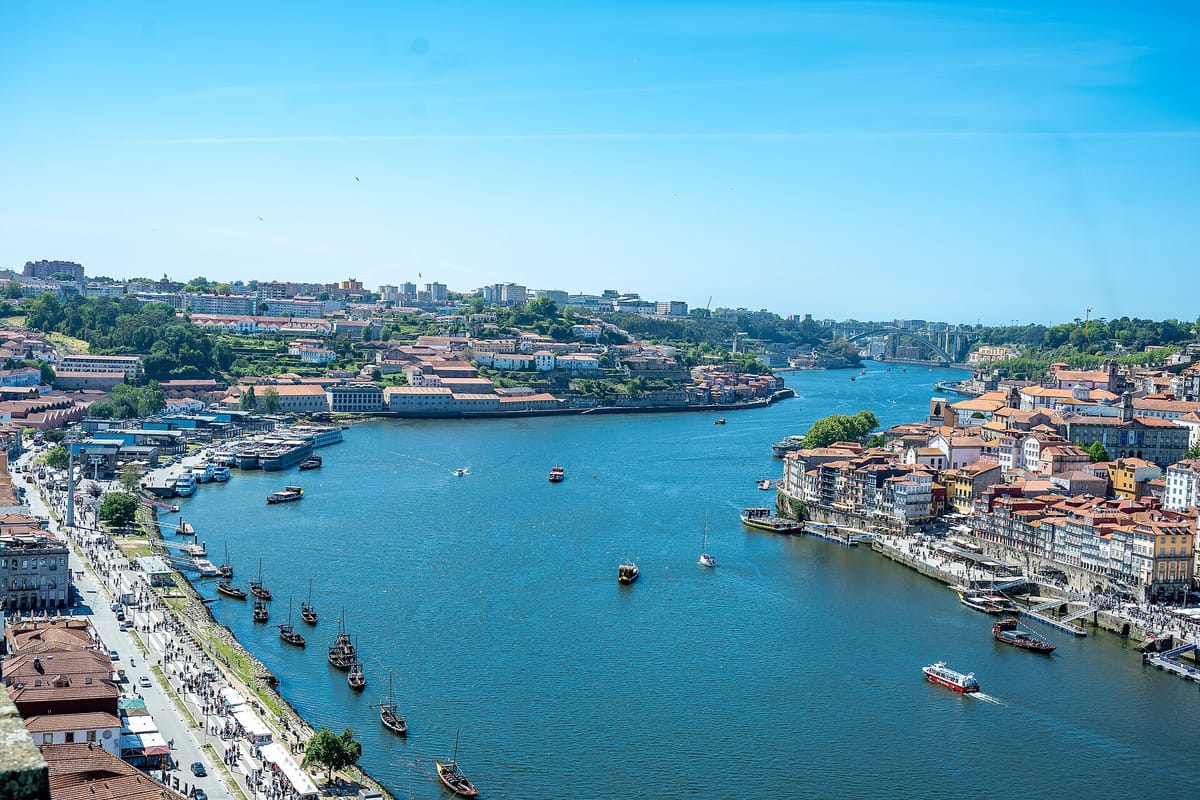
Welcome back to the Porto Brief — your weekly roundup of what mattered in the Invicta over the past seven days. The league season proper gets under way at the Dragão this weekend, the city's oldest metro trains are wilting whenever the mercury climbs, the wider North is baking under a summer of drought and fire alerts, and the region quietly cemented its place as one of Europe's great manufacturing corners. Here's what caught our eye.
A new season opens at the Dragão
A trophy in the cabinet is one thing; the league is another. Fresh from lifting the Supertaça last weekend, FC Porto open their title defence at home to newly promoted Alverca on Sunday at 18:00, the first round of the I Liga and Francesco Farioli's first competitive league fixture in charge of a full pre-season. The Italian gets a boost in defence — Jan Bednarek is fully recovered and available — but will be without Oskar Pietuszewski, sidelined by a muscle problem, and Alberto Costa. Farioli's message ahead of kick-off was pointedly forward-looking: no dwelling on last season's silverware, and no illusions that a promoted side coached by a former club man will roll over. For Dragões supporters, it is the real start of the campaign — and the first proper read on what a Farioli team looks like over 90 minutes at the Estádio do Dragão.
The metro that can't take the heat
If you sweated through a metro carriage this week, it was not your imagination. The government has conceded that the 72 oldest Eurotram cars in the Metro do Porto fleet — the backbone of the network — lose their air-conditioning once the temperature passes about 35°C. In a written answer to Parliament, the Ministério das Infraestruturas e Habitação (Ministry of Infrastructure and Housing) explained that the trains, bought roughly a quarter of a century ago, were designed against a maximum thermal reference of 35°C — the climate projections of the day — and that above that ceiling the cooling shuts down "due to high pressure." The uncomfortable subtext is that the summers Porto now routinely gets were simply not in the specification, and a proper fix is years, not months, away. Cold comfort for anyone squeezed onto Line D at midday in August.
A summer of drought and fire alerts
The heat is not just a commuting nuisance. Mainland Portugal has slipped into meteorological drought after the driest July of the century, and the consequences are showing across the North. On several days this week more than 60 municipalities sat at maximum fire danger, with districts ringing Porto — Vila Real, Bragança, Viana do Castelo, Braga and Aveiro among them — repeatedly on the list. The city itself is spared the worst of the flames, but the interior Norte and the Douro valley are firmly in the danger zone, and the reservoirs and rivers that feed the region are running low. If you are heading into the hills or up the Douro this month, check the daily IPMA (weather institute) risk map before you go, and mind the burn bans.
Short-term lets stay in the crosshairs
Porto's long tug-of-war with holiday rentals is not over. The government has moved to let municipalities keep suspending and rewriting their Alojamento Local (short-term rental) rules until the end of the year, extending a window that cities have leaned on hard. Porto is one of the most aggressive users of those powers: of roughly 10,800 registered short-term lets in the city, the Câmara (city council) has flagged 1,413 for cancellation over non-compliance — chiefly a missing liability-insurance filing — with well over half of them clustered in the historic centre. It is a slow, paperwork-driven squeeze rather than a headline ban, but the direction is unmistakable: the balance in the old town is being tilted, licence by licence, back toward residents.
Beyond the riverbank: Europe's shoemaker
Some of the best news for the wider North barely mentions Porto by name. Portugal has just overtaken Spain to become Europe's second-largest shoemaker — an industry that is overwhelmingly a Norte story, clustered in Felgueiras, São João da Madeira, Guimarães and Barcelos within an hour of the city. The sector's confidence is showing in bricks and mortar: a French group is building a new footwear factory in Barcelos that will employ up to 580 people. For a region whose identity is bound up in making things — shoes, textiles, wine, cork — it is a reminder that the Norte's economy runs on far more than the tourism and property headlines that dominate the coverage.
Weekend pick: free summer music
If the heat drives you indoors, the Casa da Música is once again offering the city a festive summer of concerts, with a run of free and low-cost sessions carrying the programme through August in Rem Koolhaas's landmark on the Boavista roundabout. It is an easy, air-conditioned way to fold a bit of live music into a weekend without spending much — and a fine excuse to see the building itself, one of the boldest pieces of architecture the city has. Check the venue's calendar for the week's line-up before you set out.
That's a wrap
From a new league season at the Dragão to sweltering metro carriages and a North baking under fire alert, it was a week of Porto shouldering into the deep heat of August. We'll be back in seven days with more from across the city and the wider Norte. Until then, stay hydrated, mind the burn bans, and saúde.