Portugal Overtakes Spain to Become Europe's Second-Largest Shoemaker
Portugal has overtaken Spain to become Europe's second-largest footwear manufacturer, and the 18th globally, exporting about 93% of output to some 174 countries. The average export price rose 2.5% to about $28.25 a pair, second only to Italy, even as sector growth slowed to 0.8% in 2025.
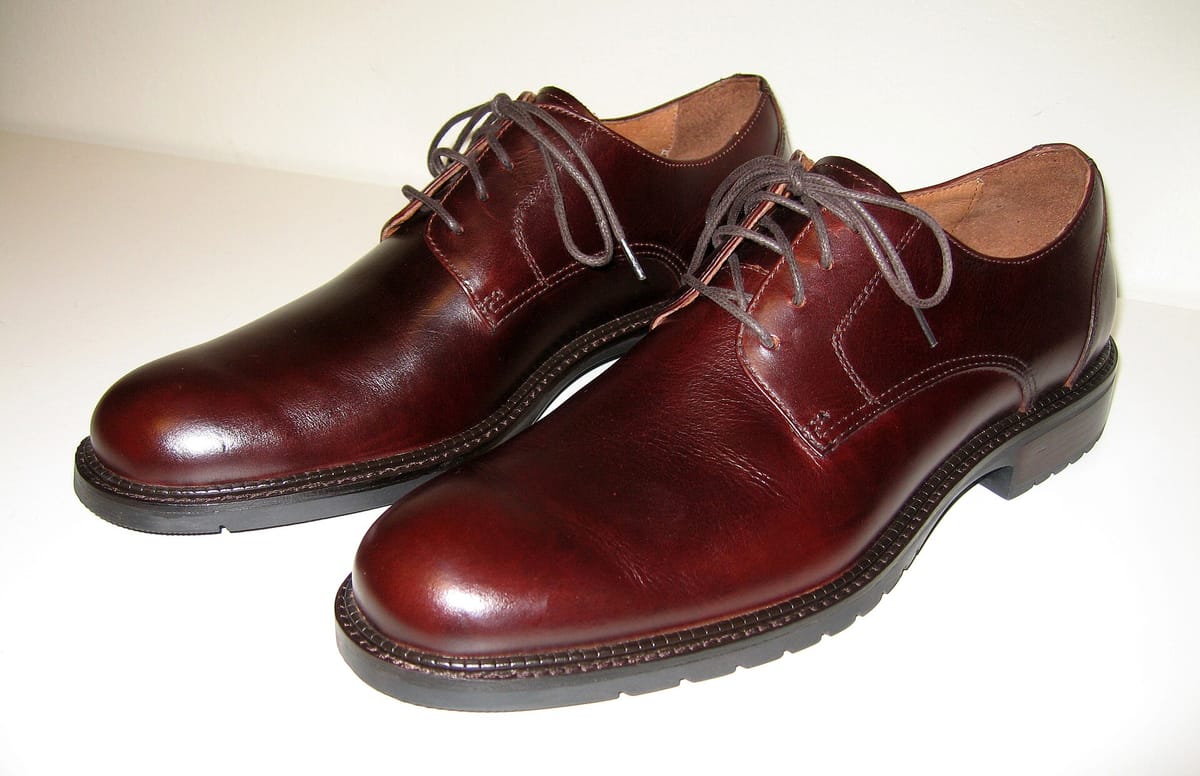
Portugal has quietly climbed a rung on the world's shoe ladder. The country has overtaken Spain to become Europe's second-largest footwear manufacturer, and the eighteenth-largest in the world, according to industry data published this week — a milestone for a sector that has spent two decades reinventing itself around quality rather than volume.
The numbers behind the ranking tell a story of a small country that sells almost everything it makes abroad. Roughly 93% of Portuguese footwear output is exported, reaching some 174 countries, a reach that turns factories clustered in the north — around Felgueiras, Guimarães and São João da Madeira — into suppliers for shops on nearly every continent. Only Italy, the industry's benchmark for luxury craftsmanship, now ranks ahead of Portugal within Europe.
Just as striking as the volume is the price tag. The average export price of a pair of Portuguese shoes rose 2.5% to about $28.25, making Portugal the world's second most expensive footwear exporter after Italy. That figure is a badge of honour for an industry that deliberately walked away from competing on cost against Asian mass producers. Faced with cheap imports in the 1990s and 2000s, Portuguese manufacturers moved upmarket, investing in design, leather quality, fast turnaround and small production runs for premium brands — a strategy that lets them charge far more per pair than the global average.
Growth, however, has cooled to a walking pace. The sector expanded by just 0.8% in 2025, a modest advance that reflects softer consumer demand across Europe and the caution of retailers wary of overstocking. In that environment, holding position — let alone overtaking a larger neighbour like Spain — counts as a genuine achievement, and it underscores how resilient the Portuguese model has proved even when the wider market is flat.
Part of that resilience comes from diversification beyond traditional leather. Manufacturers have been expanding into rubber, plastic and textile footwear, categories that widen their customer base and hedge against swings in leather prices and shifting fashion. The push also dovetails with growing demand for sustainable materials, as brands look for recycled and lower-impact components — an area where Portugal's flexible, technically sophisticated factories are well placed to respond.
The industry's importance to Portugal goes well beyond bragging rights. Footwear is one of the country's most recognisable export success stories, sustaining thousands of skilled jobs in regions where the factories are often the backbone of the local economy. A high average export price means more value — and, in principle, better wages and margins — stays in Portugal for every pair shipped out.
The challenges ahead are real. Rising labour and energy costs, competition for skilled workers, and the ever-present threat of cheaper rivals all press on margins, while trade tensions and tariffs in key markets such as the United States could complicate the export picture. But overtaking Spain sends a clear signal: Portugal's shoemakers have carved out a durable niche near the top of the global market, selling craftsmanship rather than quantity — and, for now, walking a little taller than their Iberian neighbour. On the footwear side of the export account, the first-half figures for Portuguese footwear exports sets out the 813 million euro half, the sharper falls in Italy, Spain, China and Brazil, and the 28.25 dollar average price per pair that keeps Portugal second in the world behind Italy alone. On the shape of the sector itself, our report on the Fundação Francisco Manuel dos Santos study sizing Portugal's textile and clothing industry at 11,965 companies, 118,000 jobs and 7.8 percent of national exports sets the latest reference.