The Lisbon Region's Most Pressured Emergency Department Has Been Missing From the SNS Portal for Over a Month
Amadora-Sintra is the only Portuguese hospital whose emergency waiting times are currently unavailable on the SNS portal, citing work on its systems. Its own figures put urgent patients at a nine-hour wait on Friday morning; staff say fifteen.
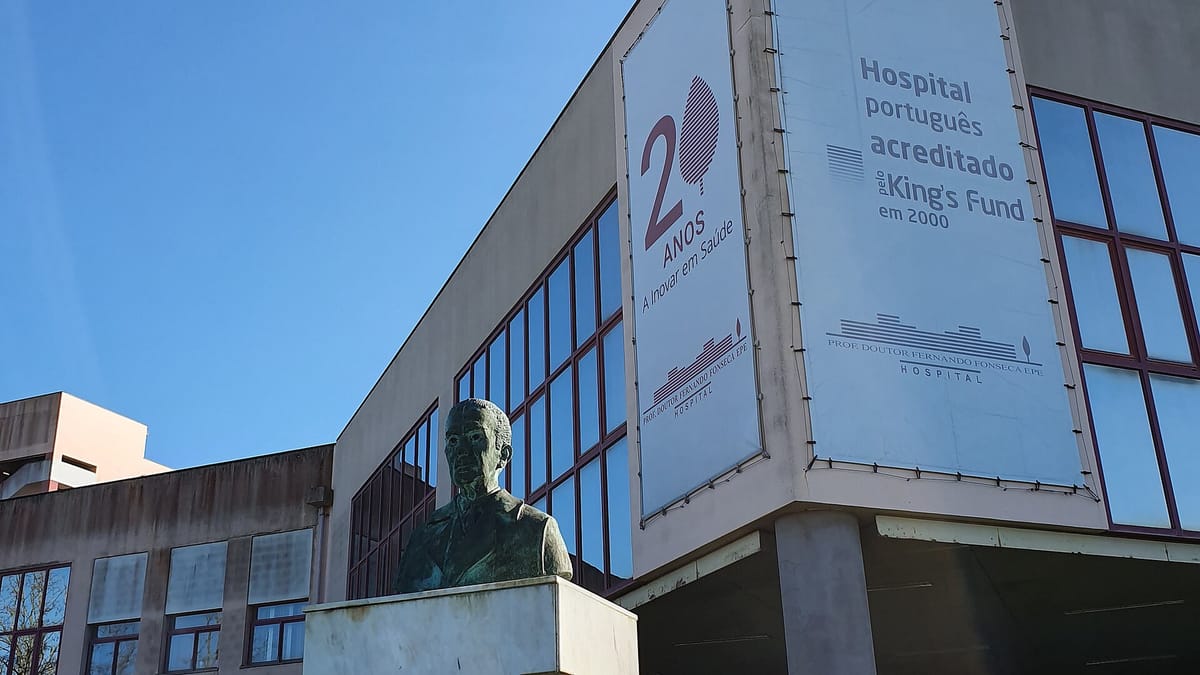
The busiest emergency department in the Lisbon region has been invisible on Portugal's public health-service dashboard for more than a month. The Hospital Professor Doutor Fernando Fonseca, universally known as Amadora-Sintra, is the only unit in the country whose emergency waiting times are currently unavailable on the SNS portal, the site the Serviço Nacional de Saúde (National Health Service) runs so that patients can see how long each hospital is taking before deciding where to go. The hospital attributes the gap to work on its information systems.
The blackout matters because of what its own figures show when they do surface. On Friday morning, urgent patients at Amadora-Sintra, those given a yellow wristband under the Manchester triage system, were waiting on average about nine hours to be seen by a doctor for the first time. Staff at the unit put the real figure higher, saying waits have reached fifteen hours. At 9:30am the hospital still carried the "data temporarily unavailable" notice on the portal, and at that moment 33 urgent patients were queuing for a first assessment.
What the rest of the region looked like
Friday's snapshot across Greater Lisbon and the south was uneven rather than uniformly bad:
- Hospital Nossa Senhora do Rosário, Barreiro: close to five hours for yellow-band patients, with 24 waiting for a first assessment at 9:45am.
- Hospital Garcia de Orta, Almada: about three hours, with 26 urgent patients waiting.
- Hospital Beatriz Ângelo, Loures: just under two hours.
- Portimão and Faro, in the Algarve: more than three hours early on, improving to inside the recommended 60 minutes by 9:45am, with five urgent patients waiting at Portimão.
Those recommended limits are the point of comparison. Under the triage protocol Portuguese hospitals use, an orange (very urgent) patient should be seen within 10 minutes, a yellow (urgent) patient within 60 minutes, and a green (non-urgent) patient within 120 minutes. A nine-hour yellow-band wait is nine times the clinical target; a fifteen-hour one is fifteen.
A transparency problem, not just a capacity problem
Portugal built the SNS portal's live waiting-time feature precisely so that a patient with a non-life-threatening problem could look at the numbers and choose a quieter unit. That mechanism only works if every hospital reports. When the unit under the heaviest load is the one missing from the board, the tool actively misleads: the region looks calmer than it is, and patients are steered toward hospitals whose numbers are visible.
This is not the first time the hospital's portal data has been questioned. In January, Amadora-Sintra publicly flagged errors in what the SNS page was showing about its average emergency waits. The current outage has now run longer than a month.
It also lands awkwardly for the government. On 14 August, Health Minister Ana Paula Martins said emergency-room waits were better than two years ago, a day after the SNS's own live data showed patients queuing more than eleven hours at a Lisbon-area hospital. A week on, the single most-watched unit in that comparison is not publishing at all.
What this means for you
- Check more than one source: if you are in the Amadora or Sintra area, the SNS portal will not currently tell you what the local wait is. Call SNS 24 on 808 24 24 24 first, or check a neighbouring unit's published figure.
- Triage colour decides everything: your wristband, not your arrival time, sets your place in the queue. If you are handed a green band, expect a long stay and consider whether a health centre or SNS 24 can handle it.
- The south bank is often faster: Loures and Almada both ran materially shorter queues than Amadora-Sintra on Friday morning, though Barreiro did not.
- August is the squeeze: summer leave rotas thin out staffing while the resident population is joined by visitors, which is why the same units reappear at the top of the wait tables every year.
- This is separate from surgery queues: Portugal has just postponed its new SNS surgery-booking system, a different backlog with a different fix.
Reinstating one hospital's data feed will not shorten anyone's wait. But a public dashboard that omits the hospital under the most pressure is worse than an incomplete one: it quietly flatters the whole system, and the patients most likely to be misdirected are the ones already waiting longest. On who pays when a non-resident walks into a Portuguese emergency department, what the health inspectorate wants to change about paying for emergency care sets out the IGAS recommendations on charging at the door, the 2024 survey that found 92,189 non-residents treated in nine months with 49.3 percent carrying no cover, and the 115, 88 and 52 euro tariffs fixed by Portaria n.º 274/2026/1.