The Final Report on Lisbon's Gloria Funicular Disaster Is Pushed Back to Early 2027, With Six Safety Orders Already Accepted
The GPIAAF now expects its report close to the end of the first quarter of 2027, not on the accident's first anniversary. Destructive one-off testing is being shared with a parallel Ministerio Publico inquiry. Carris and the IMT accepted all six recommendations.
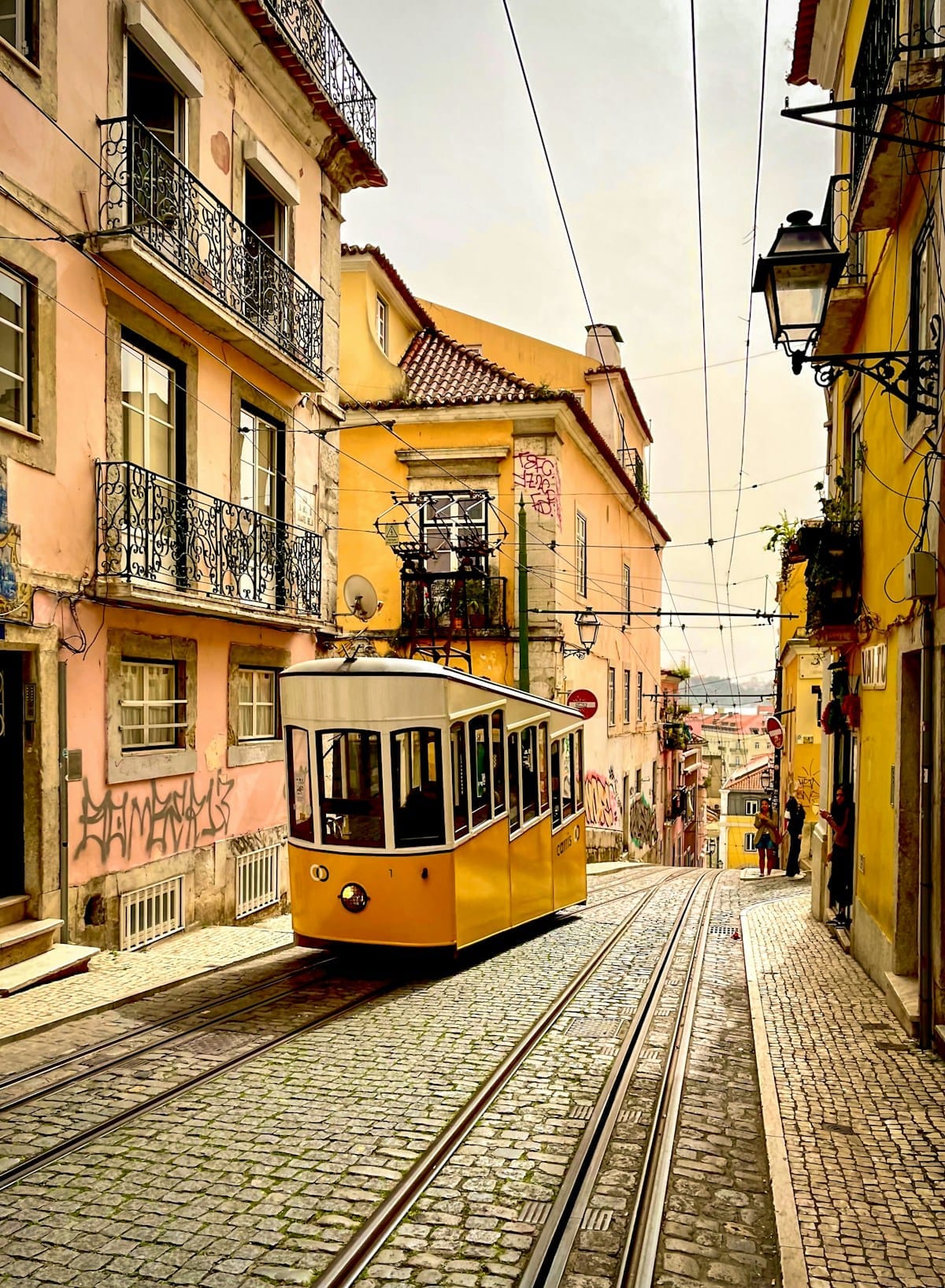
The final report into the Elevador da Gloria disaster will not arrive on the first anniversary of the accident, as had been planned. Portugal's rail and air accident investigation office, the GPIAAF (Gabinete de Prevencao e Investigacao de Acidentes com Aeronaves e de Acidentes Ferroviarios), said on Friday that its report is now expected "close to the end of the first quarter of 2027", roughly seven months later than the 3 September 2026 deadline it had set itself.
Sixteen people died and around two dozen were injured, Portuguese and foreign, when a carriage of the Gloria funicular derailed in central Lisbon on 3 September 2025 after its traction cable parted. It remains the deadliest transport accident in the capital in living memory.
Why the report slipped
The GPIAAF points to the complexity of the investigations and the expert examinations still under way. Publico reported that the office is running a joint technical inquiry with the Ministerio Publico, the public prosecution service, because some of the examinations involve destructive testing that can only be performed once. Running one set of tests for two investigations avoids destroying evidence twice over, and the office cites the optimisation of public spending as a second reason.
That coordination matters. A criminal investigation is running in parallel: the Policia Judiciaria searched Carris premises and its maintenance contractor in May, and a civil damages action has already been filed by the family of one victim.
Six recommendations, all accepted
What the office did release on Friday is the state of play on the safety recommendations it issued on 11 November 2025: four to Carris, the Lisbon municipal transport operator, and two to the IMT, the mobility and transport regulator. The preliminary report of 20 October had already found failures and omissions in the maintenance of the Gloria funicular, a lack of training among staff and a lack of supervision of the work carried out by the contracted maintenance company.
The four recommendations to Carris ask it to overhaul its internal control of the purchase, reception and fitting of safety-critical vehicle components; to carry out a critical review of the safety management system covering its electric mode, including the funiculars; to clarify the contractual obligations of its maintenance provider and actually police them; and, crucially, not to return any funicular to service until the design of the cable-to-cabin fixing system and the effectiveness of the braking systems have been re-evaluated by a body with proven funicular experience.
Carris told the GPIAAF it has commissioned an external audit of electric-mode maintenance, reinforced its operational safety division, terminated the old lift and funicular maintenance contract and transferred it to a firm with specialist expertise, and now requires an independent technical re-evaluation of traction, cable fixing and braking before any restart. The Graca funicular, the first to reopen, was put through extended checks by the Instituto de Soldadura e Qualidade and a Spanish specialist; the Santa Justa lift is in full overhaul, though its structure was found to be adequately conserved. The GPIAAF judged these actions "aligned with the objective" of its recommendations.
The two recommendations to the IMT are broader: a legal or regulatory framework covering the technical supervision of every funicular in the country, and rules for rail-borne electric cars, whether historic, modernised or modern, following the best practice of other EU member states with proper independent oversight. The IMT accepted both quickly and folded them into a draft law on metro and tram systems already in preparation. Porto suspended its own Guindais funicular in July while working through the same certification.
What this means for you
- If you use Lisbon's funiculars: the reopenings are not waiting on the final report. Each vehicle returns only after independent re-evaluation of its cable and braking systems, which is why they are coming back one at a time.
- If you are following the legal case: the GPIAAF report is a safety investigation, not a criminal one. Its job is to establish causes and prevent recurrence, and its findings cannot be used to apportion blame. The Ministerio Publico inquiry is separate.
- If you were injured or lost someone: the delay does not pause civil claims, which run on their own timetable through the administrative courts.
- If you travel by tram elsewhere in Portugal: the IMT's new framework is the piece with national reach, and it will cover historic and modernised rail vehicles well beyond Lisbon.
The recommendations are in force and largely acted on. What the extra seven months buys is the answer to the harder question: not what should change, but exactly how a traction cable on a 140-year-old funicular came to fail.