Sensors Counted More Than 110,000 People at the Romaria d'Agonia's Ethnographic Parade in Viana do Castelo
The cortejo etnografico ran 2.3 kilometres with over 3,000 participants and 27 floats under the theme 'Viana e Amor'. President Seguro watched from the stand and called the romaria the best that the Portuguese people have. Today is the closing day.
Viana do Castelo counted more than 110,000 people on its streets by six o'clock on Saturday evening, watching a parade that took over two and a half hours to pass a single point. The cortejo etnográfico, the historical and ethnographic parade that is the largest single set piece of the Romaria de Nossa Senhora d'Agonia, ran for 2.3 kilometres with over 3,000 participants and 27 floats under this year's theme, "Viana é Amor".
The attendance figure comes from VianaFestas, the association that organises the romaria, and was produced by digital counting sensors the municipal council has deployed around the route. That is a more precise method than the traditional police estimate, and it puts a number on something the north of Portugal has taken on faith for a century: that this is the country's biggest romaria.
What the parade actually is
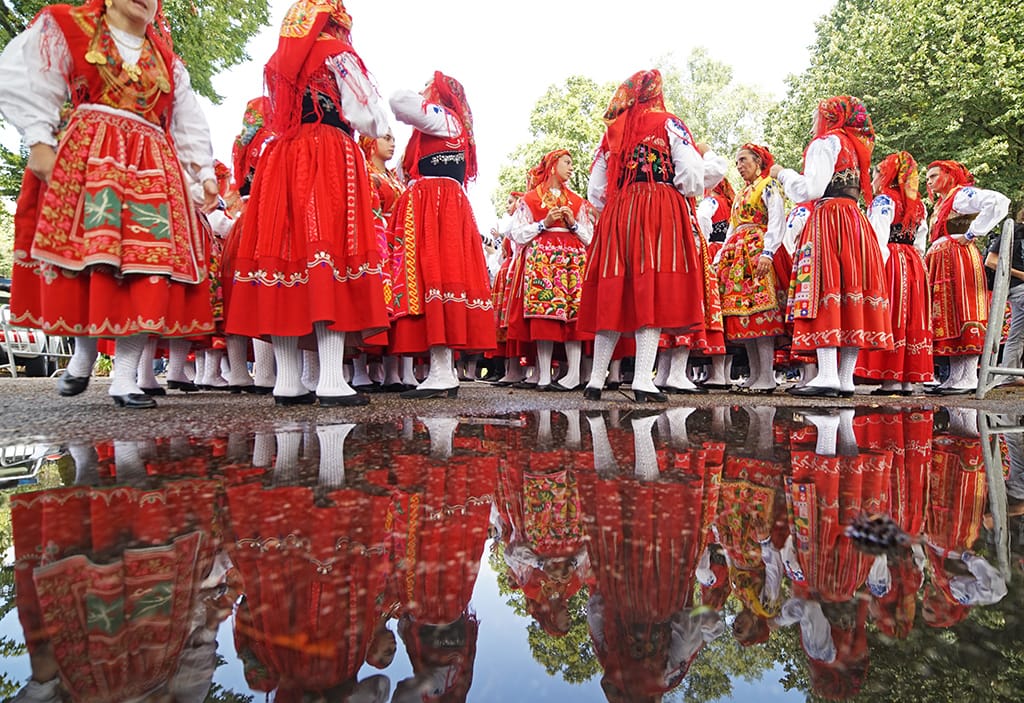
The cortejo is not a carnival procession. Parish groups from across the Alto Minho march in the working dress of the region as it was: fishermen and their wives, farm labourers, threshers, water carriers, musicians, ox carts. The floats reconstruct rural and riverside trades rather than fantasy scenes. The costume, and particularly the gold worn with it, is the point; a woman in full Minho traje can be carrying several kilograms of filigree that has passed through three or four generations of the same family.
President António José Seguro watched from the stand and called the romaria "o melhor que o povo português tem", the best that the Portuguese people have, praising its "authenticity, joy and identity". He described Viana do Castelo as a place with an unusually strong sense of its own regional character, singled out the women of the Minho as the centre of the festival, and called the day "a great lesson in unity". Leaving the stand, he handed the gifts participants had given him to a woman in the crowd who had been cheering throughout.
The rest of the week
The romaria runs from 15 to 23 August, which makes today its final day. The Desfile da Mordomia, the parade of gold in which the mordomas walk the riverfront in full traje, was held on 19 August. The sea procession, in which around a hundred decorated boats carry the image of the Senhora d'Agonia out onto the Lima estuary so the town's fishermen can ask for her protection, is unique in Portugal. On its return the procession passes over carpets laid overnight by residents in the Ribeira quarter, made this year with more than 30 tonnes of salt bought in Ovar.
CP laid on extra trains and extended timetables on the Minho line for the duration, which is the practical way most visitors from Porto arrive.
What this means for you
- If you are going today: the closing day is quieter than Saturday but the town still fills. Park outside the centre and walk in, or use the train; the Minho line runs to Viana do Castelo station, a short walk from the riverfront.
- If you missed it: the Minho's festival calendar does not end here. Vilar de Mouros, Portugal's oldest music festival, runs in the same district, and the Alentejo's Campo Maior paper-flower festival is on a UNESCO list of its own.
- If you are photographing the traje: ask. The gold is family property and the wearers know exactly what each piece is.
The sensors will report a final figure once the closing day is done. Whatever it lands on, the useful comparison is not with a music festival but with the scale of the parades Portuguese towns still stage for themselves, from Foz do Douro's 700 paper-costumed marchers upward.