Campo Maior Drapes Its Streets in Paper Flowers as a Rare UNESCO Festival Returns
The Festas do Povo (People's Festival) opened on Saturday in the Alentejo town of Campo Maior, with more than 400,000 visitors expected. Held only when the townspeople decide, the UNESCO-listed event saw over 4,000 volunteers turn roughly 50 tonnes of paper into flowers draping more than 100 streets
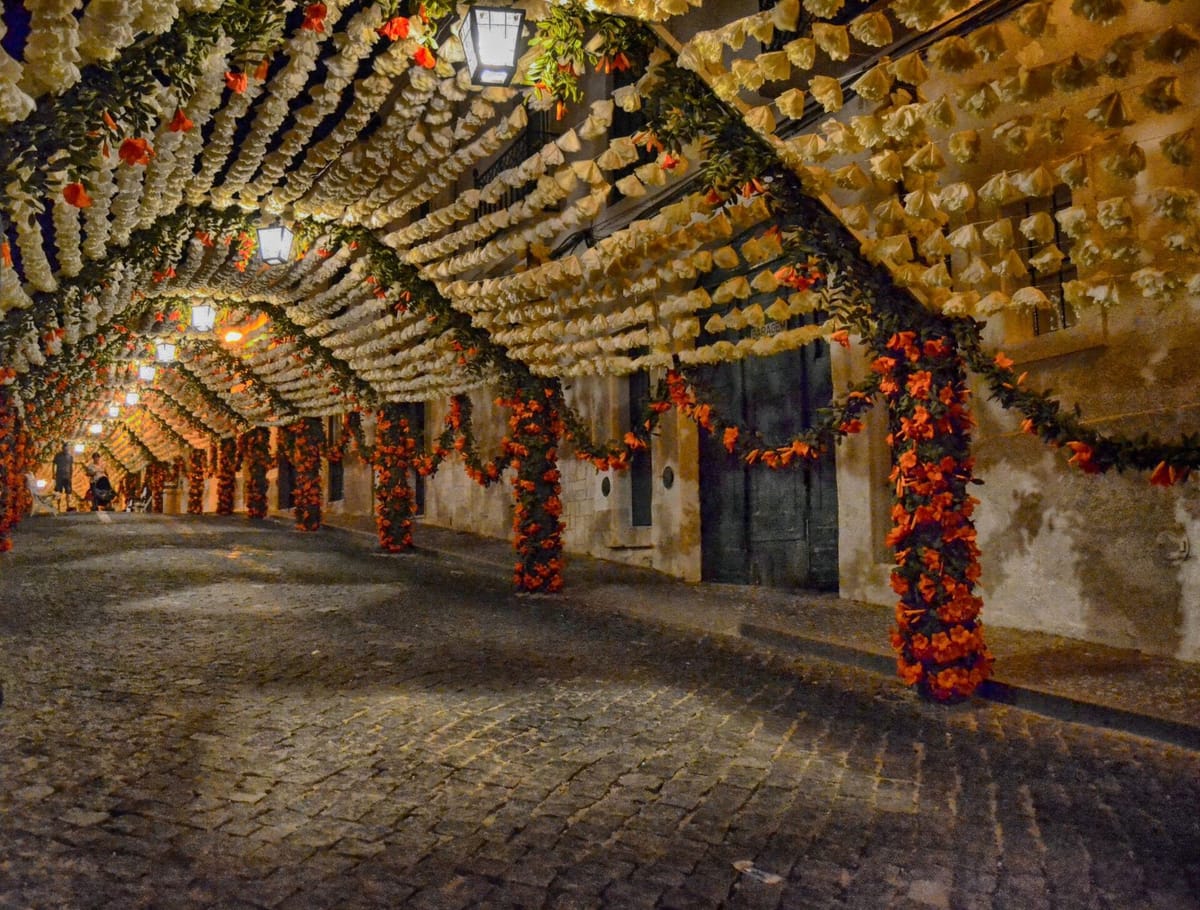
For the next week, a small town on the Alentejo's border with Spain will vanish beneath a canopy of paper flowers. The Festas do Povo de Campo Maior (People's Festival of Campo Maior) opened on Saturday, and organisers expect more than 400,000 visitors to file through streets transformed, by hand, into one of the most extraordinary folk spectacles anywhere in Portugal. Campo Maior was also where the region piloted TAAPedido, the Alto Alentejo's on-demand taxi service at bus fares.
What makes the festival so remarkable is that no one knows in advance when it will happen. There is no fixed calendar: the celebration takes place only when the townspeople themselves decide they are ready, a collective choice that can leave years — sometimes many years — between editions. When the decision is finally made, the whole community throws itself into months of secret preparation, and the result is unveiled all at once as the festival begins.
The scale of that effort is hard to overstate. For this edition, more than 4,000 volunteers turned roughly 50 tonnes of paper into countless handmade flowers, garlands and geometric hangings. Over 100 streets — most of them in the historic centre — have been engalanadas, or draped, from wall to wall and window to window, so that visitors walk through tunnels of colour with the sky itself barely visible overhead. Each street competes quietly with the next, its residents guarding their designs until the grand reveal.
The tradition's cultural weight has been formally recognised. The Festas do Povo are inscribed on UNESCO's list of Intangible Cultural Heritage, an acknowledgement that the festival is not merely a pretty display but a living practice passed down through generations — a rare case of an entire town acting as both artist and canvas. That status has helped turn a deeply local ritual into a national and international draw.
For Campo Maior, a town of only a few thousand people better known the rest of the year for its coffee industry, the festival is a once-in-a-while chance to welcome a flood of outsiders. Hotels and guesthouses across the Portalegre district and over the border in Spanish Badajoz fill quickly, and the influx delivers a sharp, if temporary, boost to cafés, restaurants and shops. Local authorities plan months ahead for the crowds, parking and safety demands that come with hundreds of thousands of day-trippers descending on narrow streets built for a fraction of that number.
Visitors planning to go should come prepared for heat and density. August in the Alentejo is fierce, and the covered streets, while shaded, funnel large crowds through tight spaces; comfortable shoes, water and patience are essential. The decorations are best appreciated on foot and by day, when sunlight filters through the paper to cast the town in shifting colour, though the festival's programme also runs into the evenings with music, processions and religious observances that anchor the celebration to its roots.
For those in Portugal this month, the timing is a gift: an event that may not return for years, staged entirely by the hands of the people who live there. Campo Maior has spent months in quiet preparation for this moment — and, for a short window, it is ready to show the country what it has made.