Government Bill Would Classify Ketamine Alongside Diazepam in Portugal's Drug Law, Making Unlicensed Dealing Punishable by Up to Five Years
A government bill now before Parliament adds ketamine and esketamine to Table IV of Portugal's 1993 drug law, citing rising recreational use. Medical and veterinary use continues; firms handling it get 60 days to apply for new licences.
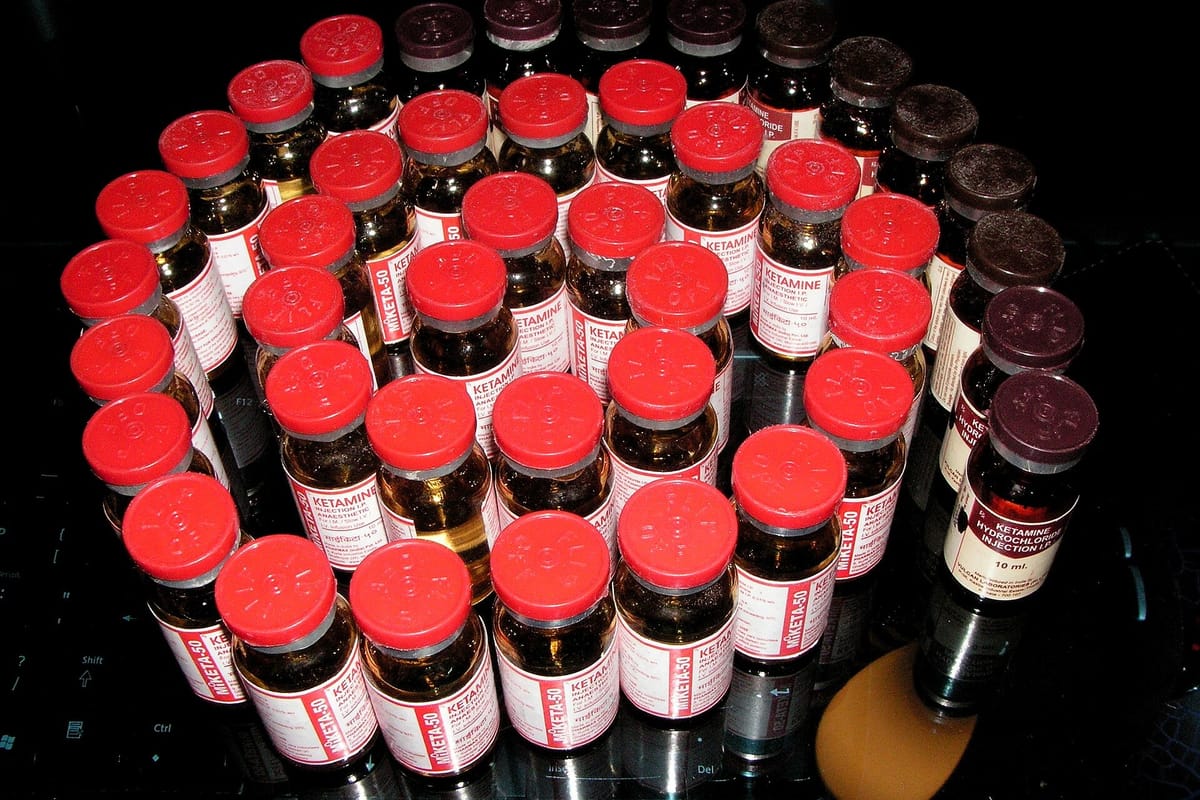
The Government has asked Parliament to bring ketamine and esketamine under Portugal's drug law, adding both to the same schedule as prescription sedatives such as diazepam, alprazolam and zolpidem. Proposta de Lei n.º 112/XVII (a government bill) was approved by the Council of Ministers on 5 November and entered the Assembleia da República on 6 November, with a request for priority and urgency. Público reported the bill on Saturday.
Ketamine is used in human and veterinary medicine as an anaesthetic and, in specific formulations, to treat depression that has not responded to other treatment. The bill says there has been "a significant increase" in its recreational use and in its diversion from legal supply chains. It cites a European Union Drugs Agency (EUDA) report, Ketamine in Europe: EMPACT Situation Report, published in March 2026, which found that Europe's illicit ketamine market is fed mainly by leakage from the legal supply chain, and that differences between national laws are exploited by criminal networks.
What changes
The bill adds ketamine and esketamine (a closely related form of the same molecule) to Table IV of Decreto-Lei n.º 15/93, the 1993 law that governs drug trafficking and use. Under that law, as it stands:
- Dealing without authorisation in a Table IV substance carries one to five years in prison, or up to two years or a fine where the offence is judged minor.
- Buying or holding for personal use is an administrative offence, not a crime, handled by the drug dissuasion commissions. Holding more than ten days' average personal use is treated as a sign that the drugs may not be for personal use.
- Licences: manufacturers, importers, distributors and others who handle Table I to IV substances need an authorisation from INFARMED, the medicines regulator.
A transitional rule covers businesses and services that already make, import, distribute, sell, hold, use or administer medicines or veterinary medicines containing ketamine or esketamine. They may carry on for 90 days, must apply within 60 days of the law taking effect for the authorisations or changes to their licences that the new listing requires, and can keep operating until INFARMED decides, provided they applied on time. Throughout, they must keep track of every stock, purchase, transfer and use, and take steps against theft, loss or diversion.
The same bill tightens the vetting of authorised firms, extending the "moral and professional suitability" check from owners and legal representatives to directors, managers and technical and security officers. It raises the maximum fines for serious and very serious breaches to 10 and 15 percent of the offender's turnover, and sends 80 percent of the proceeds of assets confiscated in drug cases to ICAD, the public institute for addictive behaviours. It also adds five new psychoactive substances to the tables to meet EU and UN obligations.
What it means for you
Patients and vets: the bill states that legally authorised therapeutic and scientific uses continue. Table IV medicines are dispensed on an ordinary prescription, although the drug law lets the health minister require a special prescription by portaria (ministerial order).
Travellers: the law already allows people crossing Portugal's borders to carry Table IV medicines for their own use, up to 30 days of treatment, with a medical document justifying it.
Anyone else: once the law is in force, possession for personal use would go to the dissuasion commissions, which have opened more than 213,000 cases in 25 years, and supply would be a crime. The law takes effect the day after publication, once Parliament has passed it and it is published in the Diário da República.