Environment Agency Clears Savannah's 16.5 Kilometre Boticas Bypass, Built to Take Barroso Lithium Mine Traffic to the A24
APA has given conditional approval to the northern route of a new road around Boticas, paid for by Savannah and required by the lithium mine's 2023 approval. Most of the 1,297 public consultation submissions opposed it.
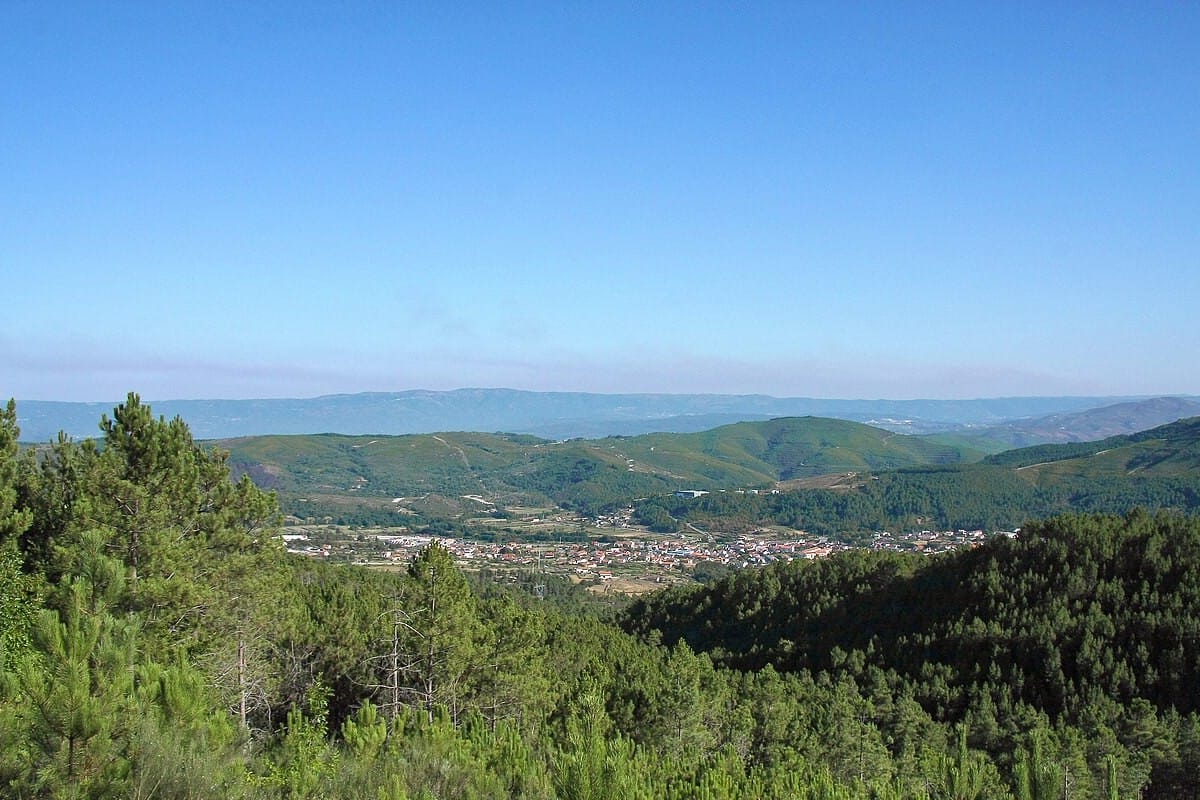
The Agência Portuguesa do Ambiente (APA, Portuguese Environment Agency) has issued a favourable conditional Declaração de Impacte Ambiental (DIA, environmental impact statement) for a new road around Boticas, in Trás-os-Montes, meant to carry traffic from Savannah Resources' planned lithium mine at Covas do Barroso to the A24 motorway. The decision, filed as process 3927, was issued on 15 October and is valid until 14 October 2030. Savannah announced it on 19 October.
What will be built
The promoter is Savannah Lithium, Lda., and the licensing body is Infraestruturas de Portugal (IP, the state roads and rail company). According to the DIA, the road runs from Carreira da Lebre, west of Boticas, to the Boticas/Carvalhelhos junction of the A24 in the parish of Redondelo, in Chaves. It bypasses the ER311, EN312 and EN103 roads.
APA approved the northern of the two routes studied. It is about 16.5 kilometres long: roughly 10 kilometres of new bypass and a 6.5 kilometre link to the A24 shared by both options. The southern route, at about 17.4 kilometres, was rejected partly because around 2 kilometres of it had gradients of 8.5 to 12 percent, which the agency said raised the risk of brake failure for heavy lorries. The approved road has one lane each way, seven roundabouts and a viaduct of about 482 metres with piers up to 51 metres high. Construction should take about 18 months.
Savannah's statement to the London market puts the cost at 61 million US dollars, based on its July 2026 feasibility study. Jornal de Negócios reports the figure as about 55 million euros, paid entirely by Savannah. The company says the road will be open to the public.
Why the mine needs it
The DIA lists four aims: better regional access, less through traffic in Boticas, Granja, Carreira da Lebre and Sapiãos, safer roads, and "an adequate link for the heavy vehicles associated with the Mina do Barroso". The 2023 approval of the mine's expansion made this new access a condition of that project. APA rejected the road's first application in August 2025 because, its letter said, the design did not meet national road standards.
The approval comes with conditions. Savannah must keep at least 50 metres from licensed groundwater wells, reduce the barrier the road creates for wolves, protect Galician-Portuguese oak woodland, and get a separate public-utility declaration if it has to fell cork or holm oaks. The detailed design then goes back to APA for a compliance review. Savannah says the mine can start operating before the road is finished. According to Notícias ao Minuto, the company plans to start building the mine in 2027 and to begin production in 2028.
Most submissions opposed the road
The public consultation ran from 5 June to 17 July 2026 and drew 1,297 submissions. According to the DIA, the associations and protest movements that took part, along with 1,126 citizens, opposed the road, while 146 citizens supported it. Boticas council backed the project. Chaves council asked for a wider road and safer local access on its section, and the DIA's design measures take up those requests.
In APA's consultation report, the residents' association Unidos em Defesa de Covas do Barroso (United in Defence of Covas do Barroso) argued that the road is "not an autonomous infrastructure" but one that is "functionally, legally and financially dependent" on the mine. It asked APA to refuse it. In the DIA, the agency replies that the road "maintains its function beyond the life cycle of the mine". Our 9 October report covers the wider dispute over the mine.