The EU Adds the Disused Borralha Tungsten Mine in Montalegre to Its Strategic List, as Barroso Villagers Block Savannah's Lithium Works Nearby
Borralha is Portugal's only pick among 46 new Strategic Projects under the Critical Raw Materials Act, which bring faster permits but no automatic money. The council voted against it; the environment agency approved it with conditions.
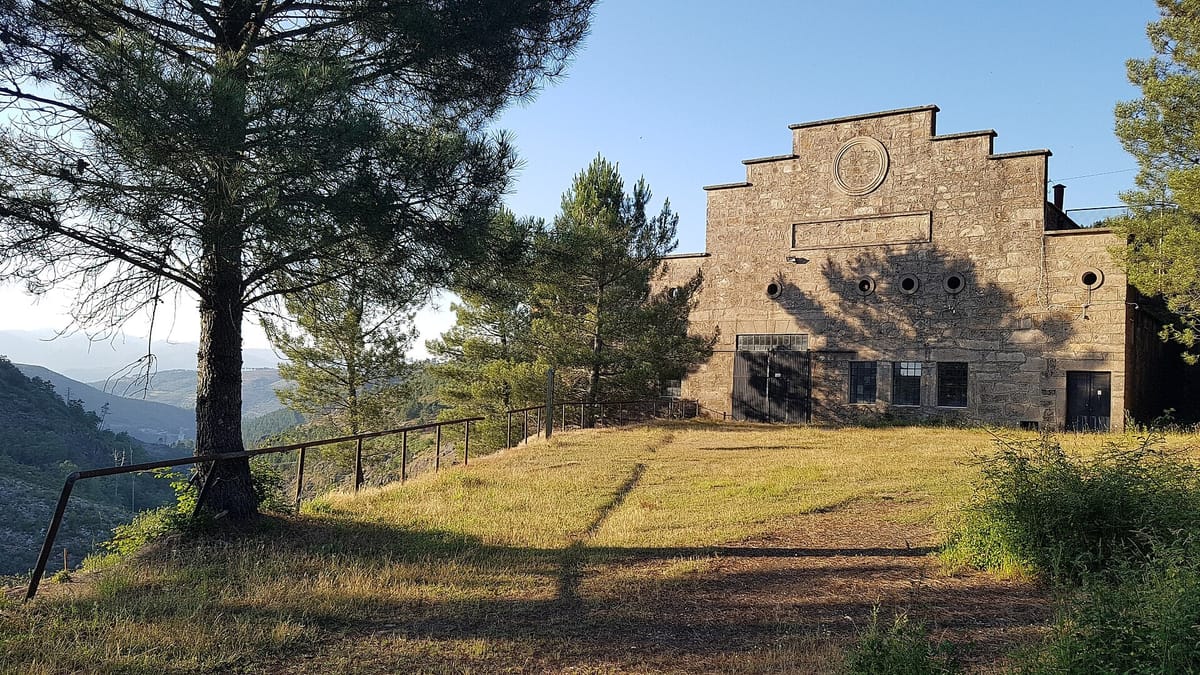
The European Commission on Friday added the disused Borralha tungsten mine, in the parish of Salto in Montalegre, to its list of Strategic Projects under the Critical Raw Materials Act. It is the only Portuguese project among the 46 chosen in this second round, and the status gives it a faster permitting track and help in finding finance.
The announcement landed on the same morning that residents of Covas do Barroso, in neighbouring Boticas, set up a blockade of the works of Savannah Resources, whose lithium mine was itself named a Strategic Project by Brussels in March 2025.
What Brussels picked
The Commission received 102 applications from 18 member states and selected 46 in 16 countries. Three concern tungsten, a metal the Commission ties to the defence and aerospace industries.
The Borralha project is listed as an extraction project for tungsten, promoted by Minerália, Minas, Geotecnia e Construções, Lda. The Commission estimates that the 46 projects together need about 21.1 billion euros of investment to become operational.
Strategic status does not bring money automatically. The Commission says it means a permit process that should not exceed 27 months for extraction projects, support in reaching lenders and help connecting suppliers with buyers. Selection is no guarantee a project will open.
The act's 2030 benchmark is EU capacity to extract at least 10 percent of its annual consumption of each strategic raw material. Combined with last year's list, the Commission says the projects could fully meet it for tungsten.
The mine and the objections
The Borralha mines opened in 1903, closed in 1986 and were among Portugal's main sources of wolfram (tungsten ore). Minerália signed a concession contract with the state in October 2021. According to the non-technical summary of its environmental impact study, as reported by Lusa, it plans an underground mine extracting 500,000 tonnes of ore a year for 15 years, with copper and tin concentrates alongside the tungsten and 116 direct jobs.
The study drew 653 submissions in a public consultation that ran from 7 October to 17 November 2025. The Câmara Municipal de Montalegre (Montalegre Town Council) voted unanimously against the project, citing hazardous substances, water supply, the stability of the old galleries and an incomplete clean-up of the old mine waste. A concern raised repeatedly in the consultation was the public water intake at the Venda Nova reservoir, downstream of the mine.
The Agência Portuguesa do Ambiente (Portuguese Environment Agency, APA) nonetheless issued a favourable but conditional decision on 8 January 2026. It argued that underground mining limits dust and noise, and that the project would remove a sulphide waste heap that produces acid water and restore the Ribeira de Amiar stream. It accepted that noise and vibration would weigh heavily on a few nearby families, for whom rehousing is proposed.
The other Barroso mine
In Covas do Barroso, about 30 people gathered from 8:00 on Friday to stop Savannah's work on common and private land placed under an administrative easement, according to Lusa and RTP. The Ministry of Environment authorised a second easement in May, Lusa reported. Nélson Gomes, president of the Unidos em Defesa de Covas do Barroso (United in Defence of Covas do Barroso) association, said the community had "exhausted all other alternatives". Savannah plans to start construction next year and produce from 2028, RTP reported.
Portugal had four projects on the 2025 list: Savannah's Barroso lithium mine, Lusorecursos's Romano lithium mine, Lifthium Energy's Lift One lithium processing plant and a Somincor copper project. The Commission plans another call for applications towards the end of 2026. We reported last month on Coimbra researchers' work on the Covas do Barroso dispute.