At Covas do Barroso, Coimbra Researchers Date the Injustice From Before the Mine, and Ask for a Binding Right to Refuse
A Horizon Europe paper from the Centro de Estudos Sociais proposes prospective environmental justice, and files Barroso under what it calls sacrificial logics. Its recommendations for Portugal include no-go criteria for mining in Natura 2000 and world agricultural heritage areas.
The usual way to argue about a mine is to weigh what it will produce against what it will cost, and to do that once the project is running. A paper published this month by four researchers at the Centro de Estudos Sociais (Centre for Social Studies) at the University of Coimbra argues that this framing arrives too late, and that by the time the first machine reaches the ground a good deal has already happened to the people living on it.
Their name for the alternative is prospective environmental justice, a concept developed by the political ecologist Irina Velicu. The lead author, Marcus Erridge, put the claim plainly in response to questions from Público: there are populations, places and ways of life that are conceived, in advance, as expendable.
What the researchers say has already happened at Covas do Barroso
The paper takes six case studies across southern and eastern Europe, and the Portuguese one is the lithium project at Covas do Barroso, in the municipality of Boticas. The authors describe it as an example of what they call sacrificial logics, and they say the harm is not purely anticipatory: they point to water contamination in Barroso as something already recorded, alongside comparable damage elsewhere, such as the loss of access to pasture and more dangerous encounters with wildlife in Romania.
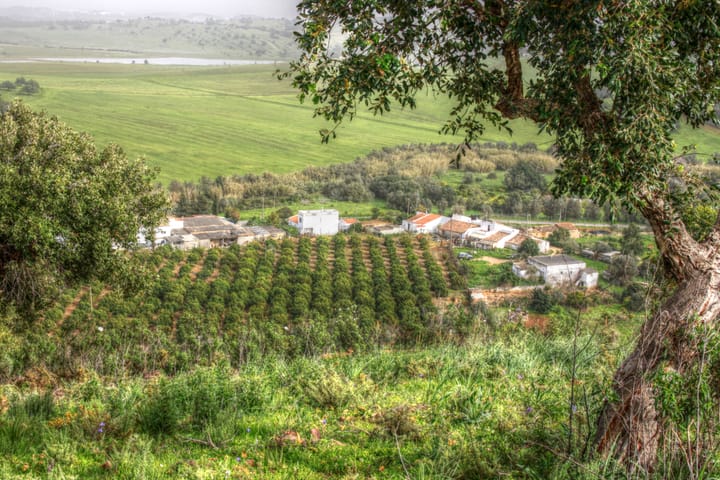
What makes the region a case rather than an anecdote, in their telling, is the combination of three things: an urgency they describe as manufactured, consultation processes reduced to formalities, and mechanisms for expropriating private and common land. Together, they argue, these press communities towards accepting mining while denying them any real power to refuse. The land in question was classified in 2018 by the United Nations Food and Agriculture Organization as a Globally Important Agricultural Heritage System, and part of it sits inside the Natura 2000 network.
The paper also cites the findings of the UN Aarhus Convention Compliance Committee in case ACCC/C/2021/186, adopted on 22 August 2025 after a complaint brought by the Fundação Montescola in May 2021. The committee concluded that Portugal fell short of the convention in how the project was licensed, including inadequate public consultation and restricted access to environmental information. Separately, the researchers note that women have been at the front of the local resistance and carry a disproportionate share of the emotional cost of a conflict that has now run for years.
The policy ask, and what it would change
The work comes out of GreenPaths, a Horizon Europe project running under grant agreement 101112305 from October 2023 to 30 September this year, coordinated by the Universidad de Cantabria and covering fifteen case studies in Europe and the Global South. Barroso is case study number one, filed under the title "Lithium Mining and the 'Green Sacrificial Logics' of the Energy Transition in Barroso, Portugal".
Its recommendations for Portugal are specific. Just transition frameworks here are built around urban building retrofits and retraining fossil-fuel workers; the researchers want the scope widened to recognise the land care done by rural communities and the cultural heritage of territories like Barroso. They want legal mechanisms giving communities a binding right to say no rather than a consultative one. And they want formal no-go criteria for mining in areas such as Natura 2000 sites and world agricultural heritage systems.
That last proposal is the sharpest, because Barroso would meet both tests. None of this changes the position on the ground: Savannah Resources holds its conditional environmental approval, completed its definitive feasibility study in July and has been signing land deals with commons communities while targeting a 2027 start. What the paper offers is not a legal obstacle but a different accounting, and one that says the ledger opened years ago.