Vilar de Mouros, Portugal's Oldest Music Festival, Opens a Five-Night Run in the Minho With Yungblud
Portugal's oldest music festival returns to the northern parish of Vilar de Mouros from 18 to 22 August, with Yungblud opening a loud, eclectic bill that also features Dropkick Murphys, Kasabian and Body Count. Born in 1971, the 'Portuguese Woodstock' drew around 50,000 people last year.
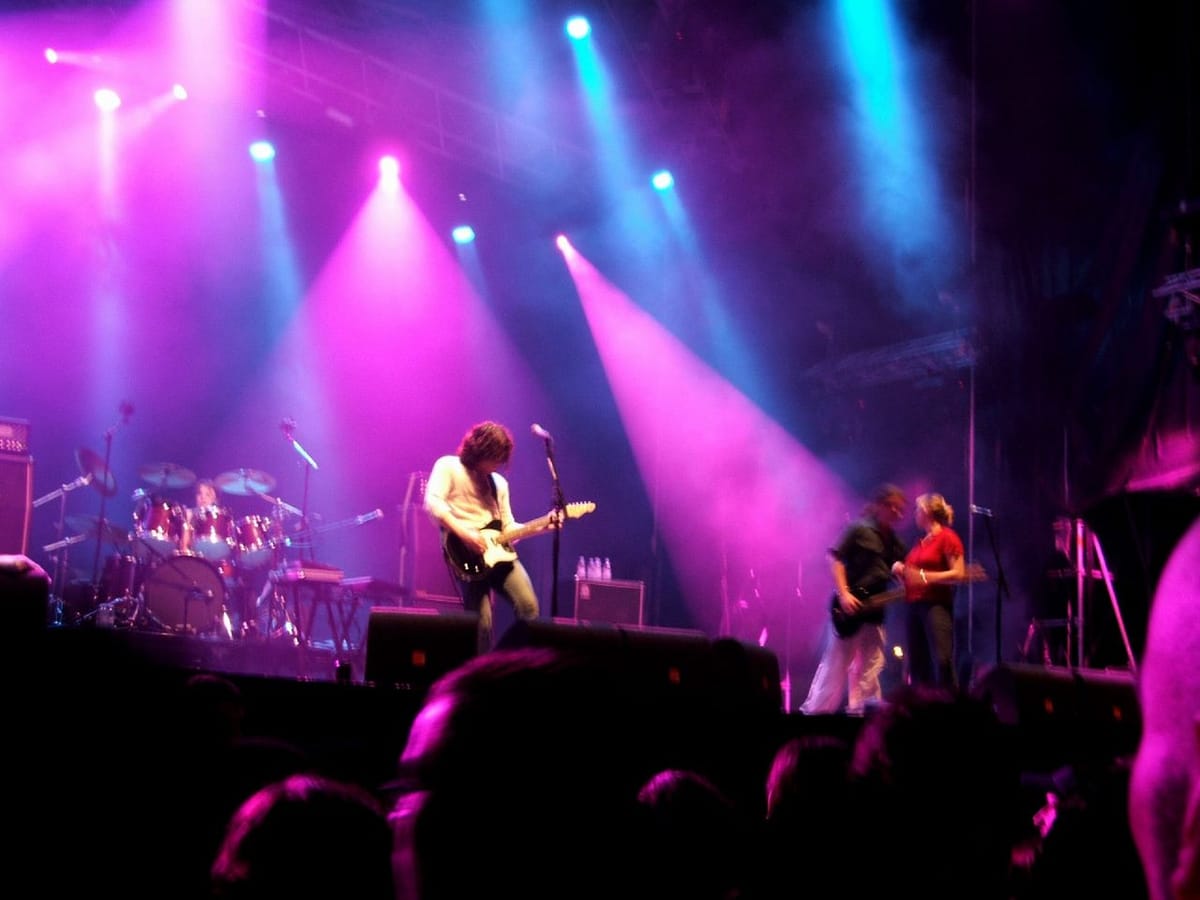
The oldest music festival in Portugal returns this week, and it is doing so with a line-up that leans loud. Vilar de Mouros opens on Tuesday, 18 August, and runs through Saturday, 22 August, spreading five days of concerts across the small parish of the same name in Caminha, tucked into the green far north of the Minho near the Spanish border. Gates and stages come alive from five in the afternoon, and the British provocateur Yungblud has the honour of opening the bill.
What follows over the week is a deliberately eclectic sweep through rock's louder traditions. Boston's Dropkick Murphys bring their Celtic punk, Britain's Kasabian and Kaiser Chiefs supply the indie-anthem singalongs, and Ben Harper & The Innocent Criminals offer a bluesier counterweight. There is heavier fare too — Body Count, the metal band fronted by the rapper and actor Ice-T — alongside Iceland's Kaleo, Sweden's garage-rock veterans The Hives, Britain's Kula Shaker and the veteran American funk outfit War, among many others across the festival's stages.
The event carries a weight of history that few Portuguese festivals can match. It was first staged in 1971 by a local physician, António Barge, in a Portugal still under the Estado Novo dictatorship — an act of countercultural daring that earned it the enduring nickname of "the Portuguese Woodstock." That inaugural edition famously featured a young Elton John. After a long dormancy, the festival was revived in 1982 and has since welcomed the likes of U2 and Echo & the Bunnymen, cementing its place in the country's cultural memory.
Its persistence matters because Portugal's summer festival calendar has become a crowded, commercial affair, dominated by big-budget events in Lisbon and the Algarve. Vilar de Mouros stands apart on geography and lineage alike: a rural festival in a corner of the country more associated with pilgrimages and vinho verde than with distorted guitars, kept alive by a sense of custodianship rather than pure spectacle. Last year it drew around 50,000 people, and the organisers, Surprise & Expectation, are hoping to better that this time.
For festivalgoers, the practicalities are gentle by modern standards. Children under six get in free, and the four- and five-day passes bundle in free access to the campsite, subject to capacity — an old-school touch that keeps the multi-day experience within reach for younger crowds. The festival is run with the backing of the Caminha municipality and the local parish council, a reminder that this is as much a community institution as a commercial venture.
For readers planning a late-August escape, Vilar de Mouros offers something increasingly rare: a festival with genuine roots, staged in one of Portugal's most scenic and least-trodden regions. Whether you go for Yungblud's opening salvo or War's closing groove, the draw is the same one that pulled crowds north more than half a century ago — the unlikely, stubborn survival of a countercultural gathering in a village most maps struggle to find. On what councils are putting into people's hands at the door, our report on Loures giving away 20,000 wristbands that change colour when a drink has been spiked, built on chemistry from a NOVA Lisbon laboratory and costing 22,000 euros split with the concert promoter sets the latest reference.