Seguro Escolar in Portugal in 2026: A Practical Guide to What the State Pays When a Child Is Hurt at School, the Journey That Counts, and the Seven Exclusions
Every state-school pupil is covered by a statutory scheme with no insurer and no policy document. It pays for public treatment, travel and compensation worth up to 300 times the minimum wage, and it pays nothing at all if you sorted the problem out privately first.
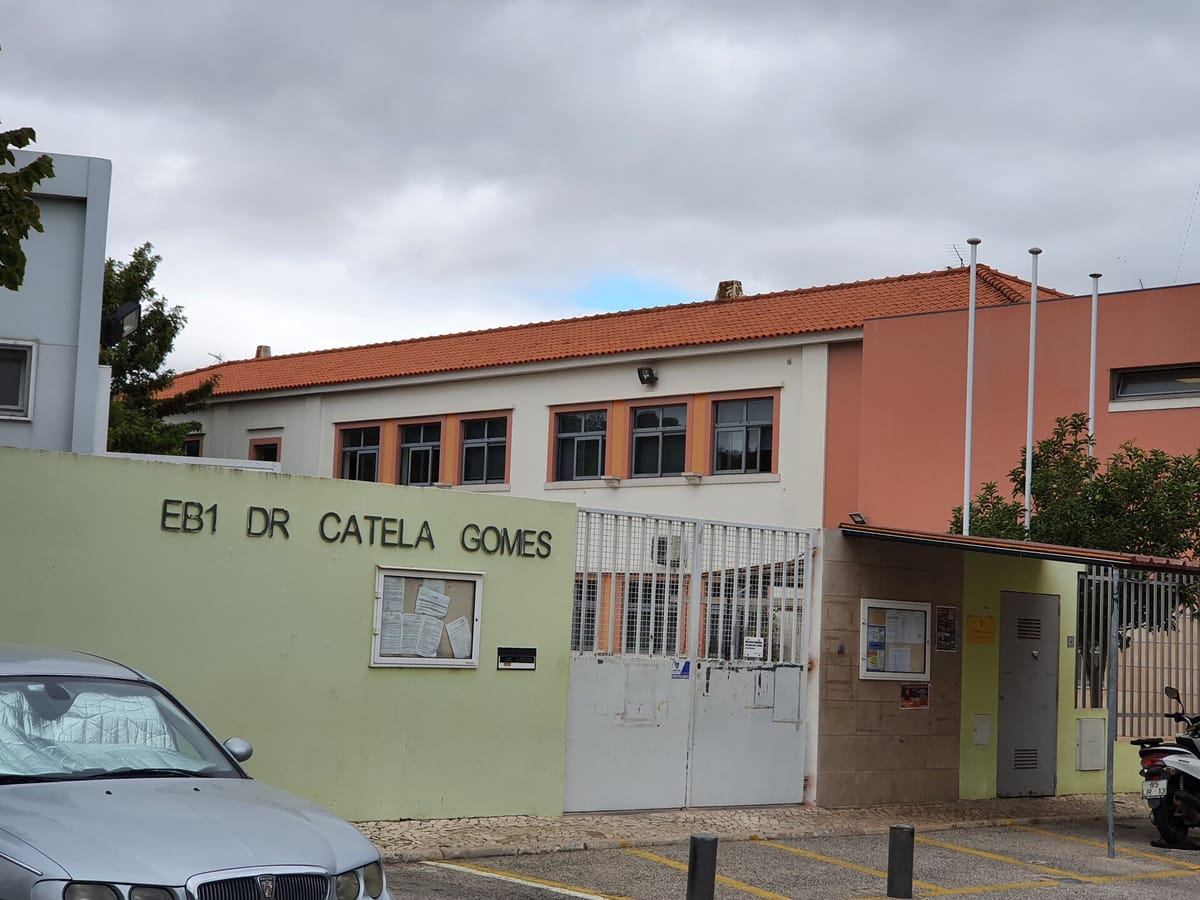
Every child enrolled in a Portuguese state school is covered by an insurance scheme that most parents never hear about until a teacher rings them from a hospital. It is called the seguro escolar (school insurance), and it is not insurance in the ordinary sense: there is no insurer, no policy document and no claims line. It is a statutory protection scheme run by the education administration, and it pays for the consequences of an accident that happens at school, on a school activity, or on the walk to and from it.
The rules are in one instrument, the Regulamento do Seguro Escolar (School Insurance Regulation), approved by Portaria n.º 413/99 of 8 June and amended once, by Portaria n.º 298-A/2019 of 9 September, which is the last change recorded on the consolidated text. This guide works through what it covers, what it pays, the seven exclusions, and the two or three procedural traps that cost families money.
One point of translation before anything else. The regulation is 1999 vintage and still speaks throughout of the direcções regionais de educação, the regional education directorates, which have since been reorganised out of existence. Read those references as the regional structure of the education administration that serves your school; the school itself will tell you which office handles its cases, and it is the school, not the parent, that opens the file.
Who is covered
Article 2 sets the scope, and it is wider than "pupils in class". The scheme covers children enrolled in and attending state pre-schools, and pupils in basic and secondary education, including vocational and artistic education. It covers pupils at private and cooperative schools operating under a contrato de associação (association contract with the state). It covers people on recurrent education and out-of-school education courses run by or with the Ministry of Education.
It also covers four situations parents often assume fall outside it:
- pre-school children and first-cycle pupils attending socio-educational activities organised by parents' associations or by the council on school premises;
- basic and secondary pupils on work placements or work-based training that forms the required extension of their course;
- pupils taking part in desporto escolar (school sport) activities;
- children and young people signed up to holiday activity or free-time programmes organised by the school and run during the holidays.
Trips abroad are covered too, but only as a top-up. Where a pupil travels outside Portugal on a study visit, an exchange project or a school-sport competition, the seguro escolar covers the damage not covered by the travel assistance insurance that article 34 makes compulsory for any such trip, and only if the trip was notified to the regional education directorate for authorisation at least 30 days in advance. If the school did not give 30 days' notice, that top-up is not there.
What counts as a school accident
Article 3 defines it as an event occurring in the place and time of school activity that causes the pupil injury, illness or death. Two things extend that. An accident arising from an activity carried on with the consent of, or under the responsibility of, the school's management bodies is inside the definition even if it does not look like a lesson. And an accident on the journey is inside it, on the terms below.
Note what the definition is not. It is not fault-based. Nobody has to have been negligent for the scheme to pay. It is also not a substitute for the health service: article 5 says the scheme guarantees financial cover for assistance to the injured pupil "complementarily" to the systems, subsystems and health or social protection insurances the pupil already benefits from. The seguro escolar sits on top; it does not replace the SNS, and it does not replace a private health policy or a public subsystem such as ADSE.
The journey, and the narrow rule on being knocked down
Article 21 treats an accident on the journey as equivalent to a school accident: an external and fortuitous event occurring on the habitual route between home and school or the reverse, in the period immediately before the start or immediately after the end of school activity, within the time reasonably needed to cover the distance from the point of departure to the place of the accident.
There is a hard qualifier in the second paragraph. Only a pupil who is a minor and not accompanied by an adult legally obliged to supervise them is covered on the journey. A child walking home alone is covered. The same child walking home holding a parent's hand is not, because the duty of supervision has passed back.
Being knocked down by a vehicle is treated separately and much more restrictively. Under article 22, an atropelamento (a pedestrian being struck) counts as a school accident only where four conditions hold at once: responsibility is attributed to the injured pupil, in whole or in part, by the competent authorities; it happens on the normal route to or from school, in the period immediately before or after activity, within the time needed to walk it; it is reported to the police and judicial authorities within 15 days, even if it appears to have been caused by the pupil or by a third party who could not be identified at the time; and the pupil is a minor and unaccompanied by an adult with a duty of supervision, unless that adult is a teacher or member of school staff.
Read that first condition carefully, because it inverts the usual instinct. The scheme steps in where the child is blamed. Where a driver is at fault, the driver's compulsory motor insurance is the route, and article 31 lets the education administration recover its outlay from a third party held responsible. There is a safety valve: paragraph 2 lets the regional director bring the pupil inside the scheme by reasoned decision where the police or courts conclude that the person responsible for the collision cannot be located or identified, provided the other requirements are met.
The 15-day police report is the deadline in this guide most likely to be missed, because a family dealing with a hurt child does not think of it as a school matter.
What the scheme actually pays
Article 6 lists two headline benefits: medical and pharmaceutical assistance, and the transport, accommodation and food needed to obtain it. Article 10 adds compensation.
Medical and pharmaceutical assistance (article 7) covers general and specialist medical care including diagnostic tests and surgery; temporary mobility aids, hired rather than bought where hiring is cheaper; and equipment including orthopaedic appliances and visual aids prescribed by a specialist and made necessary by the accident. If the accident damages or destroys mobility aids or prostheses the pupil already used, repair or replacement is covered.
Care is to be given by public hospitals. It may be given by private hospitals or private doctors only where the pupil is a beneficiary of a health system, subsystem or insurance that covers them there. Inpatient stays are covered in a shared room or a ward, not a private room.
Two paragraphs of article 7 decide who is billed. Where the pupil is a beneficiary of a public or private subsystem, SNS institutions invoice the cost of the care. Where the pupil belongs to no subsystem and is simply an SNS beneficiary, those institutions "may bill nothing" for the care. In plain terms: a child on the SNS alone is not charged for treating a school accident in a public hospital.
Accommodation and food (article 8) apply where the pupil has to travel outside their area of residence on medical instruction or on the instruction of the regional education directorate. On the day of the accident itself an accompanying adult is covered too where the pupil is a minor, and that extends to travel for outpatient treatment and to complying with formalities set by the services. Extras are not covered, and hotels above three stars are not covered.
Transport (article 9) has to be public transport unless none exists or the attending doctor certifies in writing that something else suits the case. Every journey must be evidenced by a document proving it took place. Where a private car is justifiably used, the scheme pays a per-kilometre amount at the rate fixed for public servants travelling in a vehicle assigned to a public service route, against a receipt showing the vehicle registration, the kilometres covered, and the date and purpose of the journey backed by a hospital document giving the date of the appointment or treatment.
Compensation (article 10) comes in three forms: for temporary incapacity, but only where the pupil holds paid employment, and then at the loss actually suffered and properly evidenced; for permanent incapacity; and for non-pecuniary damage.
How permanent incapacity is calculated
Article 11 is the arithmetic that decides the size of a serious claim, and it is worth having in mind before anyone signs anything.
The compensation is a function of the incapacity coefficient assigned to the pupil. The value of coefficient 100 is set at 300 times the national minimum wage in force on the date of the accident. The coefficient itself is fixed by a junta médica (medical board) using the Tabela Nacional de Incapacidades (National Incapacity Table) annexed to the work accidents and occupational disease law in force at the date of the accident, the same table used for workplace injuries and for the atestado médico de incapacidade multiuso.
The retribuição mínima mensal garantida (guaranteed minimum monthly wage) for 2026 is 920 euros, set by Decreto-Lei n.º 29-A/2026 of 30 January with effect from 1 January. At that figure, coefficient 100 is worth 276,000 euros for an accident in 2026, and a coefficient of, say, 15 is worth 41,400 euros. Because the reference is the minimum wage on the date of the accident, an accident in an earlier school year is valued at that year's figure, not today's.
On top of that, article 11(4) allows the regional director, on the pupil's application and by reasoned decision, to award non-pecuniary damages of 30 percent of the amount calculated above.
Payment (article 12) goes into a term deposit at the Caixa Geral de Depósitos in the injured pupil's name where they are a minor, and into a current account where they are an adult. For a minor, the regional director may authorise the guardian to withdraw annually the amounts needed for the pupil's wellbeing, capped at 5 percent of the sum deposited. Parents should expect the money to be locked up, not handed over.
Article 13 adds two further guarantees that sit outside the injury framework: repatriation of the body and funeral expenses, and cover for damage the pupil causes to third parties, where the pupil was under the authority of the school's management or where the damage results from a journey accident directly attributable to them.
The medical board, and the appeal that costs a deposit
A junta médica is convened by the regional education directorate on its own initiative or at the request of the pupil or their legal representative (article 14). The pupil must be examined by one whenever temporary or permanent incapacity is presumed or the clinical situation requires it. It has at least three doctors, two of whom must belong to the school health service; the third may be the pupil's own doctor if the pupil asks (article 15).
If the family disagrees with the result, article 16 allows a junta médica de recurso (appeal board). The deadline is 30 days from notification of the first board's result. The doctors who sat on the first board may not sit on the appeal, except the pupil's own doctor. And there is a cost: convening the appeal board obliges the pupil to lodge a deposit with the regional directorate equal to the cost of it, forfeited if the appeal fails. Article 17 adds that the administration does not bear the cost of the pupil's own doctor attending the appeal board unless the outcome is favourable.
Missing a board is expensive. Article 19 requires at least five working days' notice with a justification. Without it, the pupil bears the costs, save for properly evidenced force majeure or where the reason could not have been known earlier. Article 20 gives one more chance, a fresh board within 60 days, and then closes the door: two unjustified absences mean exclusion from cover and repayment of anything already received.
The seven exclusions
Article 25 excludes the following from the concept of a school accident, and therefore from cover:
- an illness the pupil already has, its prevention and its treatment, except the first trip to a health unit;
- an accident on school premises when the premises are closed, or have been lent out for activities the school management is not responsible for organising;
- an accident resulting from force majeure, defined for this purpose as cataclysms and other manifestations of nature;
- an accident during a riot or a disturbance;
- occurrences resulting from harmful acts for which the law attributes responsibility to a body outside the school;
- journey accidents involving motor vehicles or motorised cycles that are carrying the pupil or being driven by them;
- accidents involving vehicles assigned to school transport.
The last two deserve emphasis, because they remove the two most common ways a modern secondary pupil actually travels. A teenager riding a scooter or an e-bike to school, or being driven, is outside the journey cover. So is a child hurt in an incident involving the school bus itself, which is covered instead by that vehicle's own insurance.
Article 26 separately excludes the pupil's rights in cases of bad conduct in the process: leaving hospital without authorised discharge, failing to attend prescribed appointments or interrupting treatment without acceptable justification; not observing the regulation or the directorate's instructions; taking initiatives outside the regulation without prior agreement; or not accepting the compensation awarded within 30 days of notification, unless an appeal board has been requested. Expenses are excluded where they do not arise from an accident reported by the school under the regulation, or where they are not properly evidenced.
The procedural chain, and where families go wrong
Article 23 puts the first obligation on staff: any education professional who learns of a school accident must report it to the school's management body. The management body must then open a formal inquiry into the accident on the model annexed to the regulation. Where the accident results in the pupil's death or where permanent incapacity is presumed, the inquiry belongs to the regional education directorate instead, notified by the fastest available means.
Article 24 says who decides whether the event qualifies. For second- and third-cycle basic schools and secondary schools, the school's own management decides. The regional directorate decides in the cases not covered by that, and in three specific situations: death or presumed permanent invalidity; a pedestrian being struck by a vehicle; and any case involving private hospitals, private doctors, or providers with no agreement with the health service. The decision is always notified to the pupil's legal representative, or to the pupil if an adult, with a right of appeal to the regional director in the first case and to the Ministry of Education in the second.
Article 30 lists the family's duties, and they are the practical checklist. Use the assistance on the regulation's terms, carrying the card of whatever system or subsystem you belong to. Do not make payments you consider to be the responsibility of that system without the school knowing. Do not take any step without first confirming through the school that the incident falls within the regulation. Present the originals of expense documents to the health system for reimbursement. Present all supporting documentation of costs assumed to the school. Answer questions from the school or the directorate. Attend medical examinations. Give receipt for money paid. And report the accident in good time.
That third duty is where most money is lost. A parent who takes an injured child to a private clinic on the afternoon of the accident, pays, and presents the receipt weeks later is likely to find the expense excluded twice over: as a step taken outside the regulation without prior agreement, and as care outside the public network where the pupil had no subsystem entitling them to it.
Enrolment and the premium
Article 27 makes enrolment in the seguro escolar compulsory for pupils enrolled at any state education establishment below higher education. It is not something you opt into.
Article 28 sets the premium, payable at the moment of enrolment, at 1 percent of the national minimum wage. On the 2026 figure of 920 euros that is 9.20 euros. Most families will never pay it: paragraph 4 exempts pupils in pre-school education, pupils in compulsory schooling, and pupils with disabilities, and compulsory schooling in Portugal runs to the twelfth year or the age of 18. The regulation still carries teeth for those who do owe it. Not paying at enrolment doubles the amount, and a pupil who has not paid will not be issued certificates or diplomas, and will not have their marks published, until it is settled.
What the school has to do, and what you can ask to see
Article 32 obliges school management to apply the regulation and make the first assessment of whether an occurrence is covered; to record, at enrolment, which health system or subsystem each pupil belongs to; to get the injured pupil to the hospital that will treat them and tell the guardian; to prepare the accident inquiry; to explain the regulation to the guardian; to follow the treatment and the costs as far as possible; to check whether documents are in a fit state to be accepted; and to press for prompt communications and reimbursements.
The last obligation is the useful one. Schools must keep a copy of the Regulamento do Seguro Escolar posted up, or else display prominently, in a publicly accessible area, where and when it can be consulted and who can answer questions about it. Article 33 requires the school to keep individual case files in order of occurrence, a named list of injured pupils per school year, and quarterly statistical and financial returns to the regional directorate. If a school cannot tell you where its copy of the regulation is, that is itself a breach.
A short checklist
- Report the accident to the school the same day, even if the injury looks minor. Nothing is reimbursable that the school did not report.
- Ask the school to confirm in writing that it has opened the processo de inquérito.
- Go to a public hospital unless you hold a subsystem or private policy that covers the alternative, and confirm with the school before you go anywhere else.
- Keep every receipt, and for car journeys note the registration, the kilometres, the date and the appointment it relates to.
- If a vehicle struck your child on the way to or from school, report it to the police within 15 days, whoever appears to be at fault.
- If a medical board is convened and you cannot attend, tell the directorate at least five working days beforehand with a reason.
- You have 30 days from notification to appeal a medical board result, and the appeal needs a deposit you lose if it fails.
- You also have 30 days to accept the compensation awarded, or you lose the right to it unless you have asked for an appeal board.
Two neighbouring schemes are worth knowing about. The costs of the school year that are not accident-related sit under ação social escolar, of which the free textbook vouchers are the most visible part. And if the injured person is a pupil who also works, the temporary incapacity strand of this scheme is narrow and their employment contract may be the better route.
The seguro escolar is generous in some places and mean in others, and the pattern is consistent: it pays well for public treatment of an unavoidable accident reported through the school, and it pays nothing at all where a family solved the problem privately and asked afterwards. Everything in it turns on telling the school first.
Sources
This guide is written from official Portuguese and EU sources.
- Diário da República, Portaria n.º 413/99, de 8 de junho, Regulamento do Seguro Escolar, consolidated text (Portuguese only)
- Diário da República, Decreto-Lei n.º 29-A/2026, de 30 de janeiro, guaranteed minimum monthly wage for 2026 (Portuguese only)