Pump Prices in Portugal Don't Rise Faster Than They Fall, the Energy Regulator Concludes — and It Rejects Capping Margins
Portugal's energy regulator, ERSE, studied 186 weeks of prices and found no persistent evidence that fuel rises faster than it falls, and no grounds to cap retailers' margins. The real reason the pump hurts, it says, is tax, not profiteering.
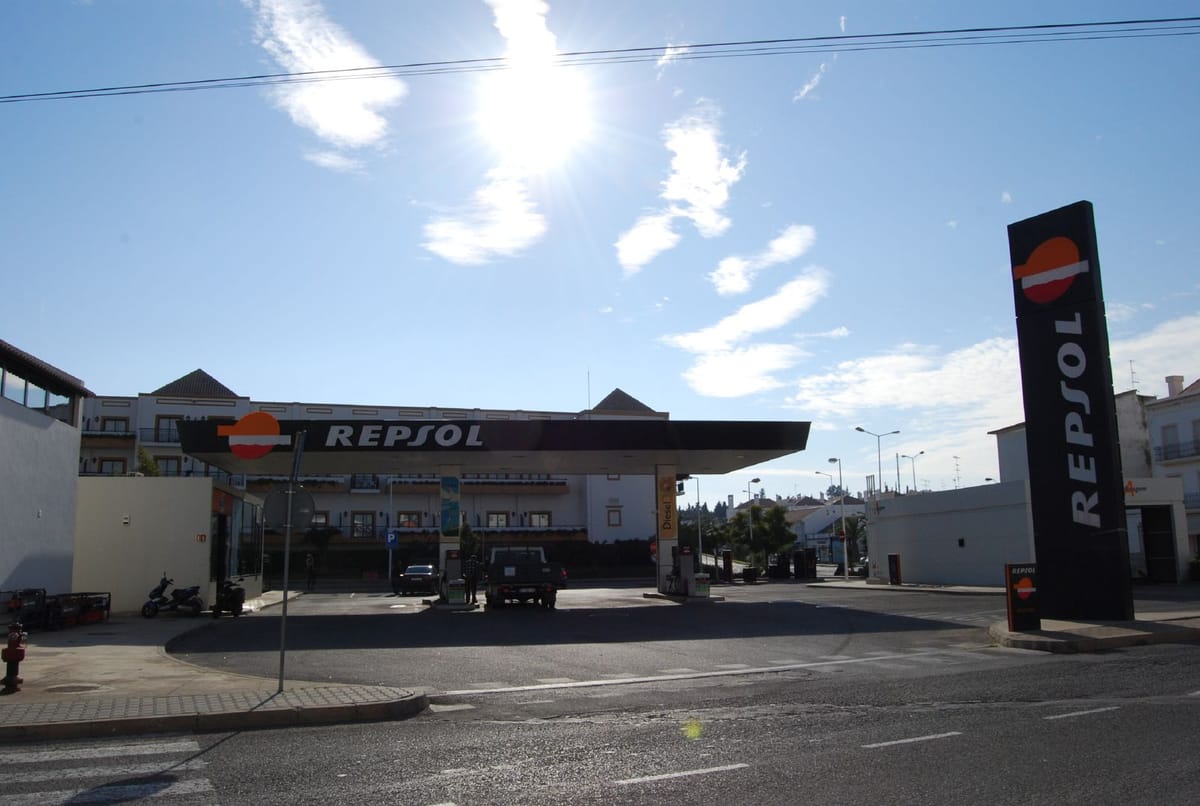
Anyone who fills a tank in Portugal has felt the suspicion: pump prices seem to leap the moment oil rises, but drift down grudgingly when it falls. On Wednesday the energy regulator put that instinct to the test — and largely dismissed it. In a study commissioned by the government, the Entidade Reguladora dos Serviços Energéticos (ERSE — the Energy Services Regulatory Authority) concluded that there is no persistent evidence that fuel prices rise faster than they fall, and found no grounds to cap retailers' margins. For foreign residents watching their cost of living, it is a rare official answer to a long-running gripe — and it points the finger not at the petrol companies, but at the tax on the receipt.
No "rocket and feathers"
The phenomenon ERSE went looking for has a nickname among economists: "rocket and feathers" (in Portuguese, foguete-pluma) — prices that shoot up like a rocket and float down like a feather. Analysing continental Portugal week by week from January 2023 to late July 2026 — 186 weeks in all — the regulator compared movements in international refined-product quotations against the national average pre-tax gate price, and reported that "the results do not support that decreases are passed through persistently more slowly or less completely than increases."
That is not to say the pass-through is instant. ERSE did detect a temporary asymmetry, concentrated in diesel — but it faded fast. For every 10-cent move in the international quotation, a rise fed through to roughly 8.52 cents at the gate in the first week, against 7.76 cents for an equivalent fall: a gap of just 0.76 of a cent per litre. By the fourth week the difference had shrunk to 0.39 of a cent and was no longer statistically significant. On a reference €50 fill-up, ERSE put the fleeting difference at around 22 cents. For petrol (gasoline 95) it found no significant asymmetry at all, and it saw "no evidence of the operators taking advantage."
Why the government won't cap margins
The study was ordered by the Minister of Environment and Energy, Maria da Graça Carvalho, amid political pressure to rein in fuel retailers — the same debate that flared when Galp rejected the idea of capped margins earlier in the summer. ERSE's verdict effectively closes that door: "the overall assessment found no grounds justifying the setting of maximum retail margins on fuel."
Its reasoning was that the market, for all its faults, broadly works. Testing the sector against four competition criteria, ERSE found three were met — retail is not overly concentrated, there is a diversity of offers, and national prices track international quotations. Only wholesale concentration fell short. Crucially, the regulator found that the discounted prices drivers actually pay — through loyalty cards, low-cost chains and hypermarket pumps — sat below its own estimate of an "efficient" pump price over the period. Oil-company forecourts priced their petrol close to that efficient benchmark; low-cost operators and hypermarkets came in around 13 cents a litre cheaper.
The real gap with Spain is tax
The most useful finding for anyone who has driven across the border to fill up is ERSE's comparison with Spain — and it upends the usual story. Before tax, Portuguese fuel was actually the cheaper of the two in the second quarter of 2026: Spanish prices ran 5.9 cents a litre higher on petrol and 10.6 cents higher on diesel. It is only after tax that Portugal becomes dearer, and by a wide margin — 41.8 cents a litre more on petrol and 25.1 cents more on diesel. The culprit, ERSE is clear, is fiscalidade (taxation), widened by Spain's temporary tax cuts, not fatter Portuguese retail margins.
That distinction matters for how the pump price behaves. Roughly half of what you hand over at a Portuguese forecourt is tax — chiefly the Imposto sobre os Produtos Petrolíferos (ISP, the fuel duty) and VAT — which is why the government's periodic tweaks to the ISP discount move prices as much as the oil market does, and why cheaper crude only ever partly feeds through to slower inflation.
What ERSE wants to change
Rather than caps, the regulator proposed a set of lighter-touch measures. It asked for stronger sanctioning powers over the National Petroleum System so it can police bad behaviour directly; it suggested the government keep the option of temporary, targeted support for specific groups — professional road hauliers, for example — if an exceptional oil shock hits; and it called for the various official "reference" and "efficient" prices to be harmonised so consumers can compare like with like, with the energy agency DGEG periodically reviewing how the discounted-price benchmark is calculated.
What this means for you
The headline for a resident household is reassurance with a caveat. The reassurance: the regulator has looked hard and found you are not being systematically gouged at the pump — the down-moves broadly match the up-moves, and the cheapest forecourts genuinely undercut the "fair" price. The caveat: because so much of the price is tax, the cost of filling up in Portugal will stay stubbornly high regardless of what retailers do, and the lever that most changes your weekly fuel bill is a political one — the ISP discount — not the oil market.
The practical takeaways are unchanged but reinforced by the data. Shopping around pays: low-cost chains and hypermarket pumps really are cheaper, by double-digit cents a litre. Loyalty discounts are worth using, since ERSE counts them as part of what makes the market competitive. And if you live near the border, the pre-tax picture is a reminder that Spain's advantage is a tax quirk that can narrow or vanish when Madrid's temporary cuts expire — so it is worth checking the actual after-tax price on the day rather than assuming Spain is always cheaper.