President Seguro Warns Portugal Cannot Treat Road Deaths as Fate, Citing Nearly 300 Killed This Year
At a fire-brigade centenary in Celorico de Basto, President Antonio Jose Seguro warned that Portugal cannot keep treating road deaths as fate, citing 589 people killed in 2025 and about 300 already this year. 'Let us stop this tragedy.'
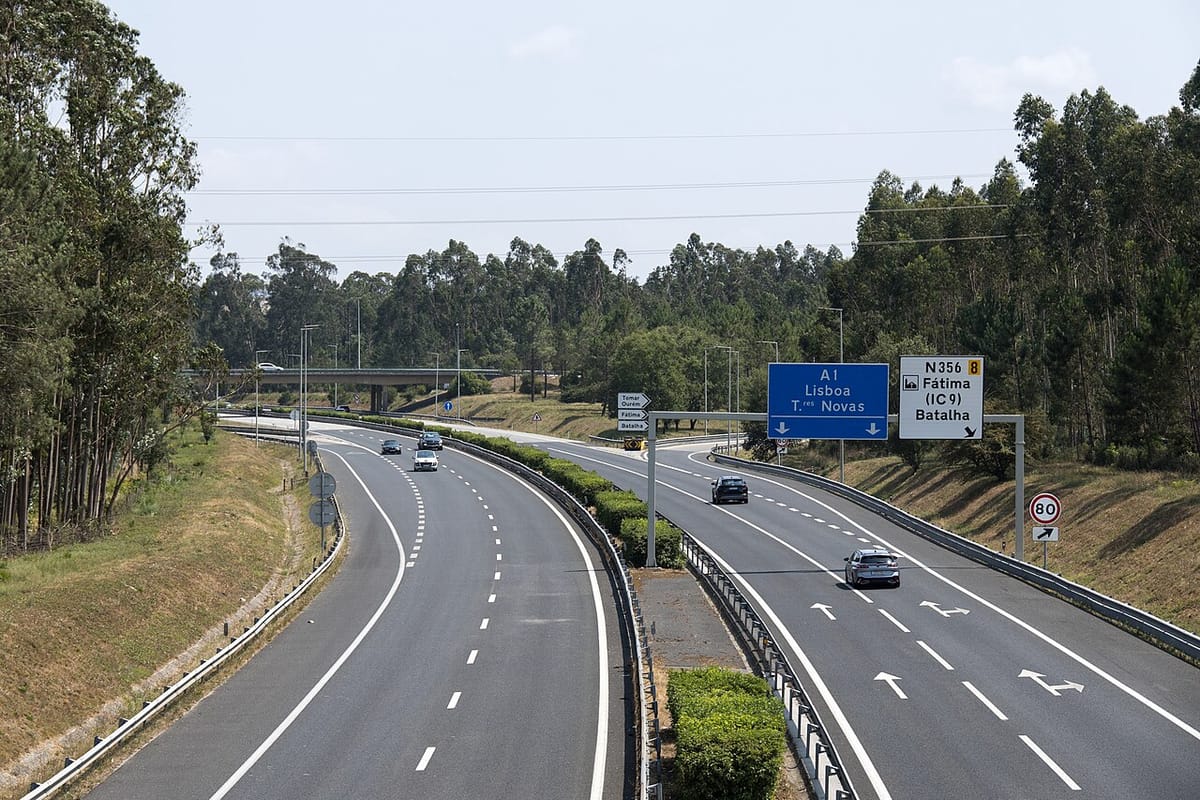
President António José Seguro used a fire-brigade celebration on Saturday to deliver a blunt warning about the number of people dying on Portugal's roads, telling his audience that the country cannot go on treating road deaths as simple bad luck.
"Allow me, on the subject of road accidents, to sound a warning," the head of state said. "We cannot accept that dying on the road continues to be a matter of fate. Every death is a destroyed family, a life-project cut short." He went on: "These are dramatic figures that we cannot accept. We all have a duty to act. Let us stop this tragedy." He appealed for what he called "a culture of responsibility on Portugal's roads."
The figures the President set out are stark, and they echo a trend the numbers have shown for years: Portugal's road-death toll has barely fallen in a decade even as the rest of Europe's dropped sharply. He said 589 people were killed on Portuguese roads in 2025, with 2,476 seriously injured, and that so far in 2026 there had already been more than 90,000 accidents, around 300 deaths and 1,786 people seriously hurt. Those numbers came from Seguro's own speech, carried by the Lusa news agency; they were cited by the President rather than drawn from a fresh bulletin of the Autoridade Nacional de Segurança Rodoviária (National Road Safety Authority), and the 2026 toll was given as an approximation.
Seguro was speaking in Celorico de Basto, in the district of Braga, at the centenary of the Associação Humanitária dos Bombeiros Voluntários Celoricenses (Humanitarian Association of the Celorico Volunteer Firefighters). During the event he inaugurated a Monumento ao Bombeiro (Monument to the Firefighter) and announced that the brigade would be made an Honorary Member of the Ordem do Mérito (Order of Merit). The monument, he said, was "a sign of respect, of gratitude and of memory" for "many lives that were saved — a value no statistic can measure."
His intervention was a moral and civic appeal rather than a policy announcement. He named no ministry, no agency and no measure, framing the responsibility as a collective one: "We all have a duty to act." The only concrete step taken at the ceremony — the decoration of the fire brigade — was unrelated to road policy.
The warning landed against a grim backdrop. A day earlier, on 14 August, the 19-year-old British cyclist Finlay Tarling was killed during the eighth stage of the Volta a Portugal (Tour of Portugal) when a car travelling the wrong way struck him near Ponte de Lima — a death Seguro and Prime Minister Luís Montenegro had both publicly lamented. The President did not explicitly tie his appeal to that crash, but it came as the summer's road toll dominated the news.
Seguro, who took office on 9 March 2026 in succession to Marcelo Rebelo de Sousa, has tended to reserve his sharper public words for social themes. On Saturday he chose one of the most stubborn: a road-death rate that, for all the enforcement tools built up over recent decades — from the driving-licence points system to the tightened rules on how new drivers qualify — still claims hundreds of lives in Portugal every year.