Portugal Turns Its Clocks Back an Hour on Sunday, Seven Years After Europe's Parliament Voted to Abolish the Switch
Clocks go back at 02:00 on Sunday 25 October on the mainland and Madeira, and at 01:00 in the Azores. Lisbon's sunset moves to 17:45. The EU plan to stop the changes is still blocked in the Council, and Portugal has no stated position.
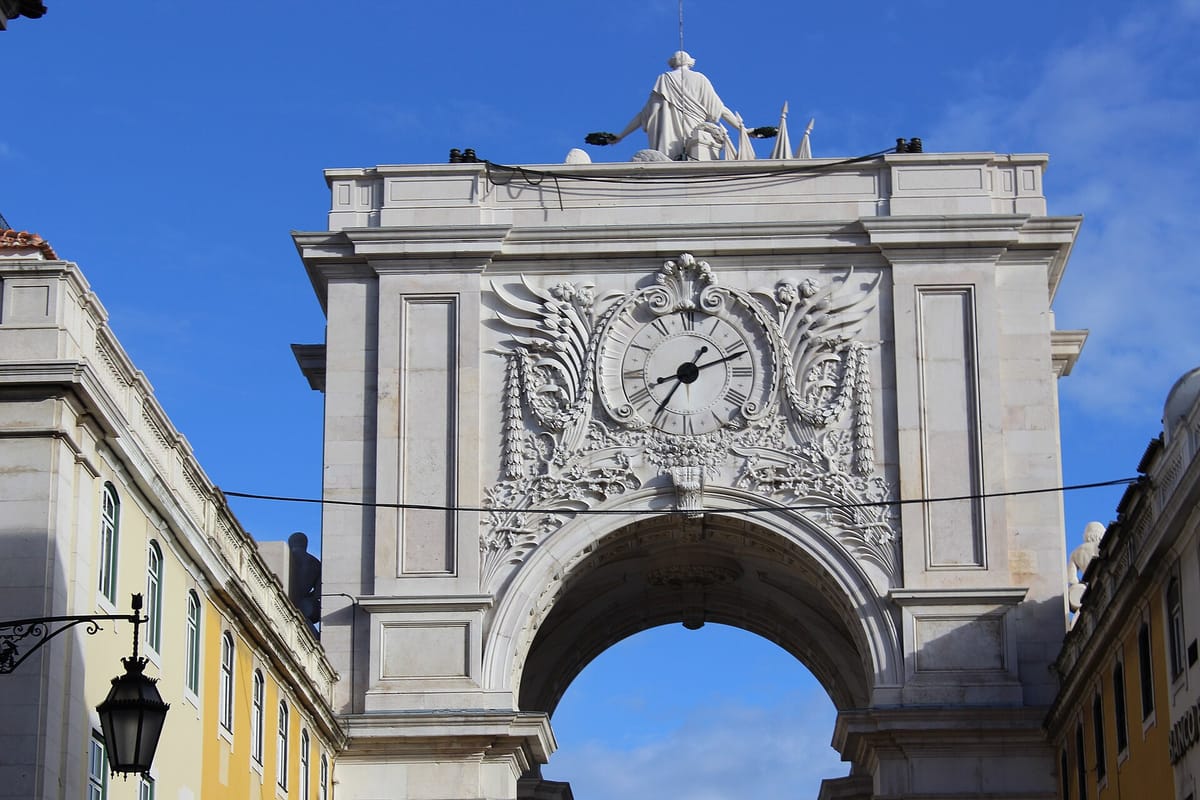
Clocks in Portugal go back one hour in the early hours of Sunday 25 October. On the mainland and in Madeira, 02:00 becomes 01:00; in the Azores, which run an hour behind, 01:00 becomes midnight. Both happen at 01:00 UTC, and Saturday night gains an hour.
The rule comes from Decreto-Lei n.º 17/96 (Decree-Law 17/96), which puts the mainland on UTC from the last Sunday of October to the last Sunday of March, and on UTC plus one hour in between. Madeira and the Azores have matching 1996 regional decrees. EU Directive 2000/84/EC fixes the switch at 01:00 GMT on the last Sunday of October in every member state, and the Commission's latest timetable sets the next change, forward again, for Sunday 28 March 2027.
What changes on Sunday
Evenings get dark an hour sooner. Figures from the US Naval Observatory's official ephemeris show that in Lisbon the sun rises at 07:55 and sets at 18:46 on Saturday; on Sunday it rises at 06:56 and sets at 17:45. In Porto, sunrise moves from 07:56 to 06:57 and sunset from 18:41 to 17:39. By 21 December, sunset will be at 17:18 in Lisbon and 17:09 in Porto.
- Phones and computers change on their own if automatic time is on. Oven and microwave clocks, older car dashboards, wall clocks and heating timers need setting by hand.
- A night shift across the change runs an hour longer; check with your employer how it is recorded and paid.
- Trains, buses and flights run to local time. If you have a departure between 01:00 and 02:00 on Sunday, check it twice, since that hour happens twice.
Why Europe still changes the clocks
The European Commission proposed ending seasonal changes in September 2018 (COM(2018) 639), after 84 percent of 4.6 million consultation responses backed stopping. The European Parliament agreed on 26 March 2019, by 410 votes to 192 with 51 abstentions, and wanted the last change in 2021. The file then stalled. According to Parliament's Legislative Observatory, it is still "awaiting Council's 1st reading position", and Parliament's Legislative Train, updated on 20 September 2026, marks it "blocked". Member states have never agreed which time each would keep.
Spain tried to restart it. On 20 October 2025 Prime Minister Pedro Sánchez said his government would ask that day's EU energy ministers' meeting to end the changes in 2026, Observador reported. Three days later, in a Parliament debate, Transport Commissioner Apostolos Tzitzikostas said the system "no longer serves any purpose", Lusa reported. Parliament's research service says the Commission has since decided to commission a detailed study to inform any decision. No date is set, and Spain changes its clocks on Sunday too.
Where Portugal stands
In 2018, the then prime minister, António Costa, said Portugal should keep summer and winter time, citing a report by the Observatório Astronómico de Lisboa (Lisbon Astronomical Observatory), for decades the keeper of Portugal's legal time. That report, Observador reported, found the energy saving small but judged the current system better than the alternatives. When Spain revived the issue last year, Foreign Minister Paulo Rangel told RTP that the government had not yet taken a position and that the Council of Ministers had not discussed it.
Portugal has tried a different time before. The preamble to Decree-Law 17/96 records that adopting Central European time in 1992 left the country more than 90 minutes ahead of solar time in winter and about two and a half hours ahead in summer, disturbed children's sleep and brought no noticeable cut in electricity use; it was reversed in 1996. Any EU deal would put that choice back on the table.