Portugal's Courts Come Back on Tuesday After a Month and a Half of Judicial Holidays, and the Civil Deadlines That Froze on 16 July Start Running Again
The judicial holidays fixed by Article 28 of Lei 62/2013 end on 31 August, so the courts reopen in full on Tuesday, 1 September. Civil procedural deadlines that suspended on 16 July start running again, and September's calendar already holds Marques, BES, Tutti Frutti and the Rato torture trial.
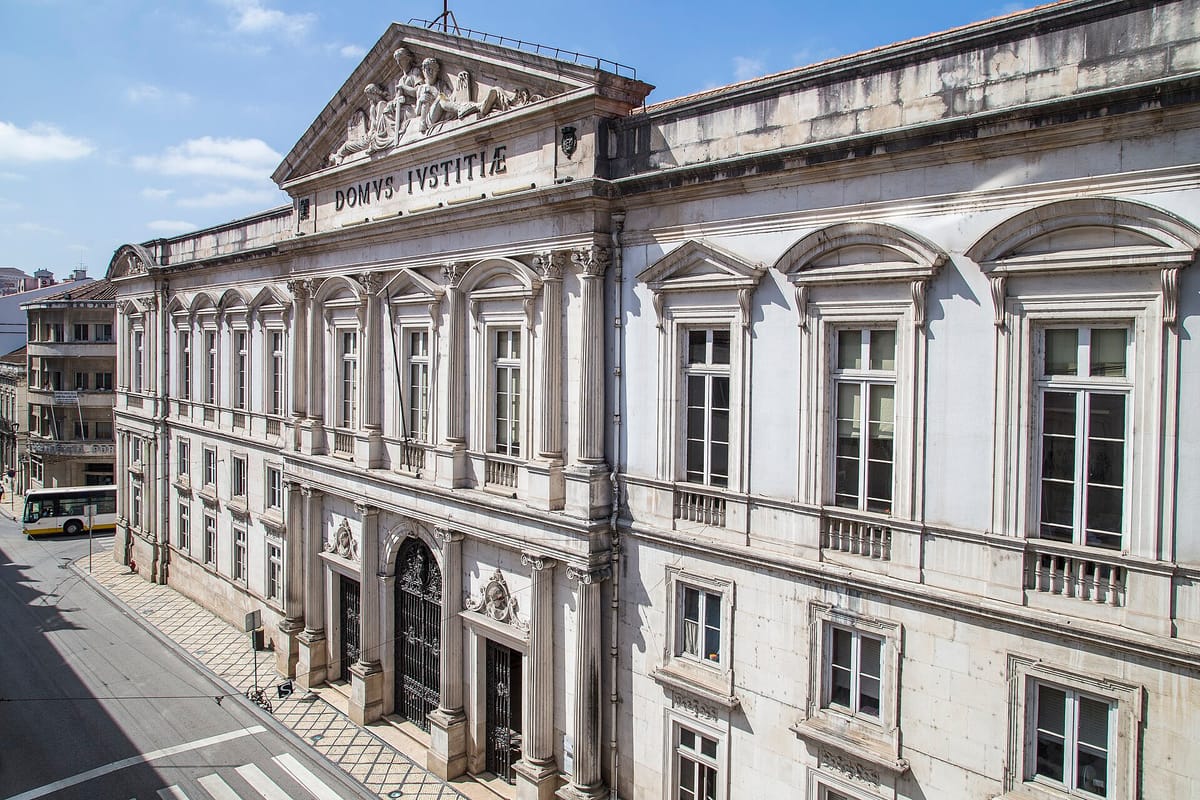
Portugal's courts return to full working order on Tuesday, 1 September. The country's summer judicial recess, the férias judiciais, ran from 16 July to 31 August, a month and a half in which most hearings were not scheduled and most civil procedural clocks stopped ticking. From Tuesday they start again, and for anyone with a case pending in a Portuguese court that is the single most practical thing to know this week.
The recess is not a matter of custom or of individual judges taking leave. It is written into Article 28 of Lei n.º 62/2013, the law on the organisation of the judicial system, which fixes three fixed windows every year: 22 December to 3 January, Palm Sunday to Easter Monday, and 16 July to 31 August. Nothing about the dates is discretionary, which is why the return is always the same: the first working day of September.
What actually stopped, and what did not
The rule that matters most for civil, family, labour and most administrative cases is Article 138 of the Código de Processo Civil. It says a procedural deadline, whether set by law or by a judge's order, runs continuously but suspends during the judicial holidays. There are two exceptions written into the same sentence: deadlines of six months or longer keep running through the recess, and so do deadlines for acts in proceedings the law classifies as urgent.
Two further paragraphs of Article 138 are worth keeping in mind. If a deadline would expire on a day the courts are closed, it moves to the next working day, and courts count as closed when the government grants a tolerância de ponto. The same regime applies to the time limits the Code sets for bringing an action in the first place, so a limitation period governed by the Code has also been on hold since mid-July.
Criminal proceedings work on a different logic. Article 103 of the Código de Processo Penal starts from the position that procedural acts are performed on working days, during office hours, and outside the judicial holidays. It then carves out a long list of things that happen anyway: acts concerning defendants who are detained or imprisoned, or otherwise necessary to safeguard someone's liberty; acts in proceedings involving minors as defendants, even where nobody is being held; investigation and instrução acts where the presiding judge sees an advantage in pressing on; sumário and abreviado proceedings up to first-instance judgment; competence disputes, recusal requests and applications to stand down; parole decisions once the qualifying part of a sentence has been served; routine administrative acts and judicial decisions where needed; and anything special legislation labels urgent.
Article 104 then closes the loop: criminal deadlines follow the civil counting rules, and they run through the holidays in exactly those proceedings where the acts listed in paragraphs (a) to (e) of Article 103 have to be carried out. In practice that is why a person in pre-trial detention does not simply wait out August, while a contested inheritance or a dismissal claim does.
A September calendar that is already full
The reopening lands on a docket that had been building all summer. The Operação Marquês trial, running since 3 July 2025 with 21 defendants including former prime minister José Sócrates and former Banco Espírito Santo chairman Ricardo Salgado, has sessions on 1, 2 and 3 September; the charges concern corruption and other economic and financial crimes said to have been committed between 2005 and 2014. Sócrates is expected to address the court again, though no date has been set. Earlier this month he asked the court to annul every act performed by his court-appointed lawyer.
The BES Angola case, covering alleged abuse of trust, money laundering and fraud, restarts on 1 September, with Salgado and former BESA chairman Álvaro Sobrinho among the principal defendants. The main BES trial, under way since 15 October 2024, resumes on 7 September; it has 18 defendants, with Salgado facing 65 charges, some of which have already passed their limitation period.
Elsewhere in September: the Tempestade Perfeita case, with 73 defendants and concerning public contracts awarded by the Direção-Geral de Recursos da Defesa Nacional, sits on 9 and 10 September. On 10 September at 10:00 the Tribunal de Monsanto in Lisbon resumes the debate instrutório in Tutti Frutti, the political-financing case that opened in June with 59 people accused of more than four hundred counts of corruption, prevarication, money laundering and influence peddling. Operação Lex resumes on 23 September, with prosecution witnesses still being heard at the Supremo Tribunal Militar in Lisbon, and the same day the NRP Mondego case returns to the Campus de Justiça, where three service members are on trial for breach of state secrecy.
Two police trials frame the month. On 8 September the Tribunal de Faro begins the trial of two PSP officers from Olhão over the abduction and killing of a Moroccan man in March 2024, a case we covered when the date was set. On 11 September at 09:30, with a second session on 6 October at the same hour, two officers from Lisbon's Rato station go on trial accused of abuse of power, torture, rape, offences against physical integrity, forgery, aggravated theft, robbery and possession of a prohibited weapon. The wider investigation into that station gained another six months in August because prosecutors say more officers were involved than they first counted.
What this means for you
- Your deadline did not disappear, it paused. If you were served with something in early July and had, say, 30 days to respond, the days you had already used still count. The remainder resumes on 1 September. Work out what was left rather than assuming a fresh start.
- Check whether your case is one of the exceptions. Deadlines of six months or more never stopped, and neither did anything in an urgent proceeding. Employment cases in particular contain several categories the law treats as urgent, so do not assume the summer bought you time.
- A deadline that falls on a closed day slides forward. That includes days when the government grants a tolerância de ponto, which it does more often than most newcomers expect around public holidays.
- Expect a slow first fortnight, not a fast one. Everything that was postponed in mid-July is being rescheduled into the same weeks as the trials above, and the courts already carry one of the longest average case durations in Western Europe. A reform proposal now on the table would pull public prosecutors out of small state lawsuits precisely to relieve that pressure.
- Contact your lawyer this week, not in October. Portuguese lawyers take their own leave against the same calendar, and the first week of September is when diaries fill. If you need a filing made in September, ask now.
- For small claims, there is another route. Disputes below the civil courts' entry threshold can often go to the julgados de paz instead, which are cheaper and faster; our guide to the peace courts sets out the limits and the fee.
The next scheduled pause is short and comes quickly: 22 December to 3 January. That leaves roughly sixteen working weeks between Tuesday and the Christmas recess, which is the window in which most of the year's remaining civil work will actually be done. For anyone whose case has been sitting still since mid-July, that window opens on 1 September.