A Justice Overhaul Would Pull Public Prosecutors Out of Small State Lawsuits to Speed Portugal's Slowest Courts
The government's administrative-justice reform, now six bills before Parliament, would stop public prosecutors intervening in state lawsuits worth up to €15,000 — one piece of a push to clear courts where cases average 861 days.
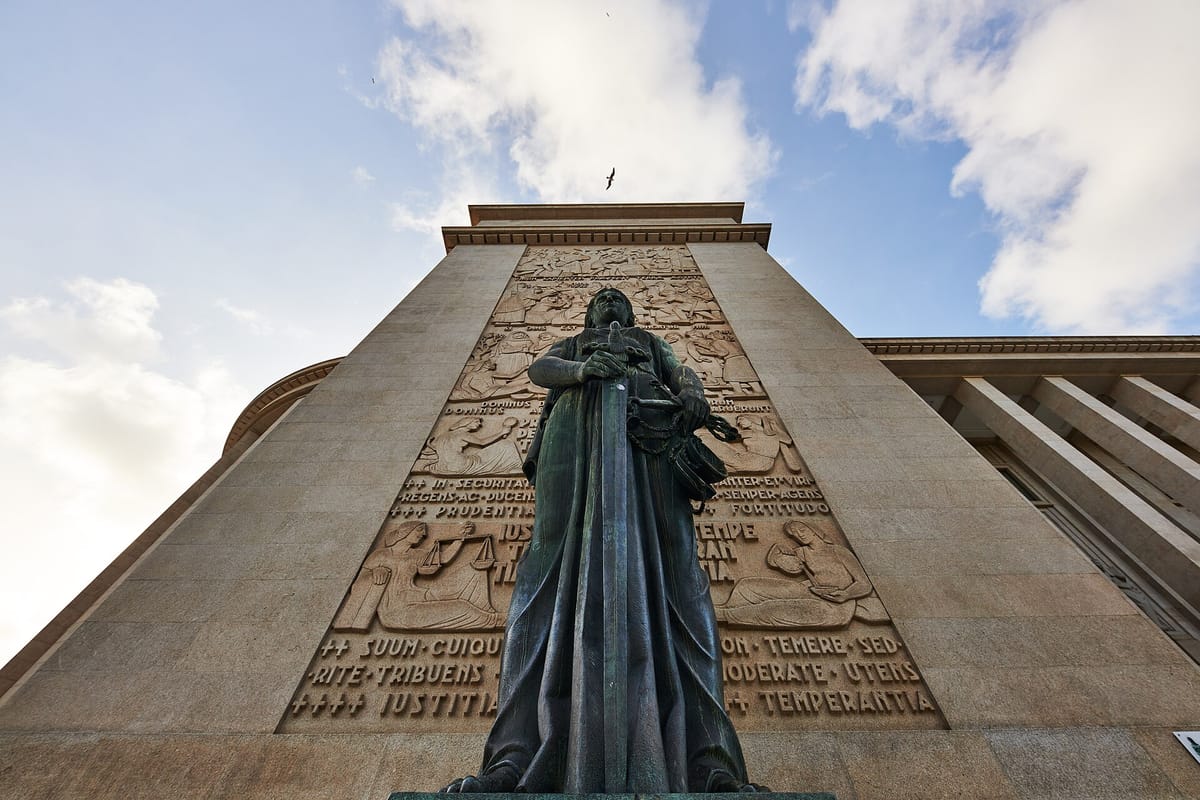
Portugal is preparing to redraw how its administrative courts work, and one of the changes would strip the Ministério Público (the Public Prosecutor's Office) of a role it has held for decades in low-value disputes with the state. Under a package of measures the government approved in the Conselho de Ministros (Council of Ministers) on 23 July and turned into six bills that reached Parliament in mid-August, prosecutors would stop intervening in administrative-court actions worth up to €15,000, according to reporting by the newspaper Público.
The aim is speed. Portugal's Tribunais Administrativos e Fiscais (Administrative and Fiscal Courts) — the courts that hear citizens' and companies' disputes with the state, from tax bills to planning permits — are among the slowest in the country, and the government's Reforma da Justiça Administrativa e Fiscal (Administrative and Fiscal Justice Reform) is built around clearing their backlog.
A fast track for small cases
The €15,000 threshold defines a new simplified track for actions in which the state is a party. Público reports it bundles several changes at once: judges could hand down oral rulings instead of written ones, procedural deadlines would be halved, and a case could last no longer than 18 months at first instance. Evidence would be pared back — Público cites a limit of eight witnesses — and processing would move to standardised electronic forms. Parties who settle would recover a quarter of their court fees. Justice Minister Rita Alarcão Júdice has said these small-value cases account for roughly 23% of all administrative litigation.
It is within that track that the Public Prosecutor's Office would step back. In administrative proceedings the Ministério Público currently intervenes to defend the public interest and constitutionally protected goods — Público lists public health, the environment, land-use planning and cultural heritage among them. The paper also reports that the reform would let members of the government remove prosecutors from representing the state by a reasoned decision. Those specifics rest on a single, paywalled Público report of 12 August and should be read as that paper's account of the draft.
Courts that take years
The case for reform is a pile-up of delays. Citing European Commission data, ECO reports that the resolution rate in Portugal's administrative courts fell to 48% in 2024 and that the average time to decide a case reached 861 days — nearly two and a half years. The number of cases pending for more than a year jumped from 12,700 to 58,600 between 2023 and 2024, overwhelmingly concentrated in Lisbon. The government's own figures, published alongside the reform, put pending first-instance cases at about 152,000 with a resolution rate near 34%. "We have an acute problem in the administrative courts and an urgent one in Lisbon," Júdice said when the package was approved. (The competing statistics come from different sources and scopes, and are best read as each body's own tally rather than a single agreed figure.)
The MP change is one piece of a broader overhaul presented by Júdice and by Gonçalo Saraiva Matias, the deputy minister for state reform. The same package would create an independent chamber in Lisbon to settle public-procurement disputes — contested tenders and competitor exclusions — with binding decisions in around 35 days; open a voluntary route for citizens to seek compensation from the state within a year without going straight to court; and set up specialised courts for immigration and international-protection cases. Crucially for foreign residents, it would redistribute the tens of thousands of cases against AIMA away from a single overloaded Lisbon jurisdiction and toward courts where applicants actually live. The reform also revises the Código de Processo nos Tribunais Administrativos (the Administrative Courts Procedure Code) and expands the use of arbitration.
The reaction still to come
What is missing so far is a clear public verdict from the people most affected. As of mid-August, prosecutors' representatives had not issued a pointed on-the-record response to the plan to remove them from small state lawsuits, and no reaction from the opposition or the bar association had surfaced in the national press. The Sindicato dos Magistrados do Ministério Público (the prosecutors' union) has spent recent months warning about understaffing and overloaded magistrates — grievances that culminated in a two-day national strike in July — and any debate over shedding a slice of their workload will land against that backdrop.
For now the bills sit with Parliament, where the government lacks a majority and every diploma is a negotiation. The measures deliberately steer clear of the most divisive fights over the judiciary, and the administrative-court backlog is one of the few justice problems on which there is broad agreement that something must give. Whether the answer is fewer prosecutors in small cases — or simply more magistrates and staff, as the unions argue, in a state that keeps testing the limits of its own accountability machinery — is the question the autumn debate will have to answer.
This article draws on reporting by Público, ECO, Observador and Diário de Notícias and on the government's own communiqués. Details of the Public Prosecutor's role, the eight-witness cap and the government's power to remove prosecutors from state representation rest on Público's 12 August report and are attributed as such. On the mechanics of taking a Portuguese public body to court, our guide to the providência cautelar, the urgent administrative injunction that carries a 48-hour first order, an automatic freeze on executing a suspended act, and a 306 euro court fee sets the latest reference.