A Lisbon Police Torture Inquiry Gains Six More Months Because Prosecutors Say Far More Officers Were Involved Than They First Counted
Judge Gabriela Lacerda Assuncao extended the Esquadra do Rato investigation after prosecutor Felismina Carvalho Franco told the court the number of people involved is much greater than first expected. The file holds 23 PSP defendants, seven in pre-trial detention and four under house arrest.
The criminal inquiry into what happened inside a police station in central Lisbon was due to run out of time. On Tuesday a judge gave prosecutors six more months, and the reason she gave is the most alarming thing about the decision: the Ministério Público (Public Prosecution Service) now believes far more police officers were involved than it originally counted.
Judge Gabriela Lacerda Assunção granted the extension after prosecutor Felismina Carvalho Franco told the court that "the number of people involved is much greater than the Public Prosecution Service initially expected," and that there are further suspects still to be detained and brought for a first interrogation so that coercive measures can be applied to them. None of the defendants currently deprived of their liberty will be released while the extension runs.
Where the case stands
As it stands, the file has 23 arguidos, the Portuguese status of a formally named defendant. Seven of them are in prisão preventiva (pre-trial detention). Four are under house arrest. All are officers of the Polícia de Segurança Pública (Public Security Police).
The alleged conduct sits at the Esquadra do Rato in Lisbon and spans 2024 and 2025. The court has found strong indications of abuse of power, torture and other serious cruel, degrading or inhuman treatment, document forgery, and offences against physical integrity, alongside completed and attempted sexual assault and possession of prohibited weapons.
The people on the receiving end were not a random cross-section of Lisbon. They were, on the prosecution's account, drug-dependent and homeless individuals, and mostly foreign nationals. Part of the evidence exists because officers filmed what they were doing and circulated the footage in WhatsApp groups reaching dozens of colleagues.
The one detail that keeps this from being purely a story about institutional rot is where the complaint came from. It came from inside the PSP.
The timeline
- 6 March 2024: the matter reaches prosecutors.
- 10 July 2025: the first arrests and searches, with two officers aged 22 and 25 detained.
- 27 April 2026: an instructory decision sends two officers to trial on torture and sexual-assault charges, covering 13 vulnerable victims and 36 combined counts. We covered that ruling here.
- May 2026: a second wave of arrests takes the running tally of PSP detainees in the wider file to 24, including two chiefs. We reported that escalation here.
- 25 August 2026: the investigation window is extended by six months.
Why an extension is not a delay
It is tempting to read a six-month extension as slippage. In this case it reads as the opposite. Portuguese pre-trial investigations run to statutory maximum periods, and those clocks tighten when defendants are held in custody. A prosecutor who simply needed more paperwork time would not tell a judge that the scope of the offending has outgrown the file. Asking for room to detain further suspects, while eleven people are already in custody or under house arrest, is a statement that the count is not final.
It also raises the question the PSP will eventually have to answer in public: how a station in a central Lisbon parish sustained this for two years, with footage circulating among dozens of officers, before anyone acted. That question sits uncomfortably beside the force's other 2026 headlines, from a 13 percent fall in applications to join to the reorganisation debate the current Interior Minister, Luís Neves, led from the opposite side of the chamber in June.
What this means for foreign residents
- The victim profile is the point. Most of the alleged victims were foreign nationals, and the prosecution's theory is that they were chosen because they were unlikely to complain and unlikely to be believed.
- Complaints do not have to go to the police. The Inspeção-Geral da Administração Interna (Inspectorate-General for Internal Administration) takes complaints about GNR and PSP conduct directly, in writing and online, and is independent of both forces.
- Being an arguido cuts both ways. The status carries rights, including to be heard and to counsel, which is why the count of 23 is a procedural fact rather than a verdict.
- Nothing is decided yet. Only the two officers from the April decision are heading to trial. The other defendants remain under investigation, and the extension now runs into late February 2027.
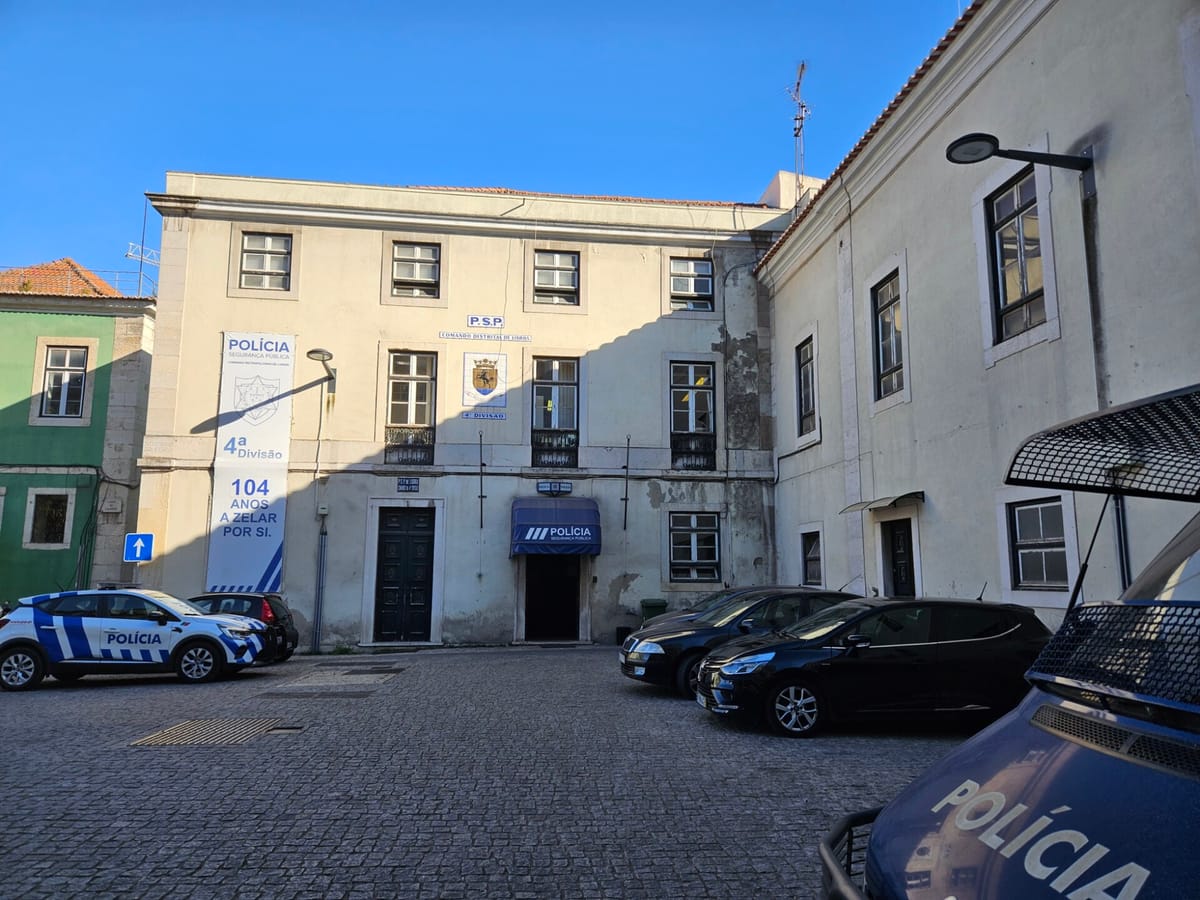
Feature image: a PSP divisional station in Alcântara, Lisbon, pictured for illustration; it is not the Esquadra do Rato. Photo by GualdimG via Wikimedia Commons, CC BY-SA 4.0. On how prosecutors must now handle these cases, the Prosecutor General's directive for the 2026 to 2028 criminal policy law keeps police assault cases away from the officers' own force, claims firefighting costs from fire defendants and screens immigration cases for trafficking.