Luís Neves Rebuffs Super-Esquadra Model at Wednesday's Parliamentary Debate — PSP Reorganisation Frees Roughly 500 Agents for Street Patrol and 360 Airport Reinforcements Hit the Tarmac From 3 July as Rato Torture Probe Accelerates Closure Roadmap
Interior Minister Luís Neves told Parliament on 17 June the PSP reorganisation under review in Lisbon, Porto and Setúbal redeploys ~500 agents to street patrol — no super-esquadras — and 360 extra officers reinforce airports from 3 July as the Rato torture probe accelerates the closure roadmap.
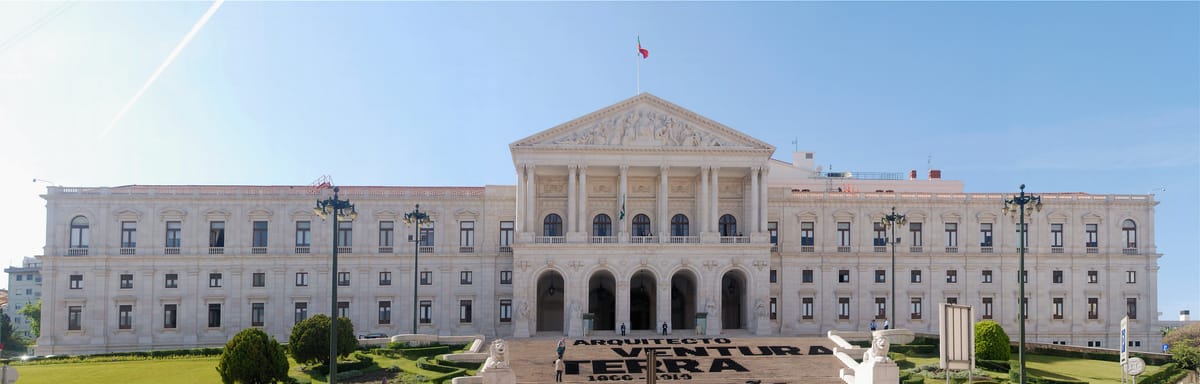
Interior Administration Minister Luís Neves told the Assembleia da República (Assembly of the Republic) on Wednesday afternoon, 17 June 2026, that the Polícia de Segurança Pública (Public Security Police — PSP) reorganisation under evaluation in Lisbon, Porto and Setúbal will not collapse precincts into the so-called super-esquadras (super-stations) floated by parliamentary critics — but will close a yet-to-be-confirmed list of urban esquadras (police stations) to redeploy roughly 500 agents from administrative chairs to street patrol, prevention and policiamento de proximidade (community policing).
The minister fielded questions from Paula Santos of the Partido Comunista Português (Portuguese Communist Party — PCP) during the periodic interior-administration debate at São Bento, framing the redesign as a redeployment rather than a footprint cut. "The objective of this reorganisation was never to close stations just to close them," Neves said, repeating that the brief from the Direcção Nacional da PSP is to "free up administrative resources and concentrate more police on patrol, prevention and proximity." Every district affected, he added, will retain its current PSP head-count — the change is where the agents physically stand, not how many wear the uniform.
The threshold metric Neves keeps citing in the chamber is a 30-agent daily minimum per esquadra: precincts that cannot sustain that staffing on a 24-hour rota are the first candidates for consolidation, with the freed agents moved onto the patrol roster of a neighbouring command. That rule pushes more than a dozen Lisbon-Porto-Setúbal precincts into the review window — the same shortlist the PSP submitted to the Ministério da Administração Interna (Ministry of Internal Administration — MAI) before the Rato precinct case detonated in May 2026.
The Rato scandal — the preventive detention of 13 of 24 PSP agents accused of torture and aggravated assault at the Rato station in central Lisbon — did not invent the reorganisation but accelerated its political clock. Neves told deputies the closure roadmap was already on his desk before the Rato indictments; what changed in late May was the speed at which the MAI was willing to defend the model publicly, with the prosecutor's office still building the case file.
The 500-agent reallocation lands alongside a parallel airport surge. Neves confirmed in the same debate that 360 additional officers will be deployed to Portugal's main airport border-control posts from 3 July, layered onto the European Entry/Exit System (EES) infrastructure that went live in October 2025. Border wait times that the minister tracked at 15 to 40 minutes earlier this week are the operational benchmark the July reinforcement is intended to defend through the high-summer peak.
For residents tracking the structural reform behind the headline numbers: this is the second visible attempt this decade to recast the Portuguese urban-policing model away from the small, lightly-staffed neighbourhood precinct toward larger command-and-patrol hubs — without crossing the political line of declaring an esquadra formally extinct. The 30-agent minimum, the redeployment-not-redundancy framing and the refusal to brand the new precincts as super-esquadras are all calibrated to keep the Sindicato Nacional da Polícia (National Police Union) and opposition benches from coalescing around a station-closure narrative, after the union warned in May that the closures would not help PSP recruit the next intake.
The next operational triggers on the calendar: the formal list of precincts to be consolidated, expected in the weeks ahead from the MAI; the 3 July airport-reinforcement deployment; and the conclusion of the recruitment cycle that started with roughly 4,100 applications and is on course to deliver around 500 new agents from the June training course — almost exactly matching the redeployment number Neves quoted to the chamber. On the policing and public-security staffing side of the file, Portugal's struggle to recruit new PSP officers looks at why fewer people are applying to join the force. On the recorded-crime side of the file, the PSP's provisional 2026 figures for the Porto, Lisbon and Setubal commands sets out where general crime, violent and serious crime and police-detected offences have each moved, and what the force has not published alongside the percentages. On the police-accountability side of the file, the return to duty of the officer convicted over Odair Moniz's death sets out how a court-ordered suspension lapsed with the June verdict, what the Public Prosecutor's appeal is asking the Lisbon Court of Appeal for, and why the IGAI disciplinary case runs on a separate track.