Two Olhao Police Officers Go on Trial on 8 September Over the Death of a Handcuffed Man
The Ministerio Publico charged the two PSP agents in July 2025 with sequestro and homicide. Aissa Ait Aissa died of a brain contusion 20 days after being beaten on a track at Pechao, outside the officers' patrol area, while handcuffed. The Tribunal de Faro sits on 8, 11 and 25 September.
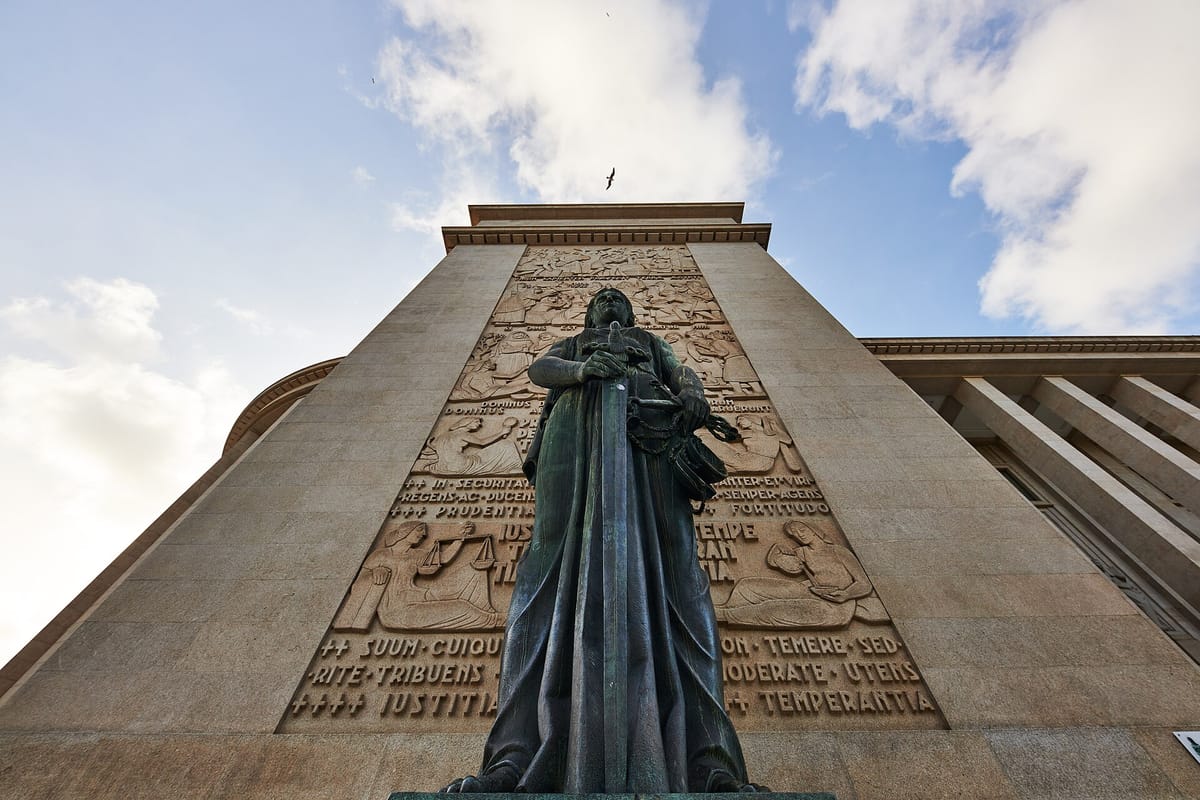
Two PSP officers from Olhão go on trial at the Tribunal de Faro on 8 September, charged with the kidnapping and homicide of a Moroccan man who died after being beaten while handcuffed. A source close to the case confirmed to Lusa that the first session is set for 9:10am and is expected to run all day, with two further sessions on 11 and 25 September.
The Ministério Público brought the charges in July 2025. The events date to March 2024.
What the prosecution alleges
The account below is the one set out in the indictment, which Lusa has seen. Nothing in it has yet been tested at trial.
A patrol car was sent to a disturbance at a supermarket in Olhão. By the time the officers arrived, the two men said to be responsible, Aissa Ait Aissa and Hassan Ait Rahou, had gone. The officers went looking, found them elsewhere, photographed them and kept a copy of Hassan Ait Rahou's documents on one officer's phone.
The two men later returned to the supermarket. According to the indictment they were behaving very erratically, having previously taken drugs, and began opening food packaging and eating the contents inside the shop. Told to stop, they insulted a member of staff. A customer telephoned the police directly, without going through the control room or 112, and the same officers, working the 15:30 to midnight shift, came back.
They found the two men near the shop, put them up against the patrol car and handcuffed them with their hands behind their backs. The supermarket supervisor declined to make a complaint. The officers detained the men anyway, put them on the back seat and did not take them to the station.
Instead, the indictment says, they drove towards Pechão, near Olhão but outside their patrol area, and stopped on a municipal track. Hassan Ait Rahou, who had fallen asleep, was thrown onto the verge. Aissa Ait Aissa was taken out of the car.
"While he was outside the vehicle, for reasons that could not be established, the defendants, acting in concert, struck several blows to the head and face of Aissa Ait Aissa," the indictment reads. At least one of the blows was delivered with an object. He was handcuffed and, the prosecution says, unable to defend himself.
He was admitted to intensive care at the Hospital de Faro and died on 28 March, roughly 20 days after the assault, of a brain contusion caused by the beating.
The legal case
The Ministério Público argues that the officers acted freely and knowingly, well aware that their conduct was prohibited by criminal law, and that they gravely abused their authority, knowing their behaviour could cause the victim's death. The charges are sequestro, the Portuguese offence covering unlawful detention, and homicide.
The trial joins a run of prosecutions of serving Portuguese police officers. In June a court in Sintra handed a three and a half year suspended sentence to PSP officer Bruno Pinto over the killing of Odair Moniz, and separate proceedings continue against officers from Lisbon's Esquadra do Rato on torture and sexual assault charges. This month Lisbon police also opened an inquiry into two officers accused of not helping a fatally stabbed man at Cais do Sodré.
What This Means for Expats
- Trials in Portugal are public. Sessions at the Tribunal de Faro on 8, 11 and 25 September are open to anyone who wants to attend, subject to the presiding judge's directions.
- A refused complaint does not authorise a detention. The supermarket supervisor declined to press charges. That the men were detained regardless, and never taken to a station, sits at the centre of the sequestro charge.
- Detention has a destination. If you are detained by police in Portugal you should be taken to a police station and your detention recorded. Anything else is a departure from procedure worth documenting.
- Nothing here is proven. This is the prosecution's case at the start of a trial. The officers have not been convicted.