Portugal Sets Up a Twenty-One Person Office to Spend €5.84 Billion of EU Defence Loans, and Its Chief May Sign Off Transfers of Any Size
Resolução do Conselho de Ministros 175/2026 creates the Estrutura Nacional SAFE: a coordinator-general, three programme coordinators, two team leaders and fifteen technical staff, funded from inside the existing defence budget, with a mandate to 30 June 2031.
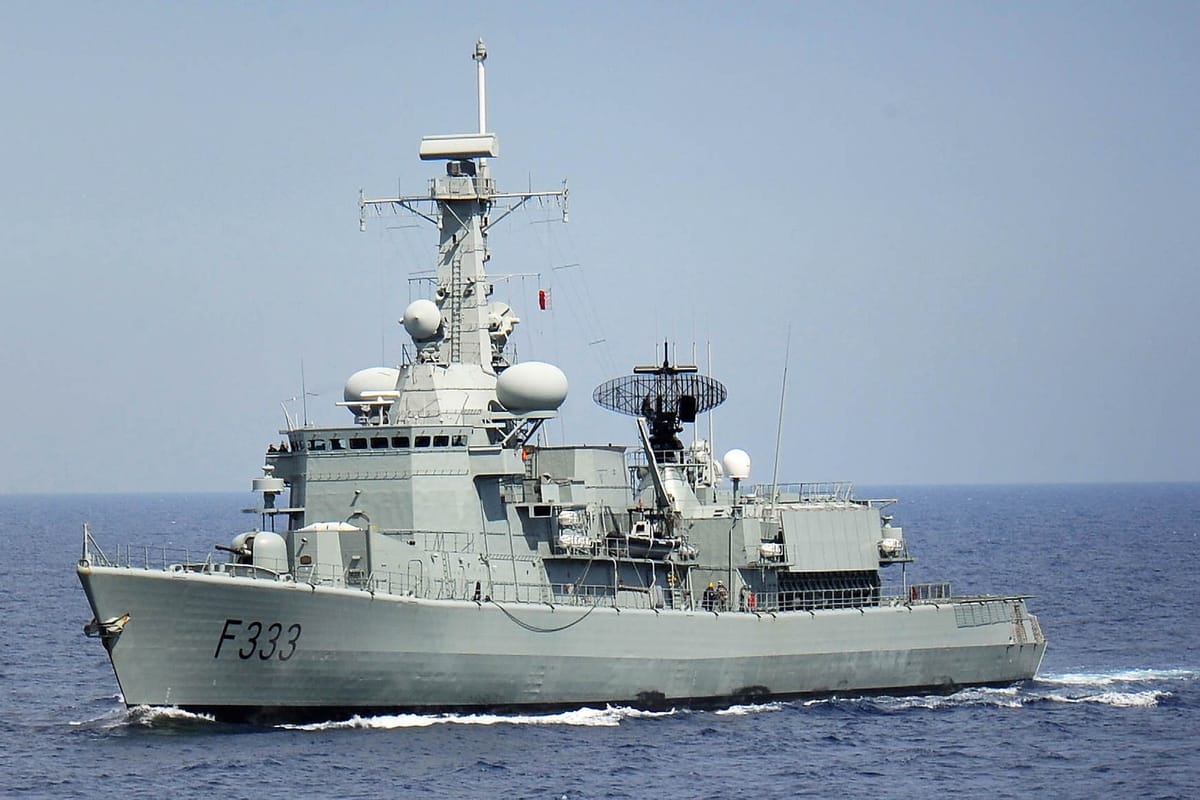
Portugal has been given permission to borrow 5,841,179,332 euros from the European Union to rearm. On Friday it published the rulebook for who will actually move that money, and the answer is a new office of at most twenty-one people, sitting inside the Defence Ministry, whose chief may authorise transfers to contractors of any size at all.
Resolução do Conselho de Ministros n.º 175/2026 appeared in the Diário da República on 28 August. It was signed by Prime Minister Luís Montenegro on 6 August and creates an estrutura de missão, a time-limited mission structure, called the Estrutura Nacional SAFE (National SAFE Structure). It entered into force the day after publication.
Where the money comes from
SAFE is the Security Action for Europe instrument, set up by Council Regulation (EU) 2025/1106 of 27 May 2025. It offers member states loans, not grants, up to a ceiling of 150 billion euros across the whole scheme, for urgent large-scale public investment in the European defence industry. Joint procurement projects are eligible where they involve at least one beneficiary member state plus another member state, an EFTA state inside the European Economic Area, or Ukraine.
The resolution sets out Portugal's route into it in dates. A working group was created by ministerial order of the Defence Minister on 30 June 2025 to prepare the national expression of interest. That expression of interest went to the European Commission on 29 July 2025. After a favourable assessment, the Commission gave Portugal a provisional allocation. The government filed its formal financing request on 28 November 2025, and the Council of the European Union approved the figure of 5,841,179,332 euros, to be formalised through a Loan Agreement and then an Operational Agreement under Article 10 of the Regulation.
That is the same 5.8 billion euros we have been reporting on all summer, from the 3.9 billion euro order for three Italian-built frigates in July through to the 133 million euros of Galician-built tactical vehicles for the marine corps in August. Until now there was no published national body running it.
Twenty-one people, at most
The resolution caps the structure precisely. It is led by a coordenador-geral (coordinator-general), appointed on a fixed-term commission by joint order of the Finance and Defence ministers, chosen from professionals with a suitable curriculum, with or without an existing public-sector contract.
Beneath the coordinator-general the resolution allows, at most:
- three programme coordinators, one of whom must be responsible for coordinating and monitoring the industrial component of the investment plan;
- two team leaders, one of whom must be dedicated to "risk management & compliance", a phrase the resolution leaves in English;
- fifteen técnicos superiores (senior technical officers) or equivalent, with or without public-sector contracts.
Recruitment can run through mobility, fixed or open-ended term contracts, secondment in the public interest, or service commission, under the general public-employment law and the Estatuto dos Militares das Forças Armadas (Statute of the Armed Forces Military Personnel). No more than one third of the total may be people without a pre-existing permanent public employment relationship. The resolution says recruitment should favour candidates with experience in European financing, public procurement, financial control and project management.
Pay is pegged rather than negotiated. The coordinator-general gets the monthly salary of a director-general plus representation expenses. Programme coordinators and team leaders are set against first and second-grade intermediate management posts respectively. Everyone else is set against the general senior technical officer career. All of them work under exclusivity, with exemption from fixed hours, and with no additional supplement beyond what the resolution provides. Serving in the structure creates no permanent public employment, fills no post on any ministry staff map, and lapses automatically when the structure is wound up.
What the coordinator-general can sign
The powers listed in paragraph 18 are the most consequential part of the document.
The coordinator-general directs the structure, represents it nationally and internationally, defines its internal shape within the stated limits, and appoints its staff. Then comes sub-paragraph (e). In coordination with the Entidade do Tesouro e Finanças, the Entidade Orçamental and the debt agency IGCP, the coordinator-general signs the disbursement requests submitted to the European Commission and authorises the transfer orders to the executing entities, "independentemente do seu valor", regardless of their value, within the limit of the financing allocated to Portugal.
Sub-paragraph (f) lets the same person authorise the structure's own running costs, within its budget.
There is also a certification power with a fiscal edge. Article 20 of the SAFE Regulation carries a value-added tax exemption for goods bought under the instrument. Paragraph 25 of the resolution provides that the certification required under Article 20(2) may be done by qualified electronic signature by the coordinator-general, who holds the competence to attest, on behalf of the Portuguese State, that the goods meet the exemption conditions.
What it is supposed to do
Paragraph 3 gives the structure sixteen attributions, from (a) to (p). The substantive ones are worth reading as a group, because together they describe a body that is meant to be a controller rather than a buyer.
It coordinates execution of the Operational Agreement and monitors delivery against milestones and targets. It handles the interface with the European Commission, working with the Defence Ministry's planning office GPEARI, the Finance Ministry, the Treasury and Budget entities and the Directorate-General for European Affairs. It checks that the joint-procurement eligibility requirements in Articles 16 to 18 of the SAFE Regulation are met. It monitors how contracts are formed and executed, making sure tender documents carry the eligibility requirements and that what gets delivered matches the specification on quality, quantity, cost and deadline.
It prepares the six-monthly disbursement requests. It manages the funds and allocates them to executing entities according to need and state of execution. It has to ensure executing entities have proper mechanisms for certifying purchase orders and invoices, "garantindo a correspondência entre os bens e serviços contratados, faturados e efetivamente fornecidos ou prestados": guaranteeing the correspondence between goods and services contracted, invoiced, and actually supplied.
It must implement an internal management and control system compatible with national and European audit requirements, and adopt effective anti-fraud measures, including a Plano de Prevenção de Riscos de Corrupção e Infrações Conexas (Corruption Risk and Related Offences Prevention Plan) and a dedicated anti-fraud plan specific to SAFE. It produces six-monthly and annual implementation reports. And it must promote independent interim and final evaluations of the instrument's results and impacts, including its effect on building a Portuguese defence industrial cluster.
Who audits it
Paragraph 24 places the structure under the audit, inspection and control of the Inspeção-Geral de Finanças (Inspectorate-General of Finance), the Tribunal de Contas (Court of Auditors), the European Commission, the European Court of Auditors, the European Anti-Fraud Office and the European Public Prosecutor's Office.
Paragraph 26 requires the structure to publish periodic aggregate information on the financial and operational execution of the instrument, while safeguarding matters that are classified or covered by military, commercial or security secrecy.
That list lands on top of an oversight argument that has been running since July. We reported then that Portugal's 5.8 billion euros in EU defence loans would escape binding Court of Auditors scrutiny, and in August that a transparency watchdog had faulted the arrangement as little more than after-the-fact control. The resolution answers part of that by naming the auditors and mandating anti-fraud plans and periodic publication. It does not change the visto prévio position, which is set by other law, and the publication duty it creates is qualified by a broad secrecy carve-out.
Paid for out of the existing defence budget
The costs of creating and running the structure come from a specific budget line called the "Medida Orçamental específica para o Instrumento SAFE", inside the flexible management of the Defence budget programme.
Paragraph 23 is explicit that this brings no new money with it: creating the structure confers on the Defence programme no reinforcement of specific allocations and no additional tax-revenue ceiling for the period it operates. The office is housed in premises provided by the Direção-Geral de Armamento e Património da Defesa Nacional (Directorate-General for Armament and Defence Infrastructure, DGAPDN), which also supplies administrative and logistical support, and it must coordinate with DGAPDN and with idD Portugal Defence, the state defence-industry platform.
It reports to the Finance and Defence ministers, and it operates under the defence minister day to day, without prejudice to the finance minister's competences on financial, budgetary and European-financing matters.
Until June 2031
Paragraph 28 gives the structure a mandate running to 30 June 2031. That can be extended if the availability period of the SAFE instrument itself is extended under Article 15(2) of the Regulation.
Five years and ten months is roughly the length of time it takes to design, order and take delivery of a frigate, which puts the calendar and the flagship purchase in the same frame.
What this means for you
For most readers this is not a story about weapons. It is a story about 5.84 billion euros of borrowed money, repayable by Portuguese taxpayers, being routed through an office of at most twenty-one people, at least fourteen of whom must already hold permanent public-sector jobs, working out of borrowed premises on a budget that comes out of the existing defence envelope rather than a new one.
Two things in the resolution are worth watching. The first is the transfer power: the coordinator-general can authorise payments to executing entities regardless of value, which concentrates a great deal of signing authority in one appointment made by two ministers, with no parliamentary step. The second is the publication duty, which is real but is limited to aggregate figures and can be narrowed by military, commercial or security secrecy. How much of the 5.84 billion euros the public actually gets to see, and at what granularity, will be decided by how that carve-out is read in practice.
The appointment itself is the next thing to look for. Until the joint Finance and Defence order naming a coordinator-general is published, the structure exists on paper only.