Portugal Ranks Dangerous-Goods Lorry Offences in Three Risk Tiers From 2 November, With New Duties for Shippers and Hauliers
From 2 November, roadside checks on lorries carrying fuel, gas and chemicals grade every breach against a fixed list of 48 offences, and consignors and carriers take on new paperwork, equipment and trailer duties.
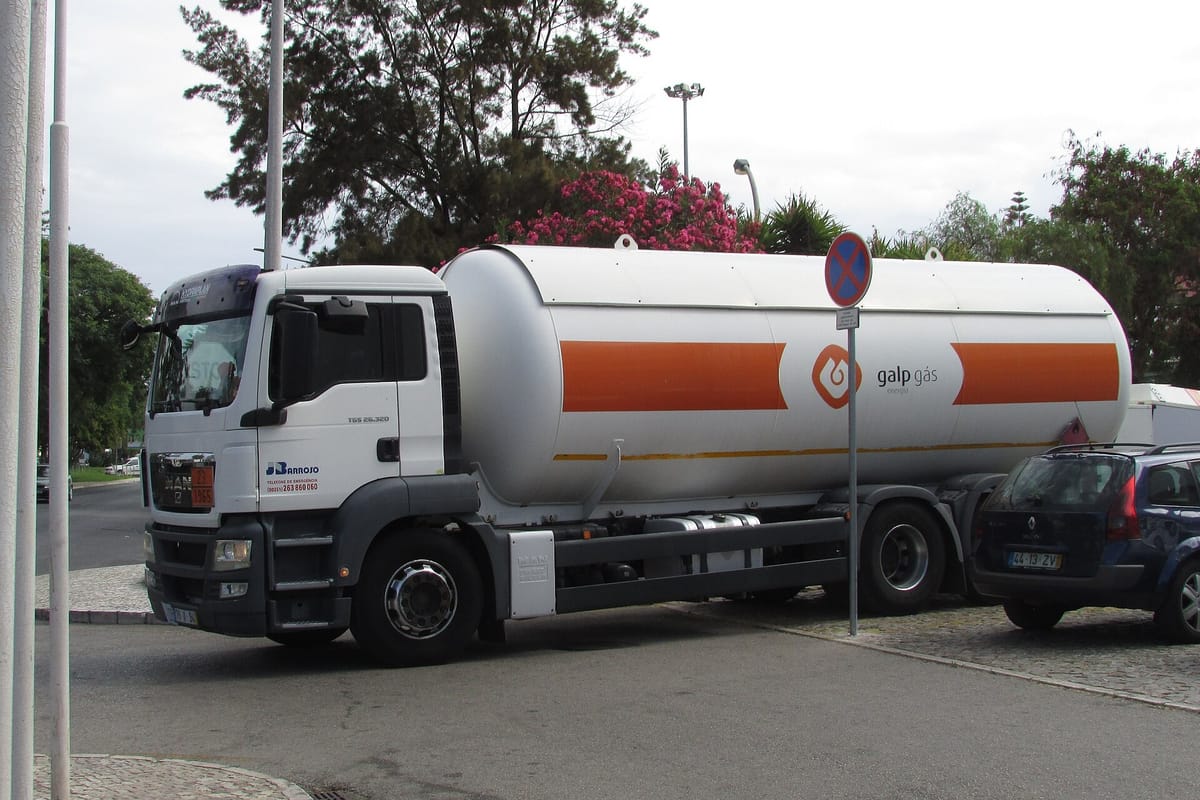
Lorries carrying fuel, gas, chemicals and other dangerous goods will be checked against a new, itemised list of offences from Monday 2 November, under Decreto-Lei n.º 204/2026, published in the Diário da República on 22 October. It transposes Directive (EU) 2022/1999 on uniform roadside checks of dangerous goods transport, amending Decreto-Lei n.º 41-A/2010, the law that governs the carriage of dangerous goods by road and rail.
The bodies that carry out checks do not change: the transport institute IMT, the GNR, the PSP and the economic safety authority ASAE. Officers still fill in a checklist and hand a copy to the driver. What changes is how each breach is graded.
Three risk categories, now spelled out
Until now the law sorted breaches into risk categories by cross-referring to each party's duties. The new text lists the offences themselves, following Delegated Directive (EU) 2025/1801.
- Category I (high risk of death, serious injury or major environmental damage): 24 offences, including leaks or spills, carrying banned goods, a vehicle without a valid approval certificate, a badly secured load, no orange plates or markings at all, a driver without a valid training certificate, smoking or naked flames, and no safety adviser where one is required. On the road these call for immediate action, such as immobilising the vehicle.
- Category II (risk of injury or environmental damage): 18 offences, among them faulty extinguishers, missing written instructions, overdue tank or packaging inspections, carrying passengers other than the crew, and towing more than one trailer. These are put right on the spot where possible, or when the journey ends at the latest.
- Category III (low risk): six offences, such as wrongly sized labels, a training certificate left at home when the driver can prove he or she holds one, or late paperwork. The company can fix these afterwards.
New duties for shippers and hauliers
Consignors must now keep a copy of the transport document and its supporting information for at least three months. Carriers must keep the written instructions within the crew's reach in the cab, keep transport documents in the cab or secure on board, keep extinguishers sealed, in date and protected from the weather, and run no more than one trailer or semi-trailer, except where Decreto-Lei n.º 132/2017 allows. Companies must keep staff training records for at least five years. The duty to adopt a security plan for high-risk goods now also covers operators of tank containers and portable tanks and, on the railways, the infrastructure manager.
What the fines are
Breaches remain economic offences under the economic offences regime (RJCE), graded light or serious. A light offence costs an individual 150 to 500 euros and a company 250 to 12,000 euros, depending on its size; a serious one costs 650 to 1,500 euros and 1,700 to 24,000 euros respectively. If a special authorisation, the vehicle approval certificate or the driver's training certificate could not be shown at the check but is proved to exist before the defence deadline, the fine falls to 50 to 150 euros for an individual or 100 to 300 euros for a company. Hauliers with no base in Portugal must still pay the minimum fine on the spot or lodge a deposit, or the vehicle can be held.
What happens next
The checklist and the table of competent authorities move into a portaria from the mobility minister; until it appears, the current annexes stay in force. For other heavy-vehicle changes, see our reports on longer, heavier lorries from March 2027, bottled gas storage at petrol stations and Porto's lorry ban on the VCI.