Lorries up to 32 Metres Long and 72 Tonnes Will Be Allowed on Approved Portuguese Routes From March 2027, Matching Spain
Decree-Law 195/2026 raises the Euro-Modular limits from 25.25 metres and 60 tonnes. Each combination needs a two-year IMT permit for named roads, driver-assistance systems, amber roof lights and no overtaking on single-carriageway roads.
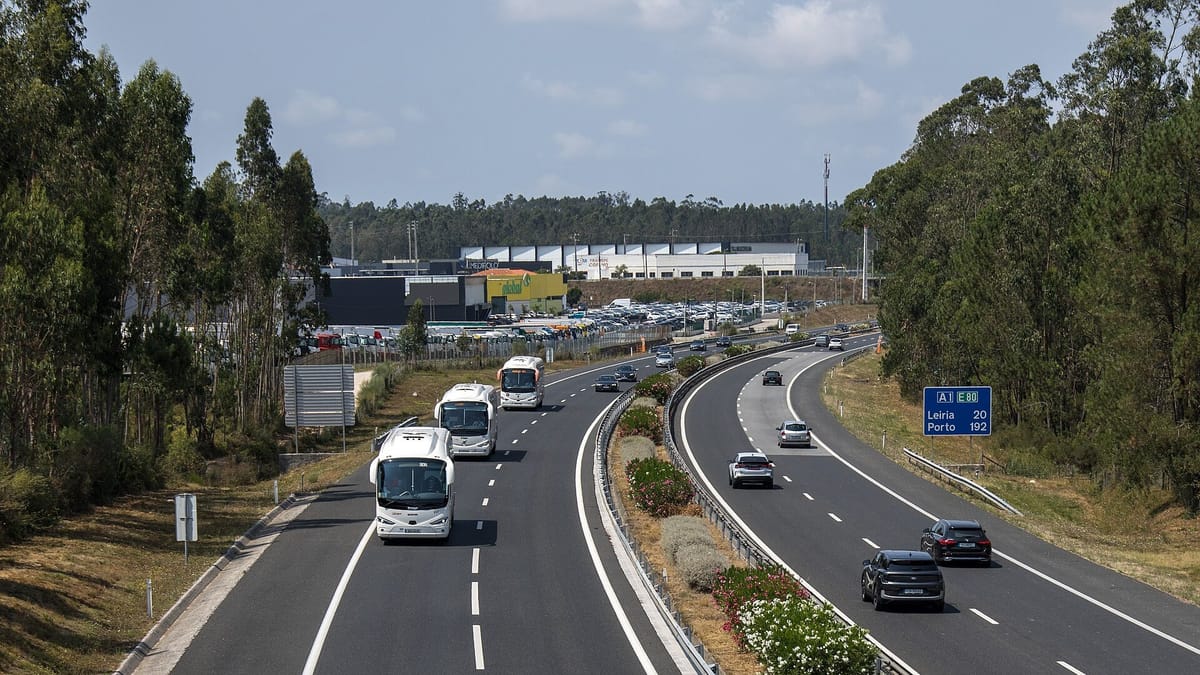
Portugal will allow lorry combinations up to 32 metres long and 72 tonnes gross weight on approved routes, up from the 25.25 metres and 60 tonnes permitted today. The change comes in Decreto-Lei n.º 195/2026 (Decree-Law 195/2026), published in the Diário da República (the official gazette) on Friday 25 September. It takes effect 180 days after publication, which puts the start date at 24 March 2027.
The decree amends the 2017 regulation on the maximum weights and dimensions of vehicles on the road. That regulation introduced the Euro-Modular configuration to Portugal: combinations built from ordinary lorries, trailers and semi-trailers, each of which stays within the legal limit for a single vehicle, joined together into one longer unit.
Why the government is raising the limits
The preamble says the Euro-Modular system has been "highly beneficial" for hauliers because it lets them reuse vehicles they already own in more efficient combinations. The government credits it with lower fuel use, a smaller environmental footprint, fewer vehicles on the road and smoother traffic. It cites studies, "notably in Spain", showing that longer and heavier combinations can run safely, and says the new limits will bring Portugal into line with the Spanish model and keep international freight moving across the Iberian peninsula.
The road safety authority (ANSR), the PSP and GNR police forces, the road operator Infraestruturas de Portugal and the national road hauliers' association (ANTRAM) were consulted, the decree says.
What the heaviest combinations must look like
Any combination above 60 tonnes must be longer than 25.25 metres and must be made up of two heavy semi-trailers (European category O4) joined by a dolly, the wheeled coupling unit that links them. No combination may include more than two towed trailers or semi-trailers. New semi-trailers used in the middle position need type approval for that use, and ones already registered must go through an approved conversion.
The tractor unit must carry lane departure warning or lane keeping assistance, advanced emergency braking and electronic stability control. It must also show two special amber warning lights at the top of the cab, lit at all times together with dipped or daytime running lights. Every vehicle in the combination needs valid registration and civil liability insurance.
Permits, routes and road rules
These combinations will not run freely. Each one needs a special traffic authorisation from the transport regulator IMT (Instituto da Mobilidade e dos Transportes), valid for up to two years and issued for a specific set of vehicles. The operators of every road on the route must first give a favourable opinion, and they can attach conditions and time limits. The lorry may use only the roads named in its permit.
Combinations longer than 25.25 metres may use single-carriageway roads, where traffic in the two directions is not separated, only for up to 25 kilometres at the start and end of a journey. On those roads they may not overtake. The permit will say whether a pilot car or a police escort is needed, and the decree rules out closing roads to let them pass. Dangerous goods stay excluded unless a future ministerial order sets the conditions, and a permit is refused if the load could compromise the combination's stability.
Other changes in the text
The decree also sets the general height limit for motor vehicles and their trailers at 4.25 metres. It allows Euro-Modular combinations turning radii of up to 14.50 metres outside and 6.5 metres inside, where the route is shown to be geometrically compatible. The Council of Ministers approved the decree on 6 August, and President António José Seguro promulgated it on 11 September.